Ohio transportation officials are taking extra precautions against rare, but deadly, instances of wrong way driving.


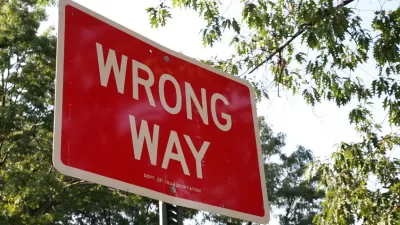
"Greater Cincinnati just became the testing ground for a new technology the state hopes will stop wrong-way drivers on the interstate, averting deadly crashes in the process," reports Pat LeFleur.
The system involves new cameras and lights along exit ramps "in an effort to alert drivers — and authorities — that they are driving the wrong way onto the interstate."
"The wrong-way alerts will have two phases: First, upon initial detection of a wrong-way driver, LED lights will begin blinking alongside the "WRONG WAY" signs already installed along the exit ramps. If that's not enough to divert the wayward driver, cameras will begin recording and ODOT will receive a message that a wrong-way driver is entering the interstate," according to LaFleur.
Ohio Department of Transportation officials say wrong way drivers are rare, but deadly when and where they occur. "In 2018, at least 15 people died as a result of 27 wrong-way crashes statewide," reports LaFleur.
FULL STORY: ODOT announces new program to combat wrong-way crash deaths


Cincinnati Gets Serious About Pedestrian Safety
A new in-house team dedicated to pedestrian safety at Cincinnati City Hall and a new complete streets ordinance are some of the changes underway in Cincinnati.

Let’s End Traffic Stops
The technology to make traffic enforcement obsolete is becoming available. But in the U.S. willing to use it?

Ohio Pledges $51 Million for Traffic Safety
The state’s department of transportation will invest in a variety of traffic safety projects as traffic fatalities reach their highest level in decades.

The state-sanctioned urbicide of Austin
People don’t kill cities. Freeways do.

US to reduce Colorado River water deliveries to Mexico
A new Colorado Treaty amendment reduces Mexico’s Colorado River water allocation by 250,000 acre feet.

New Jersey’s second-largest city bans standalone data centers
Jersey City will continue to allow co-location facilities, such as those meant for research institutions that store their own data.

Amtrak not solely to blame for New Jersey commuter rail's unreliability, report finds
A new study from the Garden State Initiative found that NJ Transit’s budget grew 20% across a 4 year period, but reliability declined significantly over the same period.

EPA erases limits on planet-warming pollution from power plants
Under Monday’s plan, power plants would still have some limits on how much mercury, arsenic and other contaminants they can emit.

Phoenix announces new on-demand transit service, more frequent RAPID buses
Both new services will launch in October, and are part of Phoenix's Project Effective Access Solutions for Easing Congestion.

FREE Course: Walkable City 1: Why Walkability?
After describing his path towards focusing on walkability as the essence of good planning, Jeff Speck marches through his five principal reasons for making more walkable places.
Reinventing Malls: Planning Alchemy—Turning Gray Fields Into Gold
The course focuses on the opportunities and imperatives that shape reinvention of mall sites.

Eagle County Government
Harvard University Graduate School of Design
Nashville Planning Department
The Architects Foundation
University of Cincinnati Online
The Pocatello Development Authority
The Urban Renewal Agency of the City of Pocatello
Journal of the American Planning Association