All over the country, sorry bus stops lack seating. Studies show that deficiency can depress ridership, some motivated citizens are looking to change that.


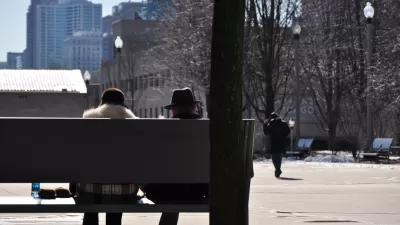
Any frequent bus rider knows all stops aren’t created equal. Sorry bus stops can leave riders waiting without shelter or the all-important place to sit. While benches are an inexpensive amenity for cities to provide, many don’t, that can be where enterprising citizens come in.
Non-for-profit Tiny WPA in Philadelphia designed an accessibility friendly bench. "They don’t look like your typical benches: Part of the seat is raised higher than normal and angled upwards, with a vertical pole attached, to assist older adults in sitting down and standing up," Linda Poon writes for CityLab. In Los Angeles, one concerned citizen has been installing difficult-to-remove benches that wrap abound poles. These benches went in without city approval, and the artist was anonymously interviewed in the Los Angeles Times.
The Better Bus Coalition of Cincinnati has also installed guerrilla benches, chaining them to sign posts with the message “This bench supports bus riders more than the city does.” Lack of seating at bus stops has long been an issue in the city "where the city council, citing improper maintenance, began removing ad-sponsored benches back in 2006," Poon writes.
Comfortable bus stops are important, because they improve the quality of the experience for riders, but they also have other benefits. "Better amenities can boost ridership, according to a Transit Center report and, given the worrying state of bus use nationwide, installing better benches should be a low-cost way for cities to address a low-hanging fruit," Poon argues.
FULL STORY: Take a Seat: 5 Brilliant Bus Stop Fixes

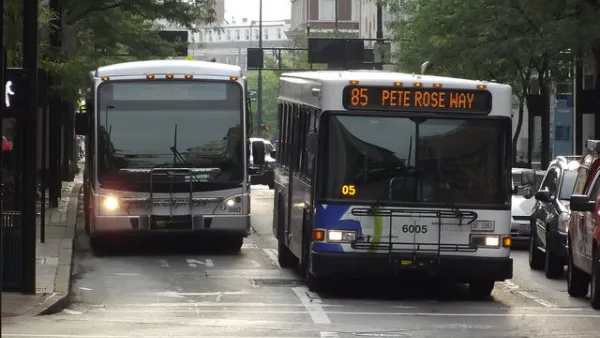
Cam Hardy, Crusader for Cincinnati Bus Riders
Cincinnati's bus riders are overwhelmingly black and poor, and looming deficits threaten to make service even worse.
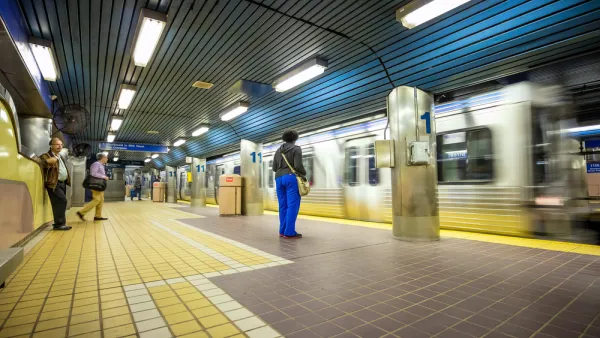
Public Transit Must Evolve to Survive
Ride hailing apps have changed the way people travel. Though public transit may lose ridership to these services, transit should also learn from technological advancements and use those insights to improve transit service.
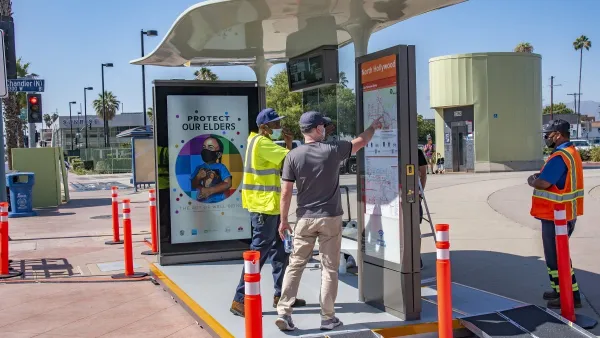
LA Begins Adding New Bus Shelters
The program, years in the works, pledges to add 3,000 new bus shelters and 450 shade structures to protect riders from extreme heat and weather.

The state-sanctioned urbicide of Austin
People don’t kill cities. Freeways do.

US to reduce Colorado River water deliveries to Mexico
A new Colorado Treaty amendment reduces Mexico’s Colorado River water allocation by 250,000 acre feet.

New Jersey’s second-largest city bans standalone data centers
Jersey City will continue to allow co-location facilities, such as those meant for research institutions that store their own data.

Amtrak not solely to blame for New Jersey commuter rail's unreliability, report finds
A new study from the Garden State Initiative found that NJ Transit’s budget grew 20% across a 4 year period, but reliability declined significantly over the same period.

EPA erases limits on planet-warming pollution from power plants
Under Monday’s plan, power plants would still have some limits on how much mercury, arsenic and other contaminants they can emit.

Phoenix announces new on-demand transit service, more frequent RAPID buses
Both new services will launch in October, and are part of Phoenix's Project Effective Access Solutions for Easing Congestion.

FREE Course: Walkable City 1: Why Walkability?
After describing his path towards focusing on walkability as the essence of good planning, Jeff Speck marches through his five principal reasons for making more walkable places.
Reinventing Malls: Planning Alchemy—Turning Gray Fields Into Gold
The course focuses on the opportunities and imperatives that shape reinvention of mall sites.

Eagle County Government
Harvard University Graduate School of Design
Nashville Planning Department
The Architects Foundation
University of Cincinnati Online
The Pocatello Development Authority
The Urban Renewal Agency of the City of Pocatello
Journal of the American Planning Association