McDonald's takes a lot of heat for the quality of the food, but most Americans still associate the fast food giant's restaurants, and others like it, with family, community, and good times.


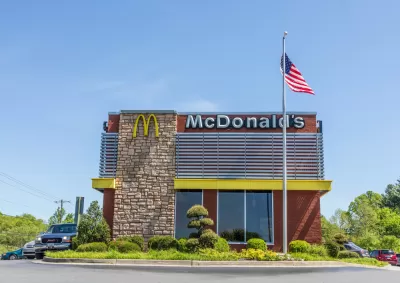
The central role of fast food restaurants in American culture and community is sometime underappreciated—even though most Americans prove their appreciation for fast food most regularly.
"According to Gallup, some 80 percent of Americans eat fast food on at least a monthly basis, and 96 percent of Americans annually. No other institution, not libraries or gyms or the collective houses of worship, is that popular. Not even the internet comes close to garnering that much loyalty or participation as fast food," writes Adam Chandler.
"The United States is and remains a fast-food nation. And this isn’t simply because quick-service restaurants are purveyors of deliciously narcotic and obesogenic foodstuffs. It’s because it’s easy to build rituals in places where everyone is welcome," adds Chandler.
While the article speaks broadly about fast food, the vast majority of specific references are to the most visible signifier of the country's role in bringing the fast food franchise to the global market: McDonald's. And this isn't the first time that an article has been written about the role of McDonald's in maintaining a third place for Americans, outside of the home and the office, for Americans to gather and linger in public.
Read the full story: Fast Food Restaurants Are Where Americans Come Together
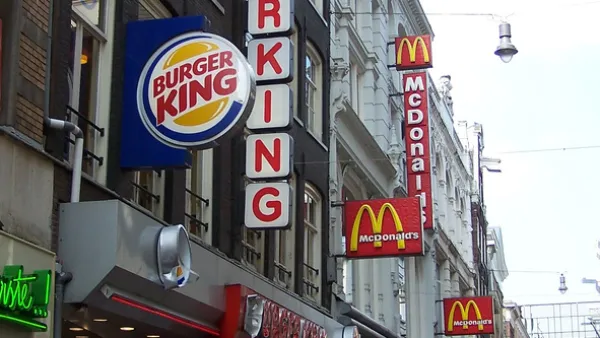
Customers Seeking "Third Places" Give McDonald's a Second Thought
Climate controlled public places where the elderly, cost-conscious and indigent are welcome to spend a few hours are hard to find. Tensions have erupted at McDonald’s restaurants in NYC between customers seeking a refuge and business interests.
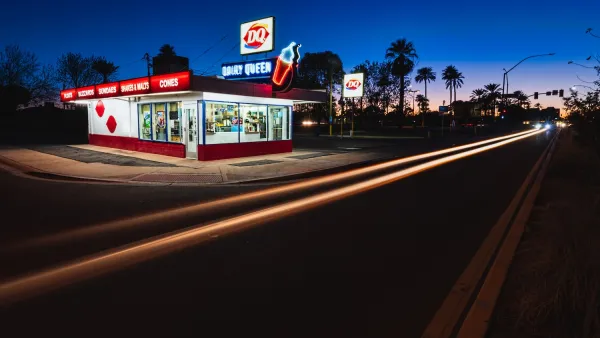
Dairy Queen and Rural Third Places
Dozens of Dairy Queen restaurants across Texas are closing, taking a critical community space with them.
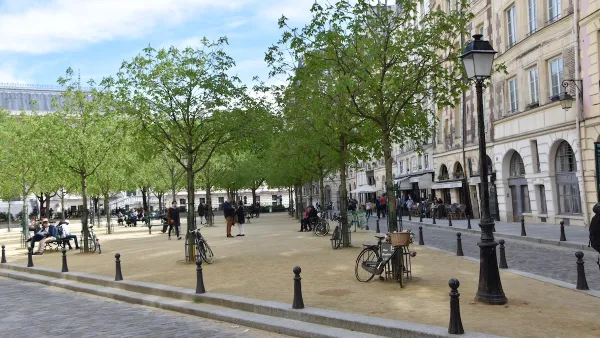
Lost and Found: Fighting Loneliness With Parks and Third Places
To combat the epidemic of loneliness, Susan Henderson's evocative photos of “third places” reflect on how these spaces have evolved and their importance in fostering connection.

Planetizen Federal Action Tracker
A weekly monitor of how Trump’s orders and actions are impacting planners and planning in America.

California plans to bury El Niño’s downpour
If the state plays its cards right, it may be able to store a billion acre-feet of El Niño’s water in aquifers.

Desperate measures: Advocates weigh draining Lake Powell to fill Colorado River
Draining the reservoir could reduce evaporation losses by a couple hundred thousand acre-feet.

Mamdani’s pied-à-terre tax survives legal challenge
A panel of judges found that the plaintiffs failed to demonstrate injury as a result of New York City's implementation of the tax.

Eastern Nebraska is running out of electricity
Data centers and electrification are straining eastern Nebraska’s grid, throttling economic development.

Seattle passes record-breaking transit services expansion
Proposition 1 will double the city’s transit tax to add 95,000 more bus trips and preserve 180,000 bus trips annually.

FREE Course: Walkable City 1: Why Walkability?
After describing his path towards focusing on walkability as the essence of good planning, Jeff Speck marches through his five principal reasons for making more walkable places.
Reinventing Malls: Planning Alchemy—Turning Gray Fields Into Gold
The course focuses on the opportunities and imperatives that shape reinvention of mall sites.

City of Rosemead
Rutgers University, Edward J. Bloustein School of Planning and Public Policy
One Hundred Miles
University of Michigan School for Environment and Sustainability (SEAS)
Hunter College, City University of New York (CUNY)
The Architects Foundation
City of Cambridge
Montrose County
The Pocatello Development Authority