Nursing homes are closing in large numbers in rural communities as a result of a confluence of market pressures.


"Over the last two decades, nursing homes around Minnesota have been closing," reports Peter Cox. "And it has hit rural Minnesotans especially hard. According to data from Care Providers of Minnesota, of the 41 Minnesota nursing homes that have closed since 2007, 31 have been in rural towns."
Cox traces a number of factors influencing the current reality facing nursing homes: they're expensive to operate, they're highly regulated, states like Minnesota are funding aging-in-place programs, and seniors prefer to age in their homes. Rural facilities face the added factor of reduced Medicaid payments.
As Cox notes, nursing homes can play an important role in communities. The example cited here is the Twin Valley Living Center in Twin Valley, Minnesota, which is closing in November.
Read the full story: More Minn. nursing homes are closing, and rural towns feel the pain

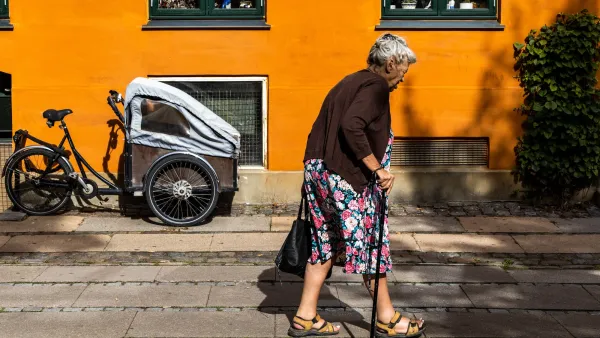
Great Cities Don’t Just Acknowledge That We Age In Them — They Build For It. We Can Too.
We age in sidewalks, public spaces, transit stops, and community centers — not in hospitals. As populations age, the built environment will determine whether our cities thrive or struggle in the decades ahead.

Porches, Pets, and the People We Grow Old With
Neighborhood connections and animal companions matter to aging with dignity, and how we build can support them. Here’s a human-scale proposal for aging in place.

Mahjong Game Highlights Displacement of Seniors in NYC’s Chinatown
‘Aging Out of Place’ explores the mechanisms that displace vulnerable seniors, and how the community can help preserve key resources and institutions.

Planetizen Federal Action Tracker
A weekly monitor of how Trump’s orders and actions are impacting planners and planning in America.

Amtrak, CN end decades-long dispute with eight-year agreement
The new operating agreement establishes an updated framework for the companies to work together, including processes to resolve disputes.

Judges permit Denver to divert 77,000 acre feet from the Colorado River for reservoir expansion
Overuse and climate change have caused the Colorado River’s water levels to plummet.

Northwest rail fans eager for Sept. 30 debut of Amtrak’s Airo fleet
Get ready for that new train smell and more seats. But they won’t go faster or run more frequently on the Cascades route in Washington and Oregon.

NYC DOT wants faster, more permanent street upgrades
The city is examining ways to build more concrete infrastructure without getting entangled in 'decades-long' projects.

'Something we’ve never seen before:' rising utility rates could strain city finances nationwide
Data centers, climate change and other factors have caused utility rates in the United States to increase by 38% since 2020.

FREE Course: Walkable City 1: Why Walkability?
After describing his path towards focusing on walkability as the essence of good planning, Jeff Speck marches through his five principal reasons for making more walkable places.
Reinventing Malls: Planning Alchemy—Turning Gray Fields Into Gold
The course focuses on the opportunities and imperatives that shape reinvention of mall sites.

Harvard University Graduate School of Design
KFH Group Inc.
Greater Baltimore Committee
The Architects Foundation
University of Cincinnati Online
The Pocatello Development Authority
The Urban Renewal Agency of the City of Pocatello