As Richmond, Virginia grows, the city’s network of fixed-route transit and shared ride service is evolving to meet travelers’ needs.


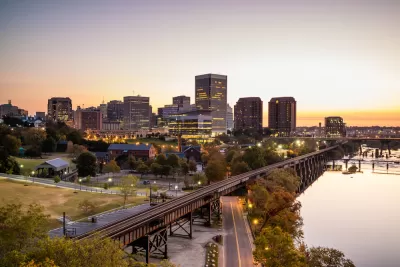
Ethan Goffman takes a closer look at mobility in Richmond, Virginia, which has a combination of fixed-route transit and shared ride service managed by the Greater Richmond Transit Company. Bus ridership has increased by 17 percent, or a million riders, in the last year, and carpool and vanpool ridership is five times what it was 15 years ago.
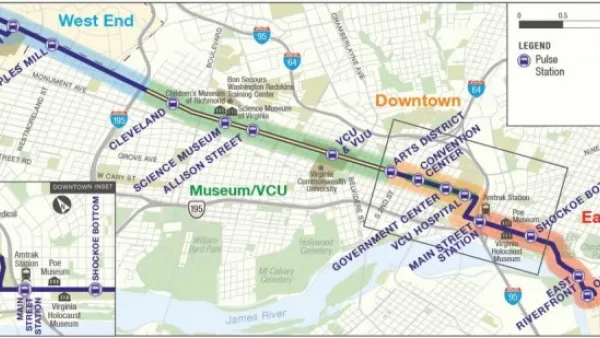
Last year, the agency revamped and upgraded its bus system and added a bus rapid transit line called Pulse that runs through the city center. Goffman notes that the redesign also involved balancing service on high-demand corridors and to areas farther away from the city’s activity centers.
The city’s RideFinders agency handles shared ride service, including carpool and private vanpool options for travelers. It also conducts public outreach, collaborates with local businesses, and promotes biking, walking, and telework. "Rose Pace said that the agency is beginning to examine the possibility of microtransit that, in contrast to today’s RideFinders vanpools, would be designed to provide first and last mile connectivity supporting fixed bus routes," notes Goffman.
FULL STORY: In Richmond, Virginia both fixed-route transit and shared ride networks are succeeding.

Meet Pulse, Richmond Virginia's New Bus Rapid Transit
Pulse BRT, the second BRT system in the state of Virginia, runs down Broad Street and offers a mix of best practices and practicality to push the mode beyond what many cities are able to realize.

Richmond Seeks to Expand Bus Rapid Transit
After seeing impressive ridership growth, Richmond's transit agency wants to expand bus rapid transit to more destinations in the region.
Quality Bus Rapid Transit Drives Systemwide Ridership Improvements in Richmond, VA
Richmond, Virginia has achieved a big ridership bump, without a big investment.

Planetizen Federal Action Tracker
A weekly monitor of how Trump’s orders and actions are impacting planners and planning in America.

The state-sanctioned urbicide of Austin
People don’t kill cities. Freeways do.

US to reduce Colorado River water deliveries to Mexico
A new Colorado Treaty amendment reduces Mexico’s Colorado River water allocation by 250,000 acre feet.

5 New England states march closer to 800 megawatt wind energy project
Securing federal approval for the project may be complicated under the Trump administration, which has historically been hostile towards domestic wind power.

Baltimore to break ground on $50 million Transit Priority Project
The project will bring faster bus trips, safer streets and better bike connections to Baltimore.

Airbnb launches $250 million 'last-dollar financing' housing accelerator, makes first investment in Austin
The company will put $6.4 million towards affordable housing development in Texas’ capital.

FREE Course: Walkable City 1: Why Walkability?
After describing his path towards focusing on walkability as the essence of good planning, Jeff Speck marches through his five principal reasons for making more walkable places.
Reinventing Malls: Planning Alchemy—Turning Gray Fields Into Gold
The course focuses on the opportunities and imperatives that shape reinvention of mall sites.

Eagle County Government
Harvard University Graduate School of Design
Nashville Planning Department
The Architects Foundation
University of Cincinnati Online
The Pocatello Development Authority
The Urban Renewal Agency of the City of Pocatello
Journal of the American Planning Association