After buses were unable to meet range expectations in Indianapolis, the city reached an agreement with Chinese bus supplier BYD to provide new charging facilities.


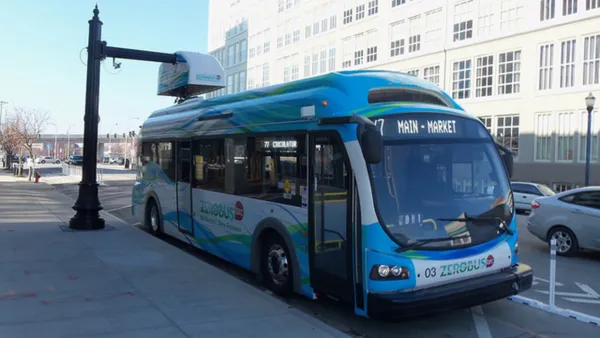
Indianapolis’ 31 battery electric buses are getting upgraded wireless charging stations. "During testing, IndyGo realized low temperatures were causing a dramatic drop-off in predicted range," Phil Dzikiy reports for Electrek. The city was promised 275-mile ranges, but when it found buses running out of power by mile 200 in colder temperatures, they looked to hold their supplier accountable. To make up for the range issue, the Chinese bus manufacturer BYD has equipped the city with three additional charging stations.
These chargers take 10-20 minutes to charge buses batteries. "IndyGo claims it can be done without interrupting service, as drivers will take scheduled breaks with no passengers on board during those times," Dzikiy reports.
The articulated BYD buses are crucial to Indianapolis’ long term public transit plans, as the city has promised its Red Line Bus Rapid Transit (BRT) line will be completely electric. If the city is able to operate a completely electric fleet on that line, it would be the first fully electric BRT in the United States.
Read the full story: BYD installing wireless charging in Indianapolis to boost disappointing range of its electric buses


Range Anxiety: Electric Buses Still Aren't Ready to Scale
Money intended for electric buses in Indianapolis will instead be spent on diesel buses.
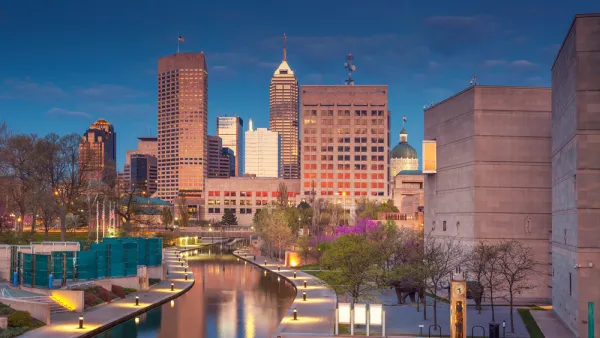
Indianapolis' New BRT Stations and Buses Roll Out Soon; Here’s What They’re Like
The new Red Line bus rapid transit will include level boarding, pre-pay bus fare service at some stops, quiet electric buses, and USB chargers.
Buses: Going Where No Electric Vehicles Have Gone Before
A 40-foot bus, dubbed the "Catalyst E2 Max," has broken the world record for longest drive on a single charge, according to manufacturer Proterra.

Planetizen Federal Action Tracker
A weekly monitor of how Trump’s orders and actions are impacting planners and planning in America.

The state-sanctioned urbicide of Austin
People don’t kill cities. Freeways do.

US to reduce Colorado River water deliveries to Mexico
A new Colorado Treaty amendment reduces Mexico’s Colorado River water allocation by 250,000 acre feet.

Nation's most wind-powered state turns to coal as data centers increase energy demand
For the first time in decades, Iowa has increased its generation of coal power.

NYC cools commuters with city's first rain garden above a bus stop
New York City officials say the plants in the rain garden can absorb 16 gallons of rainwater during heavy storms.

Brightline West’s future may rely on $6 billion federal loan
The company has until Nov. 2 to make a $400 million equity investment into its proposed high-speed rail line.

FREE Course: Walkable City 1: Why Walkability?
After describing his path towards focusing on walkability as the essence of good planning, Jeff Speck marches through his five principal reasons for making more walkable places.
Reinventing Malls: Planning Alchemy—Turning Gray Fields Into Gold
The course focuses on the opportunities and imperatives that shape reinvention of mall sites.

.jpg)
Greater Baltimore Committee
Eagle County Government
Harvard University Graduate School of Design
The Architects Foundation
University of Cincinnati Online
The Pocatello Development Authority
The Urban Renewal Agency of the City of Pocatello
Journal of the American Planning Association