Seattle recently completed a strategic business plan for its city-owned municipal golf courses. The first recommendation of the report: "commit to golf as a recreational program offered by the City on par with other recreational offerings."


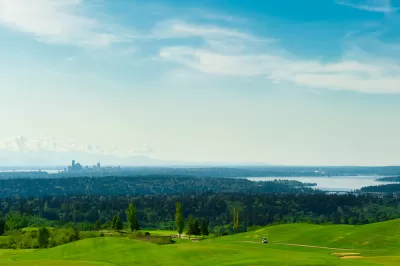
"What should Seattle do with its public golf courses and the 528 acres of mostly green space they occupy?"
That's the question Scott Hanson poses at the beginning of an article about the findings of a recent study by the city of Seattle [pdf] to figure out the future of public golf courses in the growing city.
"Much of the study focused on the financial health and sustainability of the golf courses. From 2013-17, the courses combined to have a net profit in operating income each year. But factoring in the 5 percent the courses give back to the Seattle Parks fund and debt service on improvements made at the courses put them $1.8 million in the red," according to Hanson.
With better weather in 2019, the vendors who operate the Seattle municipal golf courses report being half a million dollars ahead of budget. Still, debt service isn't going anywhere for a while, and many in the public are clamoring for the courses to be devoted to something other than a sport requiring a fair amount of skill and time.
One of the consistent messages of golfers in quoted the article is that golf, when played on public courses, is far more inclusive than its country club reputation. Bill Schickler, founder and president of Premier Golf Centers is quoted in the article saying, "You’ve got grandparents playing with grandkids and kids, and you’ve got women and men of all ethnicities playing these courses and they are very much in need as a resource for sport and recreation in the community."
According to Hanson, a groundswell of support, under the Save Seattle Golf banner, has risen since the report was released and golfers began worrying about the implications of the city asking these kind of existential questions about the future of the sport. As Hanson reports, municipal golfers in the city can probably rest easy for now. Both the report and Mayor Jenny Durkan express support for public golf in the city.
Read the full story: Seattle considering what to do with 4 public golf courses and 528 acres of green space they cover


A Historic Golf Club's Community Revival
South LA’s Chester Washington Golf Club is experiencing a revitalization, blending its rich legacy with modern advancements while continuing to foster community, diversity, and fellowship.
Proposed Bill Would Ease Conversion of Public Golf Courses to Housing in California
The California State Legislature will again consider a bill that would remove protections for municipal golf courses in the state, making it easier to rezone public golf properties for housing.
Toronto Searching for a Future for its Public Golf Courses
Amid calls to convert the city's golf courses to other uses, Toronto, Ontario city staff are trying to figure out a middle ground between competing interests.

Planetizen Federal Action Tracker
A weekly monitor of how Trump’s orders and actions are impacting planners and planning in America.

California plans to bury El Niño’s downpour
If the state plays its cards right, it may be able to store a billion acre-feet of El Niño’s water in aquifers.

Chicago breaks ground on $3 billion megadevelopment
The new neighborhood, titled Foundry Park, will one day host 3,700 residences.

Satanic Place Names
From streams and lakes to valleys and canyons, I mapped more than 1,000 places named after the Devil.

California High-Speed Rail Authority CEO resigns after $600,000 scandal
Under Ian Choudri, the authority used taxpayer dollars to fund first class flights and trips to nightclubs.

Want to study the Missouri River? Soon, you may need unanimous approval from 10 states
Legislation would require 10 governors’ permission to study or build projects moving water outside the basin.

FREE Course: Walkable City 1: Why Walkability?
After describing his path towards focusing on walkability as the essence of good planning, Jeff Speck marches through his five principal reasons for making more walkable places.
Reinventing Malls: Planning Alchemy—Turning Gray Fields Into Gold
The course focuses on the opportunities and imperatives that shape reinvention of mall sites.

City of Rosemead
Rutgers University, Edward J. Bloustein School of Planning and Public Policy
One Hundred Miles
Hunter College, City University of New York (CUNY)
The Architects Foundation
University of Cincinnati Online
City of Cambridge
Montrose County
The Pocatello Development Authority