Amid calls to convert the city's golf courses to other uses, Toronto, Ontario city staff are trying to figure out a middle ground between competing interests.


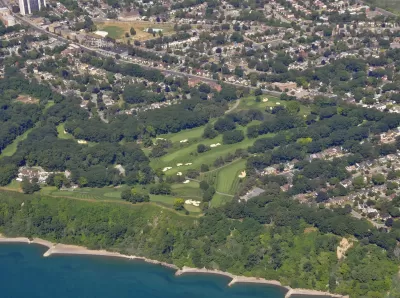
Jennifer Pagliaro previews an impending report by Toronto city staff to plan for an "improved status quo model" for the city's five public golf courses
In the process of creating the report, Toronto is attempting to balance two ardent political bases: those who want public land devoted to golf in the city converted to open space and agricultural uses, and those who want to protect the public's access to the game.
According to Pagliaro, the report headed to the Toronto City Council's Infrastructure and Environment Committee is a first step toward balancing those competing interest, but the report still favors the future of publicly owned golf courses in the city. For instance, "the report contains no clear direction on plans to improve environmental sustainability and what the other recreational uses might be" (in the "improved status quo").
The report is really a plan to start planning. "A process for a request for proposal on future operations would be started if council supports the plan, with the goal of implementing those yet-to-be-defined models for the 2024 season," according to Pagliaro.
A lot more detail about the considerations going into the continued priority on golf, and the potential for other uses, in the specific context of these five courses are included in the source article below. Environmental, social, demographic, and financial considerations are discussed.
Read the full story: Will Toronto tee up changes to city-run golf courses, amid demands for green space?


Development vs. Open Space at a Denver Golf Course
A developer just bought a Denver-area golf course in the hopes of some day rezoning the site for residential and commercial development. Open space advocates have other ideas, as does the city (for now).

Denver Voters Will Weigh Open Space Development
Two competing initiatives seek to change city regulations for residential and commercial development on the city's parklands and open spaces.
A Comprehensive Plan for Every Neighborhood Park
Minneapolis wants more equity in its parks spending—and new plans are a key step in the process of delivering more equitable results.

Planetizen Federal Action Tracker
A weekly monitor of how Trump’s orders and actions are impacting planners and planning in America.

California plans to bury El Niño’s downpour
If the state plays its cards right, it may be able to store a billion acre-feet of El Niño’s water in aquifers.

Chicago breaks ground on $3 billion megadevelopment
The new neighborhood, titled Foundry Park, will one day host 3,700 residences.

California High-Speed Rail Authority CEO resigns after $600,000 scandal
Under Ian Choudri, the authority used taxpayer dollars to fund first class flights and trips to nightclubs.

Want to study the Missouri River? Soon, you may need unanimous approval from 10 states
Legislation would require 10 governors’ permission to study or build projects moving water outside the basin.

Desperate measures: Advocates weigh draining Lake Powell to fill Colorado River
Draining the reservoir could reduce evaporation losses by a couple hundred thousand acre-feet.

FREE Course: Walkable City 1: Why Walkability?
After describing his path towards focusing on walkability as the essence of good planning, Jeff Speck marches through his five principal reasons for making more walkable places.
Reinventing Malls: Planning Alchemy—Turning Gray Fields Into Gold
The course focuses on the opportunities and imperatives that shape reinvention of mall sites.

City of Rosemead
Rutgers University, Edward J. Bloustein School of Planning and Public Policy
One Hundred Miles
Hunter College, City University of New York (CUNY)
The Architects Foundation
University of Cincinnati Online
City of Cambridge
Montrose County
The Pocatello Development Authority