A motion in Vancouver, British Columbia, calls for reconsidering policies that site multifamily buildings on busy trucking corridors where diesel emissions are high.


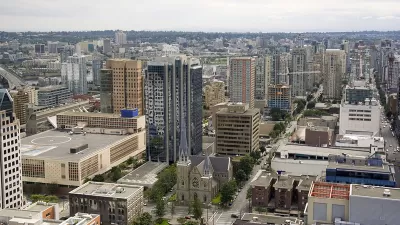
Jean Swanson, a Vancouver city councillor, is seeking support for a motion that would examine zoning, building code, and planning policies to ensure that health and safety standards are maintained for all residents. Her concern is that residents of multifamily buildings located on high-traffic corridors are exposed to dangerous amounts of air pollution, primarily from diesel trucks.
"The motion could also see Vancouver try to garner support from other Canadian municipalities to pressure the provincial and federal governments to take stronger action on road pollution, particularly from heavy trucks," writes Ainslie Cruickshank.
Pollution levels along busy trucking routes in Vancouver are as high as those found on Highway 401 near Toronto, North America’s busiest freeway, notes Cruickshank. Residents living in developments near these roadways can face a host of health problems as a result, and Swanson’s motion seeks to ensure that these impacts do not disproportionately burden people living in these areas.
FULL STORY: Vancouver should consider traffic pollution when placing condos and apartment buildings, councillor argues


Two Perspectives on Surging Canadian Housing Costs
Real estate prices in Toronto and Vancouver continue to rise, but there is not consensus about what is behind the growing housing crisis and the best solutions to pursue.
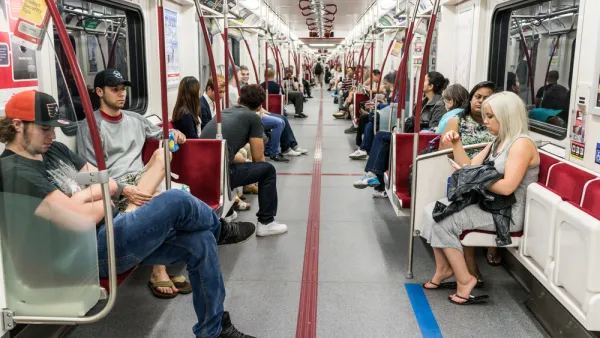
Celebrity Voices to Remind You to Keep Your Feet Off the Seats
From Judi Dench to Queen Latifah, CityLab writers match transit systems with the personalities they think would make the best announcements.
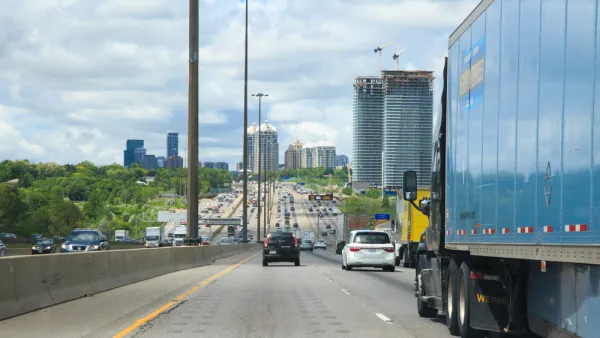
Highway Expansion Proposal Stirs Debate in Toronto
A pro-business group in Toronto wants to expand a highway, but a Toronto columnist wants to make readers aware of why the plan might not work out as hoped.

The state-sanctioned urbicide of Austin
People don’t kill cities. Freeways do.

US to reduce Colorado River water deliveries to Mexico
A new Colorado Treaty amendment reduces Mexico’s Colorado River water allocation by 250,000 acre feet.

New Jersey’s second-largest city bans standalone data centers
Jersey City will continue to allow co-location facilities, such as those meant for research institutions that store their own data.

Amtrak not solely to blame for New Jersey commuter rail's unreliability, report finds
A new study from the Garden State Initiative found that NJ Transit’s budget grew 20% across a 4 year period, but reliability declined significantly over the same period.

EPA erases limits on planet-warming pollution from power plants
Under Monday’s plan, power plants would still have some limits on how much mercury, arsenic and other contaminants they can emit.

Phoenix announces new on-demand transit service, more frequent RAPID buses
Both new services will launch in October, and are part of Phoenix's Project Effective Access Solutions for Easing Congestion.

FREE Course: Walkable City 1: Why Walkability?
After describing his path towards focusing on walkability as the essence of good planning, Jeff Speck marches through his five principal reasons for making more walkable places.
Reinventing Malls: Planning Alchemy—Turning Gray Fields Into Gold
The course focuses on the opportunities and imperatives that shape reinvention of mall sites.

Eagle County Government
Harvard University Graduate School of Design
Nashville Planning Department
The Architects Foundation
University of Cincinnati Online
The Pocatello Development Authority
The Urban Renewal Agency of the City of Pocatello
Journal of the American Planning Association