Separated bike lanes and new pedestrian infrastructure have replaced traffic lanes on a mile of Manassas Street in Memphis.


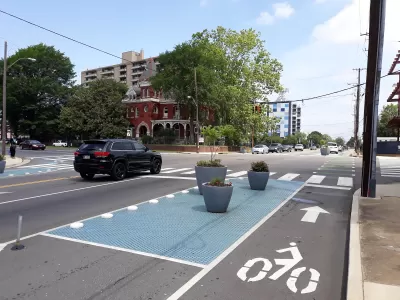
A stretch of roadway in the Memphis Medical District has undergone a redesign involving a reduction from five to three lanes of traffic. Manassas Street now has separated bike lanes, curb extensions that allow for shortened crosswalks and slower vehicle speeds, and a midblock crossing designed by a local artist.
"The ultimate goals of the project are to encourage active transportation, support the healthy lifestyles goals of the district’s medical institution anchors, and to encourage more mixed-use and multifamily residential development in the district," writes Daniel Ashworth, Jr.
The Memphis Medical District is an area adjacent to downtown, and the project seeks to create a safer multimodal roadway that gives pedestrians and cyclists equal access. The street improvement project is a joint effort between the City of Memphis and the Memphis Medical District Collaborative.
Read the full story: A New Manassas Street, Safe for Bikes and Pedestrians

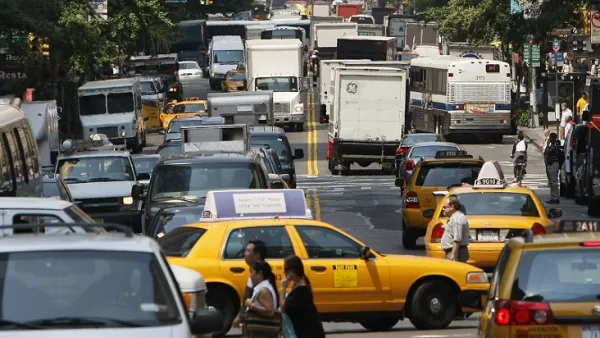
Cars Still Rule the Road. Is Change Possible?
The dominant narrative is that streets are for cars and infrastructure that accommodates driving is necessary for cities to grow. But cities ended up this way because of decisions that make other modes secondary.
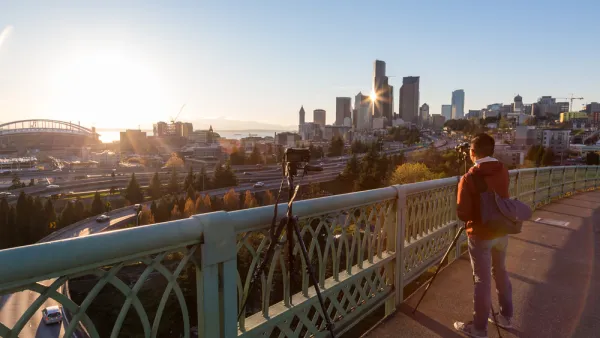
A Thorough, Mixed Review for a New Protected Bike Lane in Seattle
So many highly anticipated bike facilities finally deliver only to fall short of real game changing status. Seattle provides the latest example of the phenomenon in the wild.
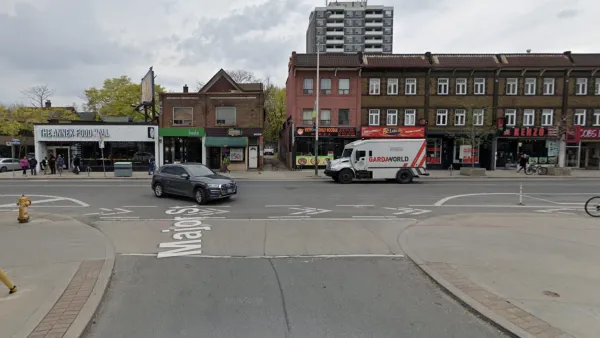
The Billion-Year-Old Curb Bulbout
Bloor Street didn't land on this billion-year old rock; the rock landed on Bloor Street.

Planetizen Federal Action Tracker
A weekly monitor of how Trump’s orders and actions are impacting planners and planning in America.

California plans to bury El Niño’s downpour
If the state plays its cards right, it may be able to store a billion acre-feet of El Niño’s water in aquifers.

Chicago breaks ground on $3 billion megadevelopment
The new neighborhood, titled Foundry Park, will one day host 3,700 residences.

California High-Speed Rail Authority CEO resigns after $600,000 scandal
Under Ian Choudri, the authority used taxpayer dollars to fund first class flights and trips to nightclubs.

Want to study the Missouri River? Soon, you may need unanimous approval from 10 states
Legislation would require 10 governors’ permission to study or build projects moving water outside the basin.

Desperate measures: Advocates weigh draining Lake Powell to fill Colorado River
Draining the reservoir could reduce evaporation losses by a couple hundred thousand acre-feet.

FREE Course: Walkable City 1: Why Walkability?
After describing his path towards focusing on walkability as the essence of good planning, Jeff Speck marches through his five principal reasons for making more walkable places.
Reinventing Malls: Planning Alchemy—Turning Gray Fields Into Gold
The course focuses on the opportunities and imperatives that shape reinvention of mall sites.

City of Rosemead
Rutgers University, Edward J. Bloustein School of Planning and Public Policy
One Hundred Miles
Hunter College, City University of New York (CUNY)
The Architects Foundation
University of Cincinnati Online
City of Cambridge
Montrose County
The Pocatello Development Authority