City life is being sold as a convenient version of the suburbs, with similar amenities minus the time-consuming commute.


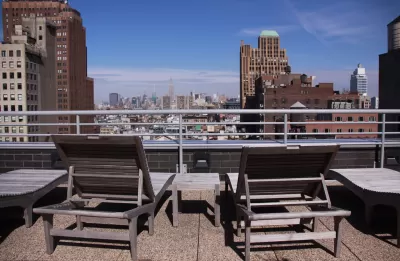
Candace Jackson writes that more wealthy people are moving back into cities from the suburbs and developers are marketing an urban lifestyle to them that reflects the suburban life they are leaving behind. Much larger units, rooftop gardens and swimming pools, and parking garages are elements of new developments that are reminiscent of suburbia, says Jackson:
At the Quay Tower, which overlooks Brooklyn Bridge Park [in New York City], there are just five condos on each floor, two of which have private elevator access. Inside, the larger units have something you see a lot of on HGTV suburban house renovation shows: large mudrooms off the back door with locker-like cubbies and sturdy ceramic-tile floors.
In addition, the areas around these buildings are catering to suburban sensibilities, with big-box retail, malls, and upscale food courts. "Of course, these new buildings are designed for a very narrow slice of the population — those who can afford to spend multiple millions of dollars on a home — but it’s a slice of the population whose purchasing decisions affect all city dwellers," notes Jackson.
Jackson notes that the demographic changes happening in cities involve not just class but, for some cities, race as well. "The return of affluent whites to cities has made for a something of a reversal of the white-flight phenomenon of the early and mid-20th century, when middle class and wealthy whites left cities en masse for the homogeneous suburbs."
FULL STORY: The Suburbs Are Coming to a City Near You

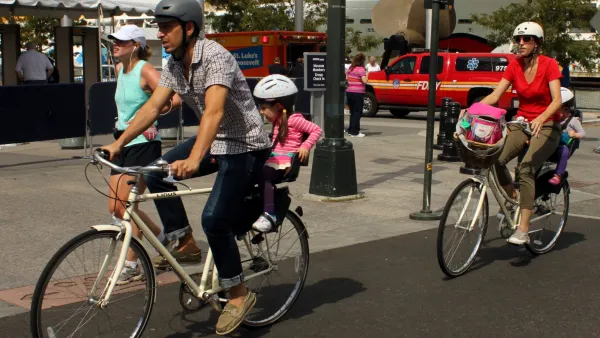
Signal Priority in N.Y.C. to Make Streets Safer for Cyclists
New York City will create green waves by adjusting traffic signals to keep cyclists moving, even when drivers will have to slow down.
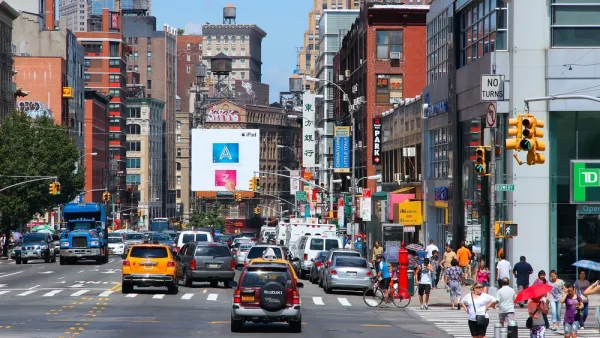
Congestion Pricing to Balance Out Mobility Systems
The goal of transportation networks should be to provide integrated and efficient services, which requires looking beyond particular modes.
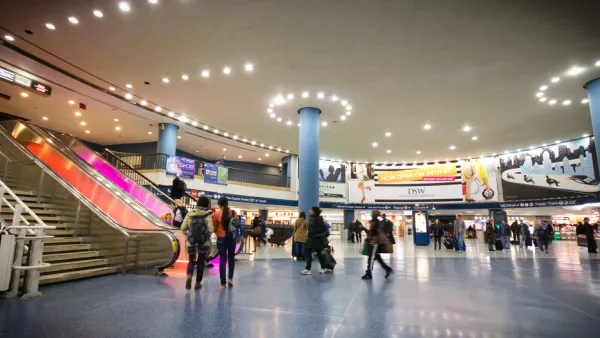
Post-Cuomo Penn Station Updates Could Move Project Forward
The controversial renovation of Penn Station could move forward with a scaled-back plan.

Planetizen Federal Action Tracker
A weekly monitor of how Trump’s orders and actions are impacting planners and planning in America.

The state-sanctioned urbicide of Austin
People don’t kill cities. Freeways do.

US to reduce Colorado River water deliveries to Mexico
A new Colorado Treaty amendment reduces Mexico’s Colorado River water allocation by 250,000 acre feet.

5 New England states march closer to 800 megawatt wind energy project
Securing federal approval for the project may be complicated under the Trump administration, which has historically been hostile towards domestic wind power.

Baltimore to break ground on $50 million Transit Priority Project
The project will bring faster bus trips, safer streets and better bike connections to Baltimore.

Airbnb launches $250 million 'last-dollar financing' housing accelerator, makes first investment in Austin
The company will put $6.4 million towards affordable housing development in Texas’ capital.

FREE Course: Walkable City 1: Why Walkability?
After describing his path towards focusing on walkability as the essence of good planning, Jeff Speck marches through his five principal reasons for making more walkable places.
Reinventing Malls: Planning Alchemy—Turning Gray Fields Into Gold
The course focuses on the opportunities and imperatives that shape reinvention of mall sites.

Eagle County Government
Harvard University Graduate School of Design
Nashville Planning Department
The Architects Foundation
University of Cincinnati Online
The Pocatello Development Authority
The Urban Renewal Agency of the City of Pocatello
Journal of the American Planning Association