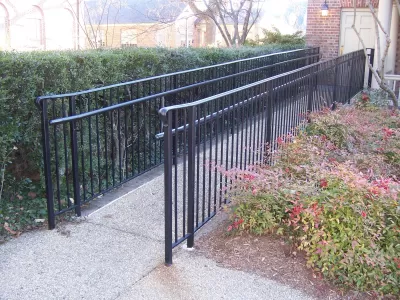
Beyond adding more housing to the market, fourplexes could bring a lot more federally mandated wheelchair accessibility to Portland.


Shifting demographics in the United States are going to create new needs in the housing market, and the greater Portland area is likely to be particularly hard hit. "Over the next 10 years, hundreds of thousands of Cascadian seniors are going to lose the ability to walk easily—and they don’t know it yet," Michael Andersen writes for Sightline. The area does not have the housing stock to accommodate an aging population. Andersen argues that an important zoning change may alleviate some of the pressure.
"It’s the movement to re-legalize 'middle housing' options like duplexes, triplexes, fourplexes and accessory dwellings," Andresen writes. These more dense housing styles are generally argued for in terms of providing more dense housing where people want to live, adding more variety to housing market or bringing down the cost of homes, but Andersen points out they would have another side benefit.
"Under the Fair Housing Act, the fourth home within any structure triggers a requirement that every new ground-floor home, and every home in buildings with elevators, be wheelchair-accessible," Andresen writes. In most of Portland it would be illegal to build a fourplex at all, but if they were allowed to come onto the market they could mean a lot more housing options for those whose choices are currently badly limited.
FULL STORY: OUR BANS ON STACKED HOMES ARE BANS ON AGE-READY HOMES


Amtrak makes over 160 stations fully accessible
Upgrades include new elevators, signage and accessible restrooms.
Federal Government to Enforce Accessibility Guidelines
Local agencies will soon be tasked with adhering to federal right-of-way accessibility rules: comprehensive guidelines for accessible streets and sidewalks.

Look North: 3 ways Canadian planners are crushing digital accessibility
Although accessibility regulations look similar in the United States and Canada, our northern neighbors have managed to make planning materials more usable for people with disabilities. Here's what we can learn from them.

Planetizen Federal Action Tracker
A weekly monitor of how Trump’s orders and actions are impacting planners and planning in America.

The state-sanctioned urbicide of Austin
People don’t kill cities. Freeways do.

US to reduce Colorado River water deliveries to Mexico
A new Colorado Treaty amendment reduces Mexico’s Colorado River water allocation by 250,000 acre feet.

5 New England states march closer to 800 megawatt wind energy project
Securing federal approval for the project may be complicated under the Trump administration, which has historically been hostile towards domestic wind power.

Baltimore to break ground on $50 million Transit Priority Project
The project will bring faster bus trips, safer streets and better bike connections to Baltimore.

Airbnb launches $250 million 'last-dollar financing' housing accelerator, makes first investment in Austin
The company will put $6.4 million towards affordable housing development in Texas’ capital.

FREE Course: Walkable City 1: Why Walkability?
After describing his path towards focusing on walkability as the essence of good planning, Jeff Speck marches through his five principal reasons for making more walkable places.
Reinventing Malls: Planning Alchemy—Turning Gray Fields Into Gold
The course focuses on the opportunities and imperatives that shape reinvention of mall sites.

Eagle County Government
Harvard University Graduate School of Design
Nashville Planning Department
The Architects Foundation
University of Cincinnati Online
The Pocatello Development Authority
The Urban Renewal Agency of the City of Pocatello
Journal of the American Planning Association