This is definitely not a one-seat ride.


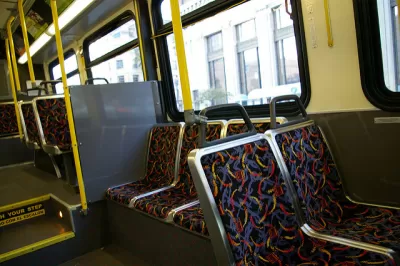
Feargus O'Sullivan presents a fascinating, and more than a little amusing, exploration of transit seat covers.
Here, O'Sullivan establishes the premise and drops one particularly large big vocabulary word:
It can’t be easy creating a good textile for public transit. Bus, train, and subway seats must do far more than look attractive. They have to stay fresh-looking as thousands of people sit on them daily, all the while trying to deter or mask the attentions of vandals. With all these boxes to tick, it’s no wonder that so many of the fabrics used on public transit are, quite frankly, pretty damned weird. Often the textiles chosen—usually, but not exclusively moquette—have an eye-grating brightness and busyness that would make the average person faint (or at least laugh) if they saw the same pattern used for a shirt or curtains.
People love their transit textiles, however, even if cloth isn't always the best choice for a transit seat. SO, the team at CityLab put together a transit seat cover ranking system considering the following:
- Memorability. They need to be striking enough to create an instant impression.
- Freshness. Moquette needs to be bright enough in color to appear new(ish) after years of wear, but not so pale as to make stains or fade evident.
- Intricacy. Large empty monochrome spaces show wear more quickly, and provide too tempting a canvas for vandals.
- Anti-Dazzle. Moquette shouldn’t be so bright and busy that it turns stomachs.
The resulting journey into transit fabrics travels from London to Turkey to Oslo and closer to home in Pittsburgh and Los Angeles.
Read the full story: The Good, Bad, and Ugly Public Transit Seat Covers of the World

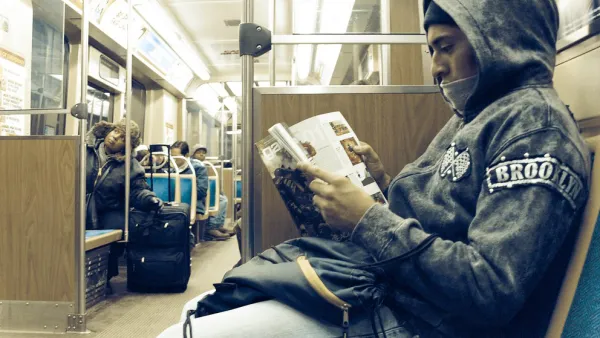
Chicago CTA Expands Hard Back Seat Pilot, Seeking to Avoid Wet Surprises
Chicago trains and buses have long had dark cloth coverings, which can hide liquids and make for unpleasant experiences for riders.
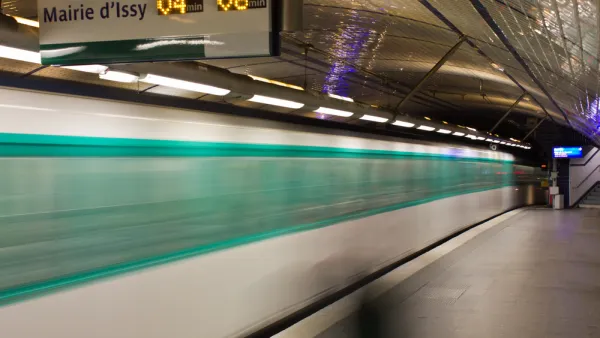
8 Lessons from the Paris Metro
Transportation planner Dan Malouff shares eight insights into what makes the Paris Metro one of the world's great subways.
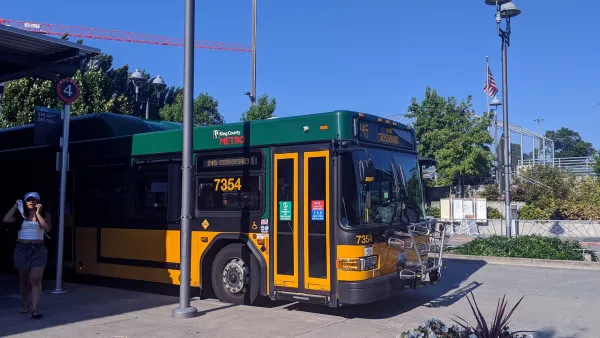
King County Metro adds 3,000 weekly bus trips, more connections to rail
King County Metro and Sound Transit are both making major adjustments to their bus networks to improve light rail connectivity across the region.

Planetizen Federal Action Tracker
A weekly monitor of how Trump’s orders and actions are impacting planners and planning in America.

The state-sanctioned urbicide of Austin
People don’t kill cities. Freeways do.

US to reduce Colorado River water deliveries to Mexico
A new Colorado Treaty amendment reduces Mexico’s Colorado River water allocation by 250,000 acre feet.

Nation's most wind-powered state turns to coal as data centers increase energy demand
For the first time in decades, Iowa has increased its generation of coal power.

NYC cools commuters with city's first rain garden above a bus stop
New York City officials say the plants in the rain garden can absorb 16 gallons of rainwater during heavy storms.

Brightline West’s future may rely on $6 billion federal loan
The company has until Nov. 2 to make a $400 million equity investment into its proposed high-speed rail line.

FREE Course: Walkable City 1: Why Walkability?
After describing his path towards focusing on walkability as the essence of good planning, Jeff Speck marches through his five principal reasons for making more walkable places.
Reinventing Malls: Planning Alchemy—Turning Gray Fields Into Gold
The course focuses on the opportunities and imperatives that shape reinvention of mall sites.

Eagle County Government
Harvard University Graduate School of Design
Nashville Planning Department
The Architects Foundation
University of Cincinnati Online
The Pocatello Development Authority
The Urban Renewal Agency of the City of Pocatello
Journal of the American Planning Association