New census data shows that millennials and seniors are migrating less, a result of the Great Recession and its economic impacts. For those who are moving, cities in the Sun Belt have been primary destinations.


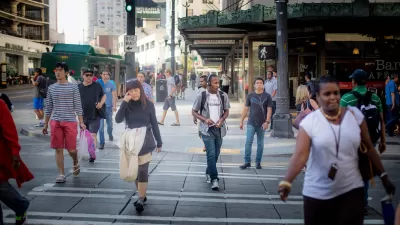
Demographer William H. Frey writes about the migration trends of millennials and Baby Boomers after the Great Recession, evident in new American Community Survey data. Migration rates for both groups slowed during and after the recession, reflecting the job and housing challenges millennials have faced and the delayed retirement and relocation limitations of seniors, says Frey.
Migration magnets for millennials are largely Sun Belt cities in the South and West. Baby Boomers also have headed to the Sun Belt, but none of the top five cities for each group overlapped, notes Frey. While both groups are leaving high-cost metropolitan areas, particularly on the coasts, millennials are spreading out across the country while seniors are focusing on the more traditional retirement states of Arizona and Florida.
"Millennials are more mobile than their elders and more apt to shift with changing opportunities, particularly to areas with knowledge based economies. In contrast, those seniors who do move are zeroing in on a smaller set of exclusively Sun Belt destinations that have long been associated with retirees, warm climates and recreation," concludes Frey.
FULL STORY: How migration of millennials and seniors has shifted since the Great Recession

The Demographics of Leaving California
The state is seeing an outmigration of residents moving to more affordable places, but it isn’t just wealthy retirees leaving the Golden State.

Study Finds Seniors Could Be Stuck with Unsellable Homes in the Future
A new paper predicts that home-buying trends among younger generations will lead to a flood of homes that older homeowners will not be able to sell.
U.S. Migration Reaches 72-Year Low
Staying in place is more and more the norm, even among historically mobile young people.

Planetizen Federal Action Tracker
A weekly monitor of how Trump’s orders and actions are impacting planners and planning in America.

The state-sanctioned urbicide of Austin
People don’t kill cities. Freeways do.

US to reduce Colorado River water deliveries to Mexico
A new Colorado Treaty amendment reduces Mexico’s Colorado River water allocation by 250,000 acre feet.

Mamdani overhauls NYC's Vision Zero plan with 100 new policy goals
The overhaul aims to reduce traffic deaths and make streets safer for pedestrians, cyclists and drivers through lower speed limits, new safety infrastructure and more.

Amtrak not solely to blame for New Jersey commuter rail's unreliability, report finds
A new study from the Garden State Initiative found that NJ Transit’s budget grew 20% across a 4 year period, but reliability declined significantly over the same period.

EPA erases limits on planet-warming pollution from power plants
Under Monday’s plan, power plants would still have some limits on how much mercury, arsenic and other contaminants they can emit.

FREE Course: Walkable City 1: Why Walkability?
After describing his path towards focusing on walkability as the essence of good planning, Jeff Speck marches through his five principal reasons for making more walkable places.
Reinventing Malls: Planning Alchemy—Turning Gray Fields Into Gold
The course focuses on the opportunities and imperatives that shape reinvention of mall sites.

Eagle County Government
Harvard University Graduate School of Design
Nashville Planning Department
The Architects Foundation
University of Cincinnati Online
The Pocatello Development Authority
The Urban Renewal Agency of the City of Pocatello
Journal of the American Planning Association