It's been expensive year for the U.S. Army Corps of Engineers' efforts to prevent environmental catastrophe in Lake Michigan.


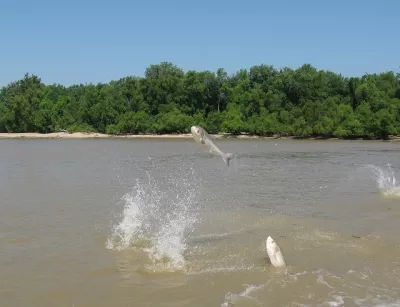
Plans to fortify an Illinois waterway to block the path of the invasive Asian carp from traveling into Lake Michigan have tripled in cost in the past year according to an article by John Flesher.
That's the finding of an updated report by the U.S. Army Corps of Engineers, which recently "released a final strategy plan for upgrading the Brandon Road Lock and Dam near Joliet, Illinois," according to Flesher.
The last Planetizen shared news of the Army Corps' plans to prevent Asian carp from decimating the $7 billion the natural habitat and fishing industry of Lake Michigan was June 2017, local stakeholders were waiting for a report that was already four months past its expected completion date.
This month's report updates a report originally released in August 2017, but in the cost has triple in the past year. A spokesperson for the Army Corps quoted in the article blames the cost increase on additional engineering and design work.
Read the full story: Cost of keeping Asian carp from Great Lakes nearly triples to $778 million

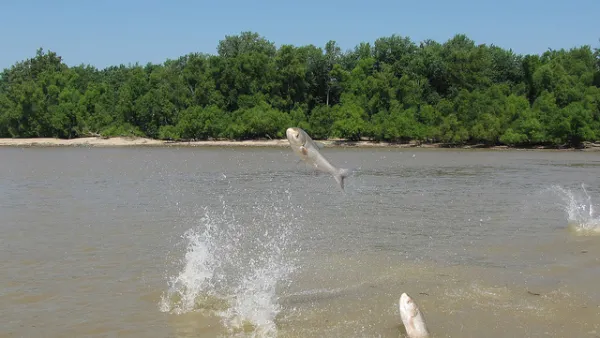
Invasive Fish Encroaching on the Great Lakes While Army Corps Study Languishes
Business interests are likely to clash as fisherman find evidence of the progress of Asian carp toward the Great Lakes. The Trump Administration delayed a study of the issue earlier this year.
94% of wetlands could lose federal protections under proposed EPA rule
The ruling would only allot federal protections to waterways that flow nearly everyday, which few wetlands do.
Scientists Studying Artificial Reefs as Flood Mitigation in Great Lakes
Artificial reefs could offer a ‘softer’ flood management and erosion solution that doesn’t disrupt the flow of sediment.

Planetizen Federal Action Tracker
A weekly monitor of how Trump’s orders and actions are impacting planners and planning in America.

California plans to bury El Niño’s downpour
If the state plays its cards right, it may be able to store a billion acre-feet of El Niño’s water in aquifers.

Desperate measures: Advocates weigh draining Lake Powell to fill Colorado River
Draining the reservoir could reduce evaporation losses by a couple hundred thousand acre-feet.

In Texas, data centers are swallowing promised parkland
Residents who moved to Taylor, Texas for a rural community now have to contend with three data centers in their backyard.

How a Chicago-sized wind farm beat the odds and powered on
The project spanned five presidential administrations and a standoff with a U.S. military base.

MTA gives itself 30 days to transform pit into basketball court
The site has been under construction since 2022; the city originally estimated it would finish the court in 2024.

FREE Course: Walkable City 1: Why Walkability?
After describing his path towards focusing on walkability as the essence of good planning, Jeff Speck marches through his five principal reasons for making more walkable places.
Reinventing Malls: Planning Alchemy—Turning Gray Fields Into Gold
The course focuses on the opportunities and imperatives that shape reinvention of mall sites.

City of Rosemead
Rutgers University, Edward J. Bloustein School of Planning and Public Policy
One Hundred Miles
Hunter College, City University of New York (CUNY)
The Architects Foundation
University of Cincinnati Online
City of Cambridge
Montrose County
The Pocatello Development Authority