Insight from Barcelona and Portland on how to plan and design an active, welcoming neighborhood square.


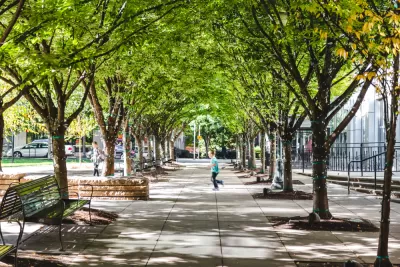
Dr. Suzanne H. Crowhurst Lennard writes with advice on how tot approach the planning of a neighborhood square, first distinguishing the neighborhood square from a city square:
Unlike a city’s main square that, from time to time, brings together representatives from all over the city for major festivals, concerts, and special events, a neighborhood square has certain unique social functions: it is frequented every day of the year by those who live in the neighborhood; it helps to strengthen social networks; and it builds community.
Those special functions require a special approach, according to Crowhurst Lennard. Those special functions are best embodied by European-style neighborhood squares. Successful examples in the Unnited States are scant, according to the article, Crowhurst Lennard cites the Conway Master Plan in NW Portland, launched over a decade ago, as a case study of a planning process focused on creating a neighborhood square.
The article proceeds to go into great depth about the proportions of the park, the heights of the surrounding buildings, and examines case studies from abroad, like Plaça del Raspali, Plaça del Diamant, and Plaça de John Lennon in Barcelona.
Read the full story: Planning a Neighborhood Square

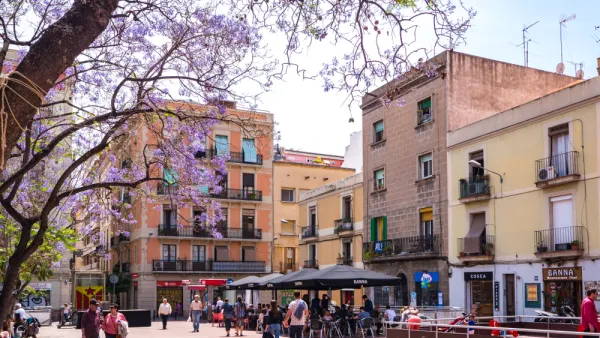
Could Los Angeles Emulate Barcelona’s ‘Superblocks’?
A proposal in the city council could bring the ‘superblock’ model to Los Angeles, opening up neighborhood streets to more biking, walking, and public amenities.

Portland Extends Pandemic Public Space Programs
PBOT will continue two highly successful COVID-era programs that allowed businesses and community groups to repurpose public spaces for pedestrian-oriented uses and engage with customers in safe, accessible outdoor settings.
Draft West Portland Town Center Plan Seeks Public Comment
Always a closely watched planning jurisdiction, Portland, Oregon is proceeding with a new vision for the future of the western end of the city.

Planetizen Federal Action Tracker
A weekly monitor of how Trump’s orders and actions are impacting planners and planning in America.

California plans to bury El Niño’s downpour
If the state plays its cards right, it may be able to store a billion acre-feet of El Niño’s water in aquifers.

Desperate measures: Advocates weigh draining Lake Powell to fill Colorado River
Draining the reservoir could reduce evaporation losses by a couple hundred thousand acre-feet.

California city breaks ground on transit connector
The project includes three mobility hubs and a pedestrian bridge.

After public outcry, Massachusetts city releases housing development tracker
Cambridge’s tracker currently shows 250 housing projects in various stages of development.

40 years after approval, Chicago breaks ground on new park
The park honors Jean Baptiste Point du Sable, the city’s first permanent non-native settler.

FREE Course: Walkable City 1: Why Walkability?
After describing his path towards focusing on walkability as the essence of good planning, Jeff Speck marches through his five principal reasons for making more walkable places.
Reinventing Malls: Planning Alchemy—Turning Gray Fields Into Gold
The course focuses on the opportunities and imperatives that shape reinvention of mall sites.

City of Rosemead
Rutgers University, Edward J. Bloustein School of Planning and Public Policy
One Hundred Miles
Hunter College, City University of New York (CUNY)
The Architects Foundation
University of Cincinnati Online
City of Cambridge
Montrose County
The Pocatello Development Authority