The federal government has no official definition of suburban, even though a majority of Americans say they live in suburban communities.


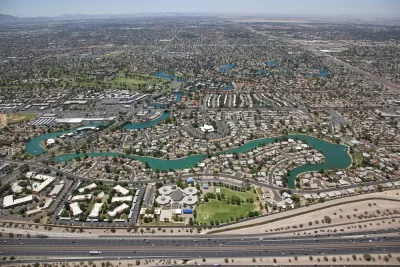
Shawn Bucholtz and Jed Kolko describe one of the facts of American life: most U.S. residents live in suburbs, but the federal government doesn't actually categorize communities as suburban. The federal government makes a distinction between urban and rural, but not for suburban.
"The lack of an official federal definition of suburban means that government data are not reported separately for suburban areas. That makes it hard to measure the reach and impact of federal programs and to produce vital statistics about Americans and their communities," according to the article.
In a small step in the right direction, the 2017 American Housing Survey (by the Office of Policy Development and Research) recently released data finding "about 52 percent of people in the United States describe their neighborhood as suburban, while about 27 percent describe their neighborhood as urban, and 21 percent as rural." That's a majority, and it echoes previous surveys undertaken by outside the government.
In addition to advocating for the federal government o gather data in a way that reflects the way Americans view their communities, the article also tries a few other angles of approach for revealing more about the statistical realities of the suburbs in the United States.
FULL STORY: America Really Is a Nation of Suburbs


How to Define the Suburban: HUD Survey Sheds New Light
A new HUD survey could help change the way the federal government defines the "suburban"—a notoriously tricky proposition.
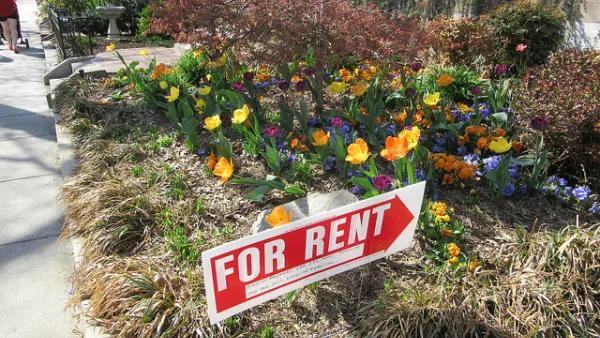
The 2010s: The Decade of the Suburban Rental
Census data reveal a growing number of suburbs are home to a majority of renters. The data challenges the "very definition of suburban living," according to this article.
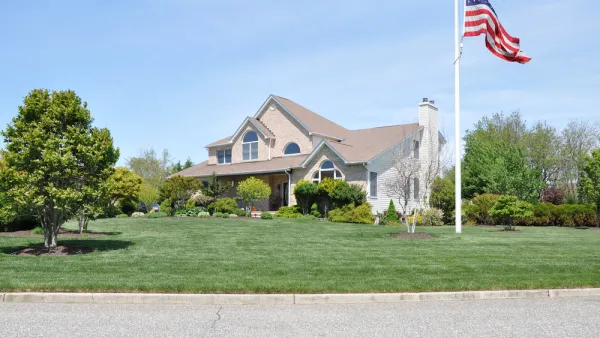
When Analyzing Suburbs, Definitions Matter
The definitions of suburban chosen by researchers tend to fall into three categories—and each has a significant impact and the results of academic inquiry.

The state-sanctioned urbicide of Austin
People don’t kill cities. Freeways do.

US to reduce Colorado River water deliveries to Mexico
A new Colorado Treaty amendment reduces Mexico’s Colorado River water allocation by 250,000 acre feet.

New Jersey’s second-largest city bans standalone data centers
Jersey City will continue to allow co-location facilities, such as those meant for research institutions that store their own data.

Amtrak not solely to blame for New Jersey commuter rail's unreliability, report finds
A new study from the Garden State Initiative found that NJ Transit’s budget grew 20% across a 4 year period, but reliability declined significantly over the same period.

EPA erases limits on planet-warming pollution from power plants
Under Monday’s plan, power plants would still have some limits on how much mercury, arsenic and other contaminants they can emit.

Phoenix announces new on-demand transit service, more frequent RAPID buses
Both new services will launch in October, and are part of Phoenix's Project Effective Access Solutions for Easing Congestion.

FREE Course: Walkable City 1: Why Walkability?
After describing his path towards focusing on walkability as the essence of good planning, Jeff Speck marches through his five principal reasons for making more walkable places.
Reinventing Malls: Planning Alchemy—Turning Gray Fields Into Gold
The course focuses on the opportunities and imperatives that shape reinvention of mall sites.

Eagle County Government
Harvard University Graduate School of Design
Nashville Planning Department
The Architects Foundation
University of Cincinnati Online
The Pocatello Development Authority
The Urban Renewal Agency of the City of Pocatello
Journal of the American Planning Association