Proposed restrictions on federal spending for transit railcars center on concerns about market competition and national security.


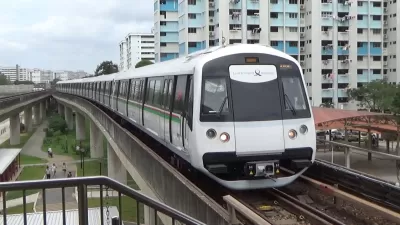
A recent Eno Center for Transportation report examines a proposed policy to restrict the use of federal funds for the purchase of transit vehicles from companies owned or subsidized by the People's Republic of China. The focus of this ban is CRRC Corporation Limited, the largest global supplier of rail transit equipment.
Proponents say the ban is necessary because CRRC is a state-owned enterprise receiving subsidies that can, as a result, underbid its competitors. They also say that CRRC will dominate the transit railcar market and move to take over the domestic freight railcar market down the road.
Opponents argue that the ban would burden American taxpayers and state and local governments, given the higher cost of transit railcars from other manufacturers. In addition, they say that domestic assembly plants for these railcars provide local jobs and encourage regional manufacturing, balancing out negative outcomes.
The report also discusses the national security concerns behind this transit railcar proposal:
Cyber threats—like spyware and malware—are a significant concern for the mass transit industry. The sector is undergoing rapid technological change as rail networks become more connected and automated, outfitted with amenities like mobile ticketing and Wi-Fi, and integrated in social networks.
The report notes that the Department of Homeland Security, as part of the National Defense Authorization Act, will be conducting a study about transit railcars manufactured by Chinese companies and national security threats.
FULL STORY: The Implications of the Federal Ban on Chinese Railcars

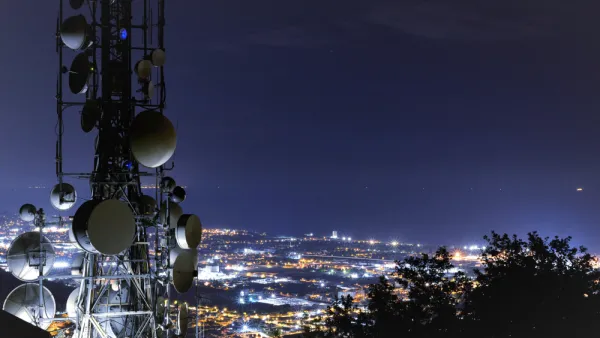
2019 Already a Big Year For 'Smart City' Evolution
While 2019 doesn’t scream smart city revolution, we are seeing signs of significant smart city evolution.
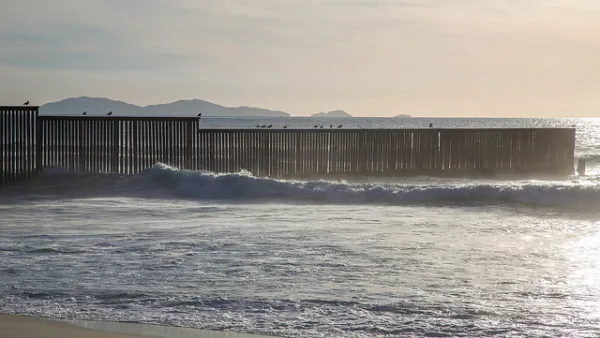
Department of Homeland Security Will Skip Environmental Review for the Border Wall
Also, the House of Representatives has approved the funding president trump wants for the wall, but the Senate is likely to balk.
China's New Train Doesn't Need Rails, Isn't a Bus
Chinese railcar-maker CRRC allowed the public a glimpse at its new "Autonomous Rail Transit" last week. The ART is more than just a bus.

Planetizen Federal Action Tracker
A weekly monitor of how Trump’s orders and actions are impacting planners and planning in America.

The state-sanctioned urbicide of Austin
People don’t kill cities. Freeways do.

US to reduce Colorado River water deliveries to Mexico
A new Colorado Treaty amendment reduces Mexico’s Colorado River water allocation by 250,000 acre feet.

5 New England states march closer to 800 megawatt wind energy project
Securing federal approval for the project may be complicated under the Trump administration, which has historically been hostile towards domestic wind power.

Baltimore to break ground on $50 million Transit Priority Project
The project will bring faster bus trips, safer streets and better bike connections to Baltimore.

Airbnb launches $250 million 'last-dollar financing' housing accelerator, makes first investment in Austin
The company will put $6.4 million towards affordable housing development in Texas’ capital.

FREE Course: Walkable City 1: Why Walkability?
After describing his path towards focusing on walkability as the essence of good planning, Jeff Speck marches through his five principal reasons for making more walkable places.
Reinventing Malls: Planning Alchemy—Turning Gray Fields Into Gold
The course focuses on the opportunities and imperatives that shape reinvention of mall sites.


Eagle County Government
Harvard University Graduate School of Design
Nashville Planning Department
The Architects Foundation
University of Cincinnati Online
The Pocatello Development Authority
The Urban Renewal Agency of the City of Pocatello
Journal of the American Planning Association