Despite the devastation wrought by Hurricane Harvey, builders and buyers alike are sustaining a market for new construction on land likely to get flooded again.


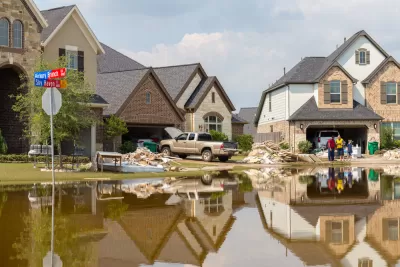
Some Houston developers and homebuyers seem to "see opportunity in devastation," according to reporting by Mike Morris and Matt Dempsey. "One in 5 new homes permitted in Houston in the year after Hurricane Harvey is in a flood plain — some on prairie developed for the first time after the storm — even as new rainfall data showed existing flood maps understate the risk posed by strengthening storms."
Many of those permits went to owners razing and elevating flooded homes, but plenty of new construction is also occurring, including "clumps of townhomes, packing more families into the flood plain."
In April, Houston's city council tightened rules on flood plain construction, extending "regulations from the 100-year flood plain to the broader 500-year flood plain and [requiring] new homes built in those areas to sit higher off the ground." But Mayor Sylvester Turner doesn't see a future in abandoning those areas outright. "Houston cannot and should not abandon a third of the city to avoid flooding any more than San Francisco should abandon numerous established neighborhoods that could be affected by earthquakes," he said.
Other civic leaders disagree, and have called for the eventual depopulation of the flood plain, "perhaps by pouring billions of dollars into buying out tens of thousands of at-risk homes." Meanwhile, some developers think the post-Harvey rebuilding spree will have a limited shelf life, arguing that heightened regulation and the cost of elevated homes will eventually deter builders from choosing flood plain sites.
FULL STORY: Even after Harvey, Houston keeps adding new homes in flood plains


Post-Harvey Homeowners Face an 'Army of Speculators'
In Houston, investors are snapping up damaged homes that will be dependent on flood insurance.
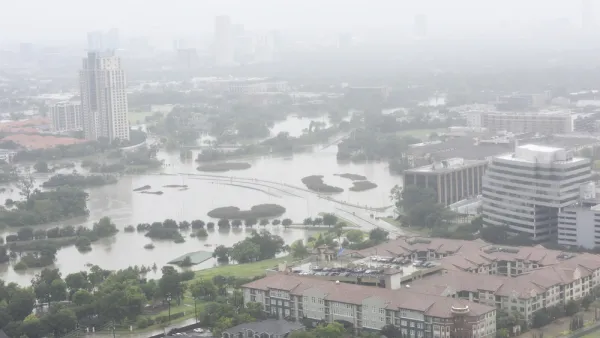
Houston Seriously Tightens Rules on Floodplain Construction
It was the city's "first major regulatory response" to Hurricane Harvey.
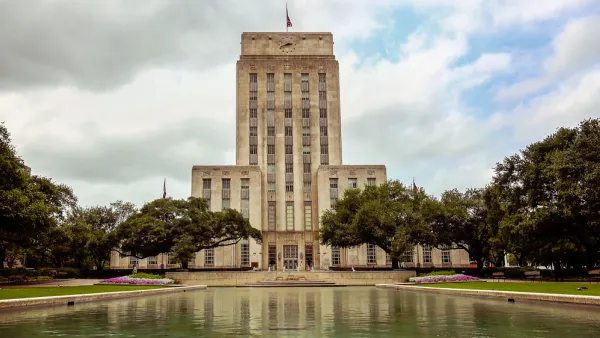
Up and Running: The Speedy Recovery of Houston's City Hall
Following Hurricane Harvey, Houston's City Hall became flooded with four feet of water, rendering the building's electrical and mechanical equipment useless. Restoring power back to City Hall quickly was crucial in aiding the recovery efforts.

The state-sanctioned urbicide of Austin
People don’t kill cities. Freeways do.

US to reduce Colorado River water deliveries to Mexico
A new Colorado Treaty amendment reduces Mexico’s Colorado River water allocation by 250,000 acre feet.

New Jersey’s second-largest city bans standalone data centers
Jersey City will continue to allow co-location facilities, such as those meant for research institutions that store their own data.

Amtrak not solely to blame for New Jersey commuter rail's unreliability, report finds
A new study from the Garden State Initiative found that NJ Transit’s budget grew 20% across a 4 year period, but reliability declined significantly over the same period.

EPA erases limits on planet-warming pollution from power plants
Under Monday’s plan, power plants would still have some limits on how much mercury, arsenic and other contaminants they can emit.

Phoenix announces new on-demand transit service, more frequent RAPID buses
Both new services will launch in October, and are part of Phoenix's Project Effective Access Solutions for Easing Congestion.

FREE Course: Walkable City 1: Why Walkability?
After describing his path towards focusing on walkability as the essence of good planning, Jeff Speck marches through his five principal reasons for making more walkable places.
Reinventing Malls: Planning Alchemy—Turning Gray Fields Into Gold
The course focuses on the opportunities and imperatives that shape reinvention of mall sites.

Eagle County Government
Harvard University Graduate School of Design
Nashville Planning Department
The Architects Foundation
University of Cincinnati Online
The Pocatello Development Authority
The Urban Renewal Agency of the City of Pocatello
Journal of the American Planning Association