As the number of excessive heat days steadily increases, cities face a range of new challenges. But they are also trying to get ahead of the problem while they still can.



Cities across the Southwest are now regularly facing sweltering heat conditions. Many areas contend with days on end of temperatures over 100 degrees, with serious consequences. “Such relentless, triple-digit temperatures — the equivalent danger of rising seas in many coastal communities — are straining power grids, buckling roads, grounding planes and endangering lives,” report Robert Moore and Katherine Davis-Young.
Moore and Davis-Young explain that urban areas are particularly vulnerable to the effects of extreme heat:
The issues are particularly pronounced in the Southwest’s largest metropolitan areas given the “heat island” effect caused by pavement and construction, which reflect heat instead of allowing it to be absorbed into the ground. As a result, temperatures are often several degrees warmer than those outside the city — and sometimes more than 20 degrees warmer at night.
Experts predict that these weather conditions will only continue to worsen. In response, cities are working to mitigate the challenges brought on by the hot weather. Los Angeles, for example, has put into place “cool roofing” requirements and has also used pavement treatments designed to lower the surface temperatures of streets. Phoenix similarly launched a Cool Roofs initiative in 2013. In addition, the city developed a tree-shade master plan, and it has a HeatReady program in the works to help the city prepare for and respond to urban heat dangers.
While cities in the heat belt work proactively to take measures, many still face challenges. “Bureaucracies are slow to innovate. Cost-sensitive developers are reluctant to take steps that could add to the price of new construction,” say Moore and Davis-Young. But one of the greatest hurdles is “community inertia,” when people get used to changing conditions and the effects on their quality of life.
FULL STORY: As temperatures keep trending up, ‘heat belt’ cities maneuver to stay livable

Unsustainable Sprawl Testing Water Supplies in the Valley of the Sun
As more and more people move to the suburbs blossoming in the Phoenix metro area, local water officials are increasingly concerned about the region's ability to keep up with demand.
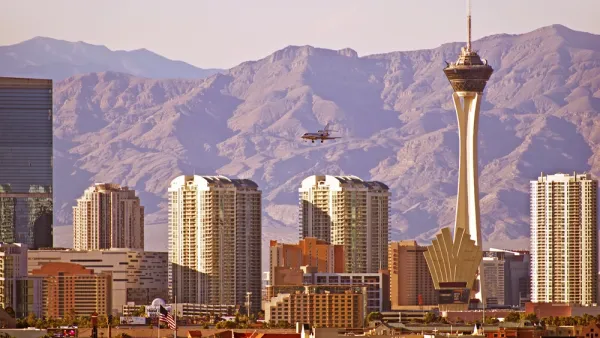
Las Vegas Faces a Challenging and Uncertain Environmental Future
Excessive heat will impact the desert city in the coming years, and major steps need to be taken now to change its course.
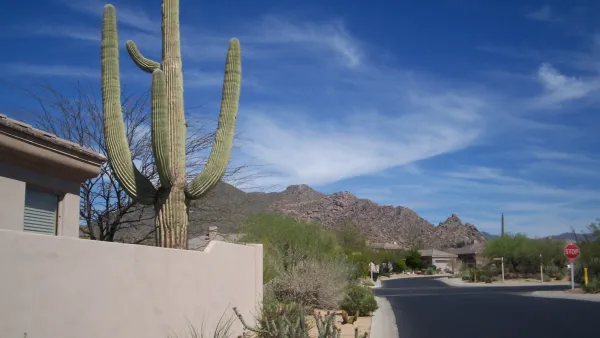
In Tucson, Sweltering Heat Threatens the Most Vulnerable
When the temperatures become dangerous in this desert city, not everyone has the option to retreat to air-conditioned spaces to wait it out.

The state-sanctioned urbicide of Austin
People don’t kill cities. Freeways do.

US to reduce Colorado River water deliveries to Mexico
A new Colorado Treaty amendment reduces Mexico’s Colorado River water allocation by 250,000 acre feet.

New Jersey’s second-largest city bans standalone data centers
Jersey City will continue to allow co-location facilities, such as those meant for research institutions that store their own data.

Amtrak not solely to blame for New Jersey commuter rail's unreliability, report finds
A new study from the Garden State Initiative found that NJ Transit’s budget grew 20% across a 4 year period, but reliability declined significantly over the same period.

EPA erases limits on planet-warming pollution from power plants
Under Monday’s plan, power plants would still have some limits on how much mercury, arsenic and other contaminants they can emit.

Phoenix announces new on-demand transit service, more frequent RAPID buses
Both new services will launch in October, and are part of Phoenix's Project Effective Access Solutions for Easing Congestion.

FREE Course: Walkable City 1: Why Walkability?
After describing his path towards focusing on walkability as the essence of good planning, Jeff Speck marches through his five principal reasons for making more walkable places.
Reinventing Malls: Planning Alchemy—Turning Gray Fields Into Gold
The course focuses on the opportunities and imperatives that shape reinvention of mall sites.

Eagle County Government
Harvard University Graduate School of Design
Nashville Planning Department
The Architects Foundation
University of Cincinnati Online
The Pocatello Development Authority
The Urban Renewal Agency of the City of Pocatello
Journal of the American Planning Association