One thing liberals and conservatives can both agree on: opposition to development projects.


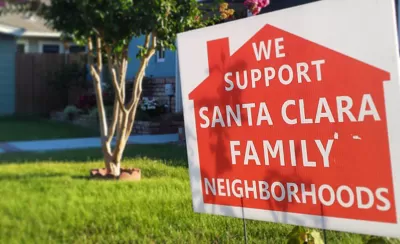
An article by Emily Badger digs deeper into the nature of development opposition—sometimes known by its rallying cry of 'Not In My Back Yard'—to reveal a perhaps hypocritical, but bipartisan coalition.
The article builds from the recent public statements by Department of Housing and Urban Development Secretary Ben Carson to support a change to federal fair housing rules: "Mr. Carson framed the idea in traditionally conservative terms: the logic of rolling back regulation. But conservative communities and Republican voters are among those who’ve pushed to tightly regulate development. Democrats have done the same. Nimbyism knows no party limits."
According to Badger, "studies show that homeowners of both parties support restricting development around them. And they do so in spite of their own ideologies — whether conservative voters might otherwise value free markets, or whether liberals value policies that aid the poor."
Badger goes on to explain many of the studies that finds evidence of development opposition among both political parties—revealing the rare political cause that transcends bipartisan politics.
FULL STORY: The Bipartisan Cry of ‘Not in My Backyard’


Development Opponents Gaining Ground in New York City
According to this article in the New York Times, the days of development interests dominating the planning process in New York City are over.
HUD Took a Strong Stance Against Local Control and Hardly Anyone Noticed
Earlier this year, the U.S. Department of Housing and Urban Development devoted an entire issue of a quarterly newsletter to land use regulations and the idea that local laws are strangling the nation's supply of affordable housing.

Progressive Planning in Ideologically Conservative Communities
Planners must work in diverse political environments including conservative jurisdictions that are skeptical of new issues and perspectives. Here are ways to reconcile conflicting goals.

Planetizen Federal Action Tracker
A weekly monitor of how Trump’s orders and actions are impacting planners and planning in America.

The state-sanctioned urbicide of Austin
People don’t kill cities. Freeways do.

US to reduce Colorado River water deliveries to Mexico
A new Colorado Treaty amendment reduces Mexico’s Colorado River water allocation by 250,000 acre feet.

Mamdani overhauls NYC's Vision Zero plan with 100 new policy goals
The overhaul aims to reduce traffic deaths and make streets safer for pedestrians, cyclists and drivers through lower speed limits, new safety infrastructure and more.

Amtrak not solely to blame for New Jersey commuter rail's unreliability, report finds
A new study from the Garden State Initiative found that NJ Transit’s budget grew 20% across a 4 year period, but reliability declined significantly over the same period.

EPA erases limits on planet-warming pollution from power plants
Under Monday’s plan, power plants would still have some limits on how much mercury, arsenic and other contaminants they can emit.

FREE Course: Walkable City 1: Why Walkability?
After describing his path towards focusing on walkability as the essence of good planning, Jeff Speck marches through his five principal reasons for making more walkable places.
Reinventing Malls: Planning Alchemy—Turning Gray Fields Into Gold
The course focuses on the opportunities and imperatives that shape reinvention of mall sites.

Eagle County Government
Harvard University Graduate School of Design
Nashville Planning Department
The Architects Foundation
University of Cincinnati Online
The Pocatello Development Authority
The Urban Renewal Agency of the City of Pocatello
Journal of the American Planning Association