Steven Vance argues that the city is missing an opportunity to zone for and create housing in and around the new Damen Green Line stop.


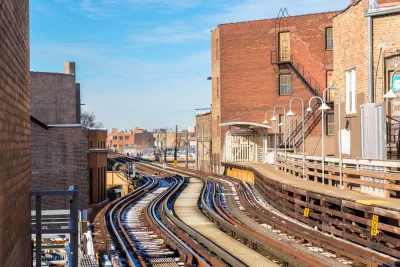
The Green Line is getting a new stop at Damen, but, while it will be great to give Bulls fans and other visitors to the United Center access to the train, more could be done to develop the land around the station. "Train stations increase value in a city, especially on the properties surrounding them. Chicago should capitalize on this phenomenon by making sure nearby land – both city-owned and not – is used in a way that captures that value," Steven Vance argues in Streetsblog.
The new station is near the city's center and will now be connected to its train network. "The property owner or the city should redevelop the land to take advantage of the fact that it will have excellent transit access, by building housing, workplaces, and/or retail," Vance contends.
The station itself could be part of that redevelopment. "Current zoning on the station property would have allowed the city to incorporate 17 apartments in the station design. While including onsite housing, offices, and retail in transit stations is a common practice around the world, it’s unusual among Chicago train stops," Vance reports.
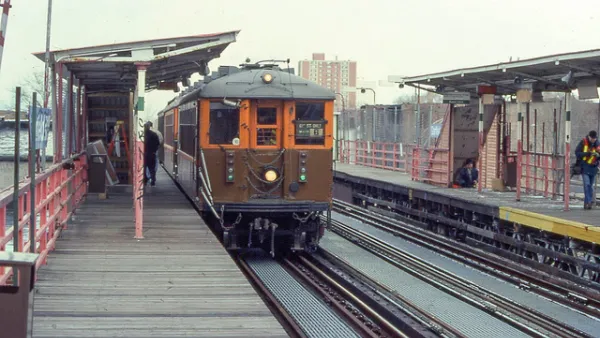
$43 Million Renovation Complete on Historic Chicago Transit Station
The CTA hopes the renovated Garfield Green Line station, originally built for the World's Columbian Exposition, will become a gateway for the Washington Park community.
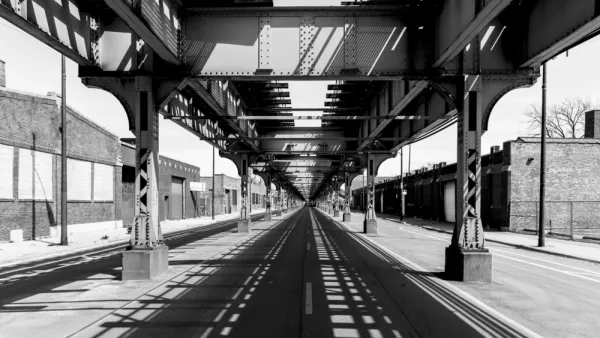
Revealed: A New Green Line Station for Chicago
An international design firm has completed the planned designs for a new transit station in the city of Chicago.
Petition Circulating for Transit to Reach Obama's Presidential Library
Hyde Park resident launches signature campaign to rebuild the CTA's demolished Green Line to connect downtown Chicago with the future site of President Obama's Library.

Planetizen Federal Action Tracker
A weekly monitor of how Trump’s orders and actions are impacting planners and planning in America.

California plans to bury El Niño’s downpour
If the state plays its cards right, it may be able to store a billion acre-feet of El Niño’s water in aquifers.

Desperate measures: Advocates weigh draining Lake Powell to fill Colorado River
Draining the reservoir could reduce evaporation losses by a couple hundred thousand acre-feet.

Post election, Texas is no longer Musk’s 'AI oasis'
Elon Musk dolled out $446 million on the 2026 midterms, the most ever spent by a non-canidate.

Chicago voters approve permanent festival grounds, penalty for vacant property owners
Currently, major summer and fall festivals take over public parks for weeks at a time, drawing criticism from nearby residents

NYC votes to cut outdoor dining red tape, speed up permitting
New York City also voted to allow the Department of Transportation to begin work on urgent projects before notifying elected officials.

FREE Course: Walkable City 1: Why Walkability?
After describing his path towards focusing on walkability as the essence of good planning, Jeff Speck marches through his five principal reasons for making more walkable places.
Reinventing Malls: Planning Alchemy—Turning Gray Fields Into Gold
The course focuses on the opportunities and imperatives that shape reinvention of mall sites.

City of Rosemead
Rutgers University, Edward J. Bloustein School of Planning and Public Policy
One Hundred Miles
Hunter College, City University of New York (CUNY)
The Architects Foundation
University of Cincinnati Online
City of Cambridge
Montrose County
The Pocatello Development Authority