The Los Angeles County Metropolitan Transportation Authority will be it the first in the country to deploy body scanners on its rail system.


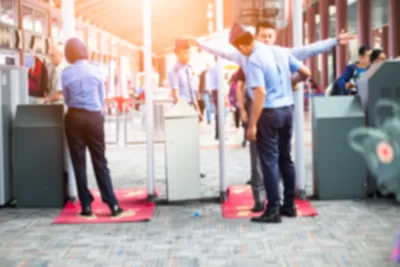
"Los Angeles County’s rail system will be the first in the United States to deploy body scanners that can detect suicide vests and other improvised explosives," reports Laura Nelson.
"Later this year, the Metropolitan Transportation Authority will deploy several portable scanners that can be moved to any of the system’s 93 subway and light-rail stations," adds Nelson. "The devices will be used in response to terrorism threats, or to scan large crowds at a station near a protest or a sporting event, officials said."
Nelson also explains the advancement in scanner technology that made the Thruvision scanner product, at the cost of $100,000, viable for Metro's budget.
Metro security chief Alex Wiggins is quoted in the article saying that transit riders must pass through security to access the system at locations where the scanners will be deployed.
Read the full story: L.A.'s rail system will be first in the U.S. to use scanners that detect explosives


Testing New 'High Tech Security Screening' for Transit Users
Union Station in Los Angeles is featuring the latest in surveillance technology, meant to deter terrorists. The concern might also be that such technology is yet another impediment in the transit user experience.
The World’s Longest Light Rail Line is in… Los Angeles?
In a city not known for its public transit, the 48.5-mile A Line is the longest of its kind on the planet.

Opinion: LA Should Reject ‘Misguided’ Car-Centric Policies
Even as the city highlights clean energy and transportation for the 2028 Olympics, Metro and Caltrans move forward with plans to expand highways.

Planetizen Federal Action Tracker
A weekly monitor of how Trump’s orders and actions are impacting planners and planning in America.

California plans to bury El Niño’s downpour
If the state plays its cards right, it may be able to store a billion acre-feet of El Niño’s water in aquifers.

Chicago breaks ground on $3 billion megadevelopment
The new neighborhood, titled Foundry Park, will one day host 3,700 residences.

California High-Speed Rail Authority CEO resigns after $600,000 scandal
Under Ian Choudri, the authority used taxpayer dollars to fund first class flights and trips to nightclubs.

Want to study the Missouri River? Soon, you may need unanimous approval from 10 states
Legislation would require 10 governors’ permission to study or build projects moving water outside the basin.

Desperate measures: Advocates weigh draining Lake Powell to fill Colorado River
Draining the reservoir could reduce evaporation losses by a couple hundred thousand acre-feet.

FREE Course: Walkable City 1: Why Walkability?
After describing his path towards focusing on walkability as the essence of good planning, Jeff Speck marches through his five principal reasons for making more walkable places.
Reinventing Malls: Planning Alchemy—Turning Gray Fields Into Gold
The course focuses on the opportunities and imperatives that shape reinvention of mall sites.

City of Rosemead
Rutgers University, Edward J. Bloustein School of Planning and Public Policy
One Hundred Miles
Hunter College, City University of New York (CUNY)
The Architects Foundation
University of Cincinnati Online
City of Cambridge
Montrose County
The Pocatello Development Authority