King County Metro enjoys the benefit of lower fuel costs from buying electric buses. Josh Cohen argues that it's time for Sound Transit to get on board.


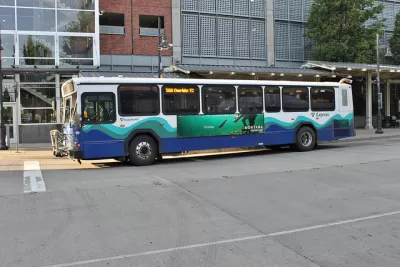
Diesel exhaust is one of the main toxic pollutants in the Seattle area, and Josh Cohen argues that it's time for Sound Transit to start the transaction to fully electric buses. "Sound Transit, which operates 307 buses throughout the region along with its light rail system, has no all-electric buses, nor any immediate plans to purchase them," Cohen writes for Crosscut.
Other transit agencies have already begun using all electric vehicles in their fleets. "King County Metro is leading the charge with 11 battery electric buses in operation on two routes in Redmond and Bellevue. The agency plans to buy 120 more by 2020, on its way to meeting a goal of being fully electric by 2040," Cohen writes. Everett and Peirce Transit have also already purchased all electric vehicles.
Besides the fumes, there's also maintenance costs to contend with. Advocates argue that over the life of an electric bus, it will save transit agencies money. While the initial cost of electric buses is still higher than that of diesel buses, the difference operational costs, fuel costs and maintenance costs can make up that difference and more over the life of a bus.
FULL STORY: As other agencies launch electric buses, Sound Transit stalls

Seattle to Introduce Electric Buses With Wireless Charging
In-ground induction chargers will reduce the cost of the charging network.
King County Metro adds 3,000 weekly bus trips, more connections to rail
King County Metro and Sound Transit are both making major adjustments to their bus networks to improve light rail connectivity across the region.
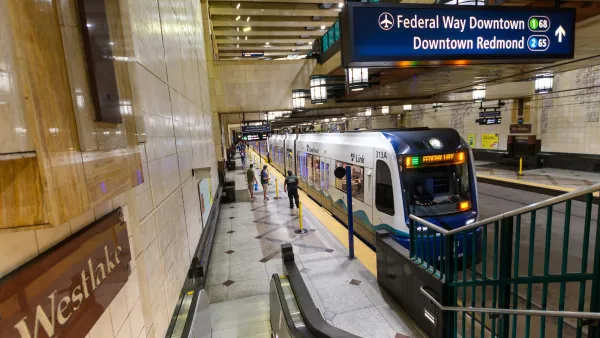
Commentary: Seattle's new transit wayfinding system is 'more confusing than clarifying'
Changes to Sound Transit signage could make it difficult to navigate the region's train system.

Planetizen Federal Action Tracker
A weekly monitor of how Trump’s orders and actions are impacting planners and planning in America.

The state-sanctioned urbicide of Austin
People don’t kill cities. Freeways do.

US to reduce Colorado River water deliveries to Mexico
A new Colorado Treaty amendment reduces Mexico’s Colorado River water allocation by 250,000 acre feet.

5 New England states march closer to 800 megawatt wind energy project
Securing federal approval for the project may be complicated under the Trump administration, which has historically been hostile towards domestic wind power.

Baltimore to break ground on $50 million Transit Priority Project
The project will bring faster bus trips, safer streets and better bike connections to Baltimore.

Airbnb launches $250 million 'last-dollar financing' housing accelerator, makes first investment in Austin
The company will put $6.4 million towards affordable housing development in Texas’ capital.

FREE Course: Walkable City 1: Why Walkability?
After describing his path towards focusing on walkability as the essence of good planning, Jeff Speck marches through his five principal reasons for making more walkable places.
Reinventing Malls: Planning Alchemy—Turning Gray Fields Into Gold
The course focuses on the opportunities and imperatives that shape reinvention of mall sites.

Eagle County Government
Harvard University Graduate School of Design
Nashville Planning Department
The Architects Foundation
University of Cincinnati Online
The Pocatello Development Authority
The Urban Renewal Agency of the City of Pocatello
Journal of the American Planning Association