A federal grant meant to reduce congestion will make bus travel from Provo to Orem free until 2021.


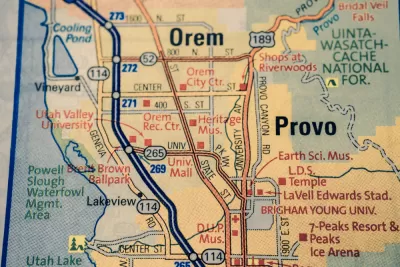
When Utah Transit Authority (UTA) starts its Provo to Orem bus service this week, it will cost nothing. The Bus Rapid Transit System operating between Provo and Orem received a Federal Highway Administration Congestion Mitigation and Air Quality Improvement grant, which will fund its operation for at least three years.
While bus-only lanes are still under construction, "[t]he new line is opening nine months ahead of its original schedule to accommodate BYU and Utah Valley University students as they begin the fall semester," Lee Davidson Reports for the Salt Lake City Tribune. The long, 60-foot buses are hybrid vehicles. "When construction is complete, bus-only lanes will cover about half of the route," Davidson writes.
In addition to its grant, the bus service will also be supported by the universities it serves. "In a deal with UTA last year, BYU and UVU had also agreed to pay $1 million each for 10 years to provide passes for all UTA bus and rail services to their students, staff and their families," Davidson reports.
FULL STORY: Riding the new Provo-Orem bus rapid transit line will be free for three years, thanks to a federal grant


Free Buses Are Filling Up in Utah
UTA's Bus Rapid Transit Line is yet to be completed but, by removing fares, the service has quintupled its ridership.
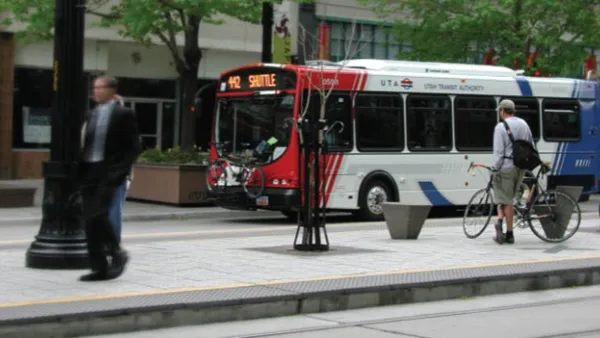
Utah Transit Officials Promote BRT
The state’s transit agency is building out new bus rapid transit lines, but has not reversed the sweeping cuts to local bus service made last year.
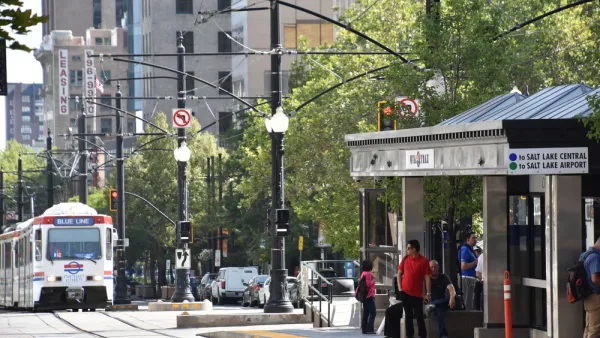
'Free Fare February' a Huge Boost for Ridership in Utah
Early returns from Utah Transit Authority's fare-free transit experiment.

Planetizen Federal Action Tracker
A weekly monitor of how Trump’s orders and actions are impacting planners and planning in America.

The state-sanctioned urbicide of Austin
People don’t kill cities. Freeways do.

US to reduce Colorado River water deliveries to Mexico
A new Colorado Treaty amendment reduces Mexico’s Colorado River water allocation by 250,000 acre feet.

5 New England states march closer to 800 megawatt wind energy project
Securing federal approval for the project may be complicated under the Trump administration, which has historically been hostile towards domestic wind power.

Baltimore to break ground on $50 million Transit Priority Project
The project will bring faster bus trips, safer streets and better bike connections to Baltimore.

Airbnb launches $250 million 'last-dollar financing' housing accelerator, makes first investment in Austin
The company will put $6.4 million towards affordable housing development in Texas’ capital.

FREE Course: Walkable City 1: Why Walkability?
After describing his path towards focusing on walkability as the essence of good planning, Jeff Speck marches through his five principal reasons for making more walkable places.
Reinventing Malls: Planning Alchemy—Turning Gray Fields Into Gold
The course focuses on the opportunities and imperatives that shape reinvention of mall sites.

Eagle County Government
Harvard University Graduate School of Design
Nashville Planning Department
The Architects Foundation
University of Cincinnati Online
The Pocatello Development Authority
The Urban Renewal Agency of the City of Pocatello
Journal of the American Planning Association