The MTA hopes to create more competition for better bus options while still "buying American."


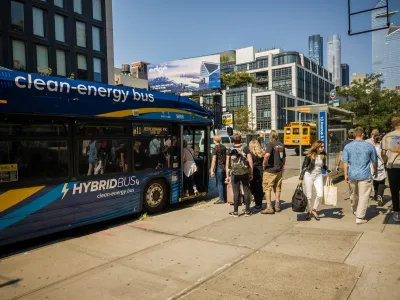
To encourage international bus manufacturers to set up shop in America, the Metropolitan Transportation Authority plans to buy a small number of their buses in “an ambitious ‘try before you buy’ strategy,” Dave Colon writes for Streetsblog NYC. According to a recent study by the Eno Center for Transportation, only two American firms manufacture buses: Gillig, which does not bid on requests for proposals from large transit agencies, and New Flyer.
“Earlier this year, the MTA explained its struggle to find reliable zero emissions buses built in the United States, and paused an order for almost 500 electric buses from New Flyer until the manufacturer could ensure the company’s buses could consistently complete a day’s service. But instead of twiddling their thumbs, agency executives are recruiting international firms in an attempt to develop a more competitive manufacturing environment while still taking advantage of federal help for bus purchases,” Colon reports.
The MTA’s pilot will emphasize electric buses. The small number of buses the MTA buys from overseas will not trigger any federal subsidy.
Read the full story: How The MTA Plans To Build Up America’s Bus Manufacturing Base

Nearly billion-dollar budget deficit looms over MTA
Metropolitan Transit Authority officials say the cost of healthcare, wages, electricity and fuel is outpacing revenue from tolls, taxes and fares.
MTA sends Dem leaders a wish list to mend Trump’s damages
Requests include exempting new train and bus components from tariffs and increasing transit security funding.
NYC bus network redesign speeds up Queens buses
Rush routes have seen a 4.6% speed increase after the redesign.

Planetizen Federal Action Tracker
A weekly monitor of how Trump’s orders and actions are impacting planners and planning in America.

Washington state to charge fee to drivers with fuel-efficient cars
Revenue from the fee will go towards supporting the state’s highways.

Trump to blast ‘hydrocarbon highway’ through ‘world’s longest art gallery’
Environmental and historic preservation groups are suing to stop the project.

The MTA wants to entice international bus manufacturers to set up shop in America
The MTA hopes to create more competition for better bus options while still "buying American."

Environmentalists sue to halt NYC waterfront development
Activists claim that the planned development sits in a floodplain.

NYT examines the plan to help Chicago’s struggling neighborhoods
The Times found that Chicago’s tax increment financing program "largely" failed to help West Side neighborhoods.

FREE Course: Walkable City 1: Why Walkability?
After describing his path towards focusing on walkability as the essence of good planning, Jeff Speck marches through his five principal reasons for making more walkable places.
Reinventing Malls: Planning Alchemy—Turning Gray Fields Into Gold
The course focuses on the opportunities and imperatives that shape reinvention of mall sites.

City of Charlotte
City of Rosemead
Rutgers University, Edward J. Bloustein School of Planning and Public Policy
University of Michigan School for Environment and Sustainability (SEAS)
Hunter College, City University of New York (CUNY)
The Architects Foundation
University District Partnership