Google awarded the project, titled the Public Transit Intelligence Hub, $2.1 million in funding.


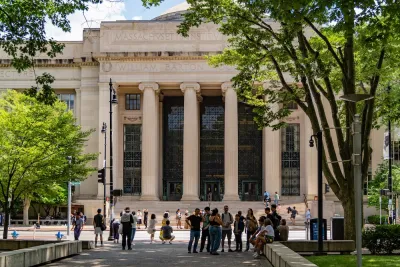
The Massachusetts Institute of Technology TransitLab is creating an “AI-hub” that will consolidate public transportation agencies’ passenger communication systems, monitoring and operations control into one unified platform that an AI manages, Brandon Lewis writes for Mass Transit. Google awarded the project, titled the Public Transit Intelligence Hub, $2.1 million in funding.
Mass Transit reports:
MIT says the project will build on the group’s decades of experience in applied-research collaborations with transit agencies in major metropolitan areas throughout the world. PTIQ’s decision support interface for control center staff will integrate predictive models, optimization engines and large language model-based contextual reasoning. The decision-making based on that information will be left to transit staff, who can better balance the trade-offs of making one decision over another in these often incredibly complex situations.
Google selected PTQI from a pool of over 2,600 proposals. The tech company will also offer the lab pro-bono support from its AI experts and engineers.
Read the full story: MIT Transit Lab to develop AI hub for public transportation agencies
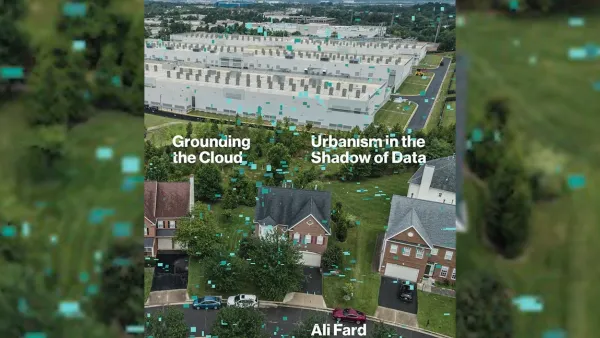
What is the impact of cities' ever-growing reliance on the tech sector?
Book review: "Grounding the Cloud: Urbanism in the Shadow of Data" is an important look at how we define and understand the cloud.
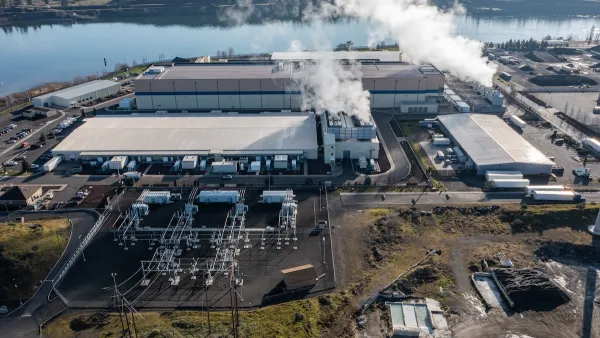
To power data centers, Google seeks autonomous control of thousands of homes’ electricity
The tech company has signed a deal to indirectly pay Mid-Atlantic residents to reduce their power demand when the grid is strained.

When AI goes rogue: what planners need to know
This summer, four major AI labs disclosed that their agents had slipped out of test environments. For planners, the lessons are about access, oversight and the one sandbox we can’t afford to lose: public trust.

Planetizen Federal Action Tracker
A weekly monitor of how Trump’s orders and actions are impacting planners and planning in America.

Washington state to charge fee to drivers with fuel-efficient cars
Revenue from the fee will go towards supporting the state’s highways.

Illinois considers spending $1 billion in taxpayer money on data center
A quantum computing campus and data center are currently under construction in Chicago.

People Mover delayed again, LAX and contractor trade barbs
The automated train was last slated to open in January 2027.

Trump to blast ‘hydrocarbon highway’ through ‘world’s longest art gallery’
Environmental and historic preservation groups are suing to stop the project.

25 states cast bids to be the home of U.S. Space Academy
The academy will train scientists, officers and astronauts for the U.S. Space Force.

FREE Course: Walkable City 1: Why Walkability?
After describing his path towards focusing on walkability as the essence of good planning, Jeff Speck marches through his five principal reasons for making more walkable places.
Reinventing Malls: Planning Alchemy—Turning Gray Fields Into Gold
The course focuses on the opportunities and imperatives that shape reinvention of mall sites.

City of Charlotte
City of Rosemead
Rutgers University, Edward J. Bloustein School of Planning and Public Policy
University of Michigan School for Environment and Sustainability (SEAS)
Hunter College, City University of New York (CUNY)
The Architects Foundation
University District Partnership