The state’s latest transportation plan set aside about half of what transportation leaders say is needed to keep roads in good condition.


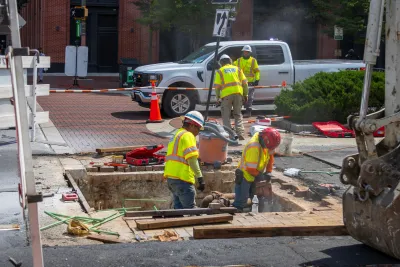
Under current funding projections, Maryland’s 2025 Annual Attainment Report estimates that 13% of the state’s pavement will be in poor condition by 2028, a jump from the 10% of pavement in poor condition in 2024. The state’s latest transportation plan sets aside $193.8 million for pavement resurfacing and rehabilitation in fiscal 2027 – less than half the roughly $400 million a year transportation industry leaders say is needed to keep Maryland’s roads in good repair, Tessa Bentulan writes for Fox Baltimore.
“A Spotlight on Maryland review also found the amount the state planned to spend on that work has fluctuated sharply. Across six consecutive transportation plans, Maryland’s projected pavement funding for fiscal 2027 has ranged from $99.4 million to $236.9 million – a swing of more than $137 million for the same year,” Fox Baltimore reports.
The report found that as pavement conditions deteriorate, restoring roads will likely cost more: every $1 spent on pavement preservation while pavement is in fair or better condition can result in $6 to $12 in savings on rehabilitation or reconstruction.
Read the full story: Maryland’s roads are deteriorating. Repair funding is not keeping up.
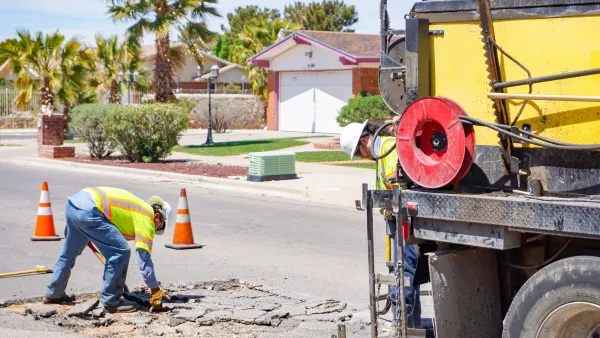
Report: 16% of roads that received federal funds remain in poor condition
Despite a glut of federal funding, most state DOTs used the money for expanding highways instead of maintaining existing roads.
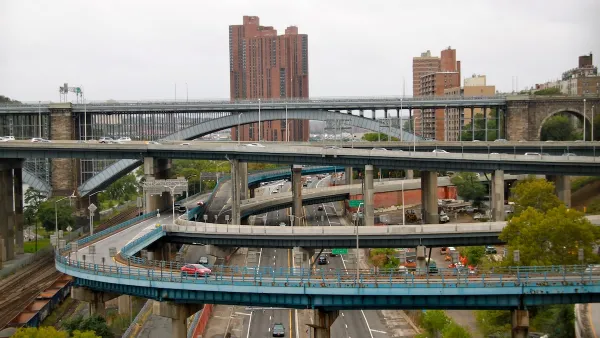
New York Scraps Cross Bronx Highway Expansion
In the wake of community opposition, the state DOT says it no longer plans to add a “traffic diversion” that would have added an elevated roadway next to the CBX.
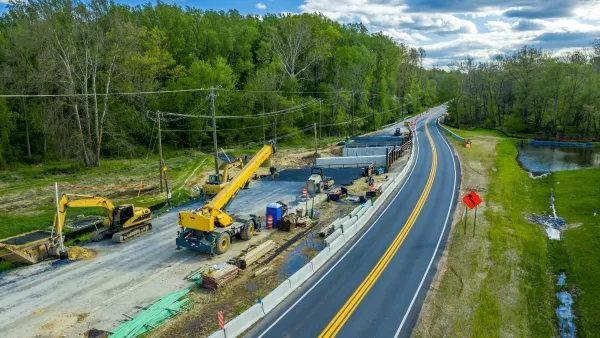
Survey: Americans Don’t Support Road Expansions
U.S. transportation policy, which still heavily centers automobile infrastructure, is increasingly out of step with the majority opinion, according to a new survey from Transportation for America.

Planetizen Federal Action Tracker
A weekly monitor of how Trump’s orders and actions are impacting planners and planning in America.

California plans to bury El Niño’s downpour
If the state plays its cards right, it may be able to store a billion acre-feet of El Niño’s water in aquifers.

Desperate measures: Advocates weigh draining Lake Powell to fill Colorado River
Draining the reservoir could reduce evaporation losses by a couple hundred thousand acre-feet.

Housing is the top priority of Seattle’s sole new councilmember
Jenks campaigned on building 1,000 new units of affordable housing.

New tax cuts may slash $1.5 billion in funding for Miami transit, public parks
Amendment 3 will save Miami-Dade homeowners $2,700 in 2028.

Arizona, Wisconsin, Pennsylvania hope to finally advance climate goals post-midterms
The three states have spent years under Republican or divided control.

FREE Course: Walkable City 1: Why Walkability?
After describing his path towards focusing on walkability as the essence of good planning, Jeff Speck marches through his five principal reasons for making more walkable places.
Reinventing Malls: Planning Alchemy—Turning Gray Fields Into Gold
The course focuses on the opportunities and imperatives that shape reinvention of mall sites.

City of Rosemead
Rutgers University, Edward J. Bloustein School of Planning and Public Policy
One Hundred Miles
University of Michigan School for Environment and Sustainability (SEAS)
Hunter College, City University of New York (CUNY)
The Architects Foundation
City of Cambridge
Montrose County
The Pocatello Development Authority