Despite a glut of federal funding, most state DOTs used the money for expanding highways instead of maintaining existing roads.


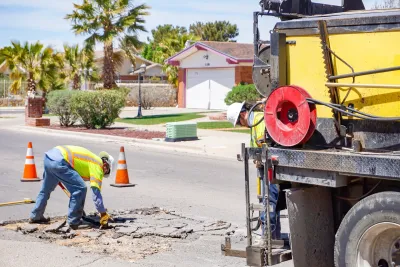
In 2024, Congress allocated $56.8 billion to state transportation departments — well above the $43.2 billion figure that experts estimate it would take to take all of the nation's roads from "poor" to "acceptable" condition, reports Kea Wilson in Streetsblog USA.
Yet 16.34% of U.S. streets that were eligible for federal funding were still in poor condition in 2024, according to Transportation for America. This is largely because state DOTs are spending most of that money on highway expansions instead of repair and maintenance work. And "Because increasingly lax reporting standards conceal broken roads from public view, and DOTs routinely mis-categorize expensive expansion projects as simple 'maintenance' or lump them into a mysterious 'other' category, Transportation for America suspects the national highway network is actually even more drastically overbuilt than it appears on paper."
According to Mehr Mukhtar of T4A, "We’re still seeing inconsistencies and a lack of transparency in reporting standards. And all of this just leads us to the conclusion that until we see a meaningful shift in our priorities, and in how we’re tying our spending to our outcomes, the backlog of roads in poor conditions is going to persist — and likely it’s going to worsen."
FULL STORY: Congress Gave States Enough Money to Fix Every Road in America; States Set It On Fire Instead

Follow Planetizen’s analysis of surface transportation reauthorization
Follow along as we explore the upcoming surface transportation reauthorization bill and its potential impacts on US transportation infrastructure in the coming years.
Sacramento Faces a $5 Billion Backlog of Transportation Projects
Between 2015 and 2024, 22,538 injury or fatal crashes occurred on Sacramento streets.
Portland Raises Parking Fees to Pay for Street Maintenance
The city is struggling to bridge a massive budget gap at the Bureau of Transportation, which largely depleted its reserves during the Civd-19 pandemic.

Planetizen Federal Action Tracker
A weekly monitor of how Trump’s orders and actions are impacting planners and planning in America.

The state-sanctioned urbicide of Austin
People don’t kill cities. Freeways do.

US to reduce Colorado River water deliveries to Mexico
A new Colorado Treaty amendment reduces Mexico’s Colorado River water allocation by 250,000 acre feet.

5 New England states march closer to 800 megawatt wind energy project
Securing federal approval for the project may be complicated under the Trump administration, which has historically been hostile towards domestic wind power.

Baltimore to break ground on $50 million Transit Priority Project
The project will bring faster bus trips, safer streets and better bike connections to Baltimore.

Airbnb launches $250 million 'last-dollar financing' housing accelerator, makes first investment in Austin
The company will put $6.4 million towards affordable housing development in Texas’ capital.

FREE Course: Walkable City 1: Why Walkability?
After describing his path towards focusing on walkability as the essence of good planning, Jeff Speck marches through his five principal reasons for making more walkable places.
Reinventing Malls: Planning Alchemy—Turning Gray Fields Into Gold
The course focuses on the opportunities and imperatives that shape reinvention of mall sites.

Eagle County Government
Harvard University Graduate School of Design
Nashville Planning Department
The Architects Foundation
University of Cincinnati Online
The Pocatello Development Authority
The Urban Renewal Agency of the City of Pocatello
Journal of the American Planning Association