If moveable bridges are raised during heatwaves, the metal can expand and jam the bridge's mechanisms, preventing it from lowering.


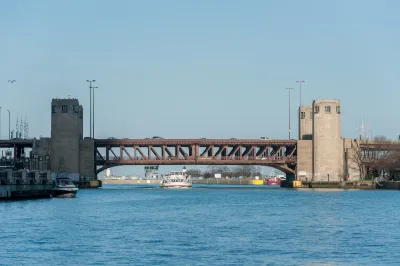
Severe heat in Chicago led to two moveable bridges getting stuck in their raised positions for hours on Sept. 2. The DuSable Lake Shore Drive bridge was stuck for more than four hours, and the Torrence Avenue Bridge was unmoveable for over an hour, causing disruptions and traffic jams for city residents.
Wednesday was Chicago’s second day under a heat advisory, writes Amy Yee for the Chicago Sun-Times. When lowered, moveable bridges are protected from extreme heat due to the river cooling the air. However, if the bridges are raised, the heat can cause the metal to expand and jam the bridge's mechanisms, preventing it from lowering.
“As a city with so many older movable bridges and extreme hot and cold weather, Chicago is vulnerable to stuck bridges,” the Sun-Times reports. “Chicago also has the most moveable bridges of any city in the U.S., making it potentially more vulnerable to heat-related closures.”
Read the full story: Here's how extreme heat affects Chicago's moveable bridges

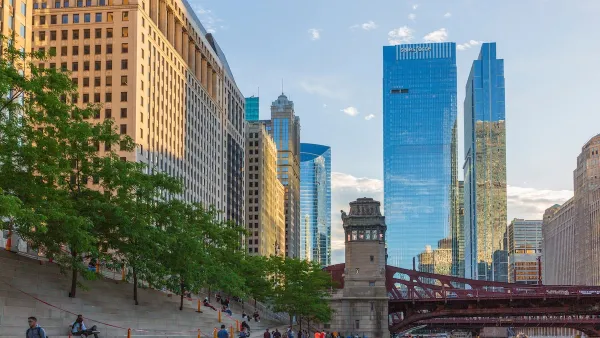
Chicago Avenue bridge construction delays enrages city leaders
The bridge has been closed since 2025. The city originally aimed to re-open it in December, and now expects to finish construction in 2027.

40 years after approval, Chicago breaks ground on new park
The park honors Jean Baptiste Point du Sable, the city’s first permanent non-native settler.
Feds to more closely scrutinize proposed Amtrak facility’s environmental impact
The Federal Railroad Administration had initially said the facility qualified for a less extensive environmental review.

Planetizen Federal Action Tracker
A weekly monitor of how Trump’s orders and actions are impacting planners and planning in America.

California plans to bury El Niño’s downpour
If the state plays its cards right, it may be able to store a billion acre-feet of El Niño’s water in aquifers.

Desperate measures: Advocates weigh draining Lake Powell to fill Colorado River
Draining the reservoir could reduce evaporation losses by a couple hundred thousand acre-feet.

California city breaks ground on transit connector
The project includes three mobility hubs and a pedestrian bridge.

After public outcry, Massachusetts city releases housing development tracker
Cambridge’s tracker currently shows 250 housing projects in various stages of development.

40 years after approval, Chicago breaks ground on new park
The park honors Jean Baptiste Point du Sable, the city’s first permanent non-native settler.

FREE Course: Walkable City 1: Why Walkability?
After describing his path towards focusing on walkability as the essence of good planning, Jeff Speck marches through his five principal reasons for making more walkable places.
Reinventing Malls: Planning Alchemy—Turning Gray Fields Into Gold
The course focuses on the opportunities and imperatives that shape reinvention of mall sites.

City of Rosemead
Rutgers University, Edward J. Bloustein School of Planning and Public Policy
One Hundred Miles
Hunter College, City University of New York (CUNY)
The Architects Foundation
University of Cincinnati Online
City of Cambridge
Montrose County
The Pocatello Development Authority