The East Coast is in need of renewable energy, but wind farm developers face permit revocations and stop-work orders from the Trump administration.


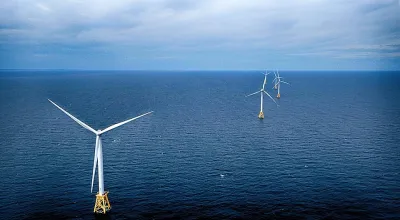
Large scale, renewable power is difficult to come by on the East Coast, which must contend with aging power lines and a dense landscape. As the region's electricity prices continue to rise, offshore wind offered a unique solution to its energy and emissions woes — but the Trump administration’s hostility has caused these initiatives to disappear.
“The administration has subjected offshore wind projects to questionable Pentagon reviews, permit revocations, and stop-work orders,” Austin Corona writes for Grist. “The administration’s most consequential move may have been its decision to pay developers to surrender their rights to develop in federally managed waters. By mid-August, it had committed to roughly $4 billion in payouts, wiping an estimated 21 gigawatts of potential wind power capacity off U.S. coasts, or enough energy to power over 15 million average-sized U.S. homes.”
These offshore wind energy projects are disappearing at a time when the three major interstate grids in the Northeast and mid-Atlantic are facing growing demand from data centers and new manufacturing. At least nine companies are still holding onto their offshore wind development rights, with some appearing unlikely to strike a deal, Grist reports.
Read the full story: Offshore wind power projects are flailing, just when the East Coast needs them most

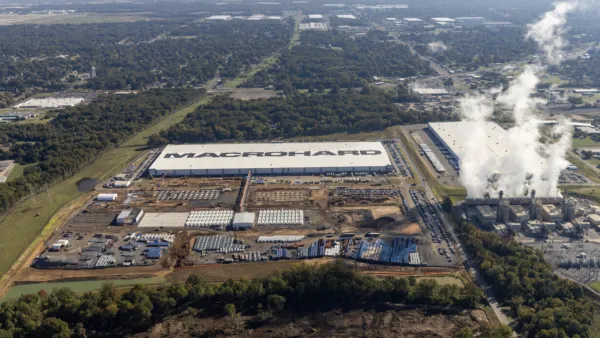
Trump does not have free reign to dismiss Clean Air Act violations, judge rules
The administration attempted to dismiss the NAACP’s lawsuit against SpaceXAI, which claims the company’s smokestacks violate the Clean Air Act.
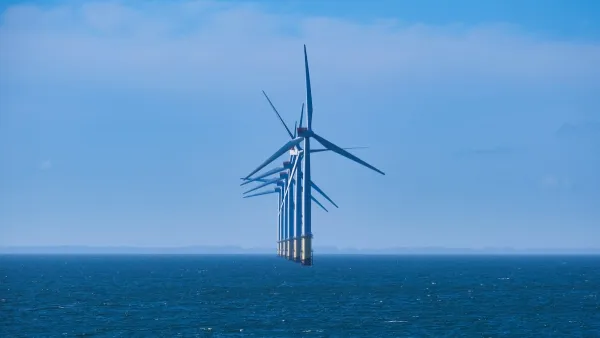
Battered from federal attacks, Louisiana's offshore wind industry refuses to give up
State Representative Joe Orgeron expressed hope that the state could revitalize its wind industry once President Trump leaves office.

Trump is considering data centers on 6 states' public land — some state officials say they had no idea
If the administration approves the proposed projects, data center and data center-related developments will cover 17,600 acres of public land.

Planetizen Federal Action Tracker
A weekly monitor of how Trump’s orders and actions are impacting planners and planning in America.

Data reveals that NYC’s bet on congestion pricing has paid off
After almost two years of the program, reports show positive impacts on traffic and air quality and no disruptions to parking.

Denver is solving homelessness. Why aren't the rest of us?
Since 2023, Denver's street homeless population has decreased by 64%, proving that effective tools exist to support those in need of housing.

SF weighs putting data center inside abandoned mall
An unnamed technology company may buy the entire building, and convert one-third of it into what development consultants are calling a “regenerative urban energy center.”

Michigan needs billions to save its water infrastructure. The state won't fund it
Michigan needs to invest $2.8 billion per year over the next 20 years to fix its water infrastructure. The FY 2027 budget allocates only $27.9 million.

Trump asks Supreme Court to allow border wall through Texas national park
Judge Kathleen Cardone previously blocked the Big Bend border wall project, and Texas’ Land Commissioner has spoken out against it as well.

FREE Course: Walkable City 1: Why Walkability?
After describing his path towards focusing on walkability as the essence of good planning, Jeff Speck marches through his five principal reasons for making more walkable places.
Reinventing Malls: Planning Alchemy—Turning Gray Fields Into Gold
The course focuses on the opportunities and imperatives that shape reinvention of mall sites.

City of Rosemead
Rutgers University, Edward J. Bloustein School of Planning and Public Policy
One Hundred Miles
The Architects Foundation
University of Cincinnati Online
Montrose County
Northern Illinois Transit Authority (NITA)
The Pocatello Development Authority