How often do residents visit your downtown?


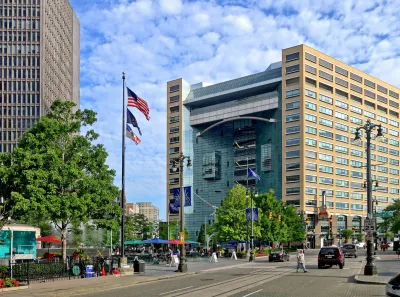
A new study from Gensler Research Institute reveals how much people actually visit their local downtowns, reports Ryan Kushner in Smart Cities Dive. "In North America, 47% of downtown visitors fall in the reluctant category, 23% as errand runners, 17% enthusiasts and 13% only visit for special events."
The survey, designed to test the "stickiness" of various downtowns, shows that "People aren’t staying away because they dislike their downtowns. They’re staying away because the pull isn’t strong enough, the friction is too high, or both," according to Sofia Song, Global Cities Research Leader at Gensler’s Research Institute.
Song adds, "Visitors who perceive their downtown as vibrant look for five key attributes, according to the report: After-hours activities, attractiveness, activities and events, good lighting and a sense of personal safety." The report notes, "The strategic goal should not be to simply increase total visits, but to move residents up the engagement ladder, converting Reluctant Visitors and Errand Runners into Enthusiasts."
FULL STORY: These 10 US cities have the ‘stickiest’ downtowns

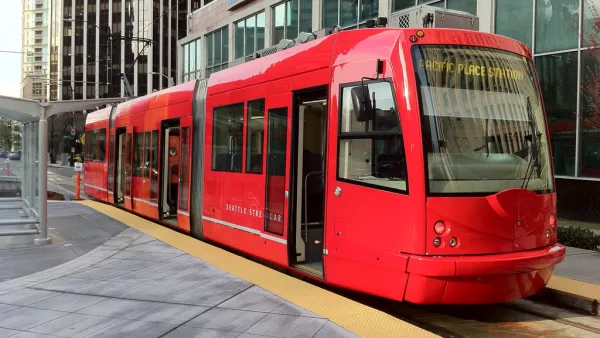
Op-Ed: Streetcars Should Actually Serve Locals
While they're currently in vogue, streetcars are only worthwhile if they can be a viable option for local residents. Unfortunately, this is rarely how the systems are designed.
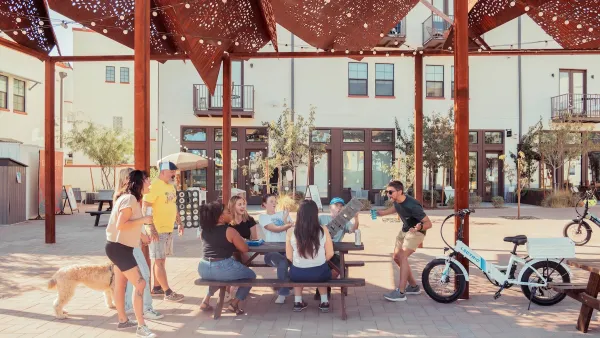
After Culdesac's success in Tempe, Mesa approves new 1,000-unit 'car-light' development
Culdesac Mesa will take the same transit-oriented approach with a compact, walkable design and access to transit and shared mobility options.
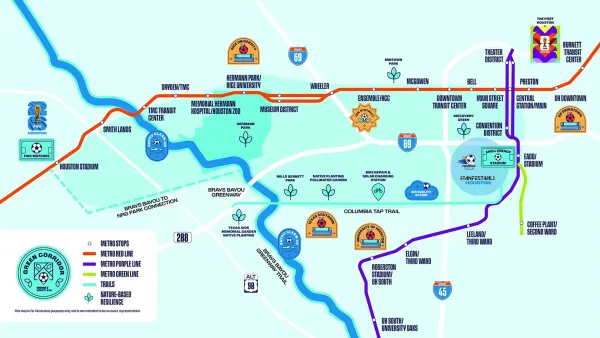
Houston improved walkability ahead of the World Cup. Will it last?
Some mobility advocates say the city's 'Green Corridor' amounts to 'lipstick on a pig' rather than a true commitment to better transit and walking infrastructure.

The state-sanctioned urbicide of Austin
People don’t kill cities. Freeways do.

US to reduce Colorado River water deliveries to Mexico
A new Colorado Treaty amendment reduces Mexico’s Colorado River water allocation by 250,000 acre feet.

New Jersey’s second-largest city bans standalone data centers
Jersey City will continue to allow co-location facilities, such as those meant for research institutions that store their own data.

Amtrak not solely to blame for New Jersey commuter rail's unreliability, report finds
A new study from the Garden State Initiative found that NJ Transit’s budget grew 20% across a 4 year period, but reliability declined significantly over the same period.

EPA erases limits on planet-warming pollution from power plants
Under Monday’s plan, power plants would still have some limits on how much mercury, arsenic and other contaminants they can emit.

Phoenix announces new on-demand transit service, more frequent RAPID buses
Both new services will launch in October, and are part of Phoenix's Project Effective Access Solutions for Easing Congestion.

FREE Course: Walkable City 1: Why Walkability?
After describing his path towards focusing on walkability as the essence of good planning, Jeff Speck marches through his five principal reasons for making more walkable places.
Reinventing Malls: Planning Alchemy—Turning Gray Fields Into Gold
The course focuses on the opportunities and imperatives that shape reinvention of mall sites.

Eagle County Government
Harvard University Graduate School of Design
Nashville Planning Department
The Architects Foundation
University of Cincinnati Online
The Pocatello Development Authority
The Urban Renewal Agency of the City of Pocatello
Journal of the American Planning Association