Even if Congress approves a proposal to temporarily lift the federal gas tax, a variety of other factors and transportation and processing delays would mean American consumers would see little difference at the pump.


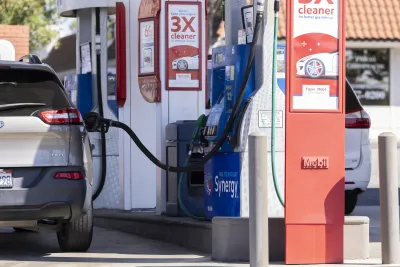
Experts say pausing the federal gas tax would do little to save U.S. consumers money this summer, reports Molly Taft in Mother Jones.
The federal gas tax, which adds 18 cents per gallon, would require an act of Congress to suspend. A pause on it would be unlikely to significantly lower prices at the pump, Taft notes. However, it would have a dramatic effect on federal revenue for the Highway Trust Fund, which already faces insolvency. "Cutting off revenue, even temporarily, would only exacerbate the problem. There’s also a possibility that a temporary break could be extended indefinitely, given the political risks of reinstating it, particularly as midterms near."
According to Taft, "Even if the Strait of Hormuz immediately opens up tomorrow, the effects of the new supply could take a while to reach consumers—likely a month or more as tankers travel to customers and production facilities start back up again."
Read the full story: Why a Federal Gas Tax Holiday Is a Terrible Idea

U.S. Gasoline Consumption Up, Oil Production Down
Gas prices are on the rise, though they will remain well below 2014 levels through this year. U.S. oil production dropped by 600,000 barrels from last year, while gas consumption is on track to break the 2007 record thanks to cheap gas and more SUVs.

U.S.-Iran war may have ‘devastating’ impact on cost to warm homes
Vermont and Maine residents may see a 76% increase in the cost of warming their homes this winter.
Why does Maryland's gas tax change every year?
The state's annual gas tax update may still not be enough to keep up with changes in the transportation sector and rising project costs.

Planetizen Federal Action Tracker
A weekly monitor of how Trump’s orders and actions are impacting planners and planning in America.

California plans to bury El Niño’s downpour
If the state plays its cards right, it may be able to store a billion acre-feet of El Niño’s water in aquifers.

Desperate measures: Advocates weigh draining Lake Powell to fill Colorado River
Draining the reservoir could reduce evaporation losses by a couple hundred thousand acre-feet.

California city breaks ground on transit connector
The project includes three mobility hubs and a pedestrian bridge.

After public outcry, Massachusetts city releases housing development tracker
Cambridge’s tracker currently shows 250 housing projects in various stages of development.

40 years after approval, Chicago breaks ground on new park
The park honors Jean Baptiste Point du Sable, the city’s first permanent non-native settler.

FREE Course: Walkable City 1: Why Walkability?
After describing his path towards focusing on walkability as the essence of good planning, Jeff Speck marches through his five principal reasons for making more walkable places.
Reinventing Malls: Planning Alchemy—Turning Gray Fields Into Gold
The course focuses on the opportunities and imperatives that shape reinvention of mall sites.

City of Rosemead
Rutgers University, Edward J. Bloustein School of Planning and Public Policy
One Hundred Miles
Hunter College, City University of New York (CUNY)
The Architects Foundation
University of Cincinnati Online
City of Cambridge
Montrose County
The Pocatello Development Authority