Passenger rail agencies will be required to acquire roughly $400 million in excess liability insurance.


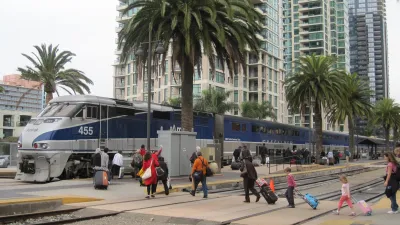
A federal insurance requirement set to go into effect soon could derail passenger trains in the United States, writes Kea Wilson in Streetsblog USA.
According to Wilson, "The commuter railroad industry is bracing for the impending publication of a new federal 'passenger rail liability cap,' which will start a 30-day doomsday clock for every rail operator in America to either secure millions of dollars in additional insurance, or immediately cease operations."
The impending crisis dates back to 1997, when the Amtrak Reform and Accountability Act mandated $200 million in excess liability insurance for railroads. This cap continued to increase despite a lack of increase in train crashes, reaching $294 million in 2015. "Worse, federal law requires Congress to adjust the cap every five years; in 2021, the legislative body raised it to $323 million. The next adjustment is due any day now, and advocates believe the cap will rise to around $400 million — an increase of nearly 24 percent."
This stands in contrast to other modes of travel. For example, the requirement for freight truck companies has been set at $750,000 since 1980 — and hasn't changed. "This is particularly notable given the surging number and associated costs of truck crashes, which often leave victims and survivors destitute, especially when a big rig causes a grisly, multi-car pile-up with damages comparable to train crashes."
Moreover, because the coverage required is so massive, no single U.S. insurance company is able to offer a single, comprehensive policy to train operators, forcing railroads to use foreign insurance markets, sending a significant portion of railroad budgets overseas.
Jim Mathews, President and CEO of the National Rail Passengers Association, says Congress could fix the problem by requiring the Federal Railroad Administration to use actuarial science to estimate the cost of rail disasters and create tiered minimums to accommodate multiple scales of operators, or authorizing state transportation departments to create their own regional insurer pools.
FULL STORY: This Doomsday Law Could Stop Trains Across America In A Matter of Weeks

Amtrak unveils proposal to restructure, split into 3 divisions
Agency officials say the new structure would offer more transparency and accountability.
California rail builders sign MOU advancing statewide high-speed network
The agreement aims to create an interconnected high-speed rail network and bring down the cost of construction.
Why are America's trains so slow?
A brief historical inquiry.

Planetizen Federal Action Tracker
A weekly monitor of how Trump’s orders and actions are impacting planners and planning in America.

The state-sanctioned urbicide of Austin
People don’t kill cities. Freeways do.

US to reduce Colorado River water deliveries to Mexico
A new Colorado Treaty amendment reduces Mexico’s Colorado River water allocation by 250,000 acre feet.

5 New England states march closer to 800 megawatt wind energy project
Securing federal approval for the project may be complicated under the Trump administration, which has historically been hostile towards domestic wind power.

Baltimore to break ground on $50 million Transit Priority Project
The project will bring faster bus trips, safer streets and better bike connections to Baltimore.

Airbnb launches $250 million 'last-dollar financing' housing accelerator, makes first investment in Austin
The company will put $6.4 million towards affordable housing development in Texas’ capital.

FREE Course: Walkable City 1: Why Walkability?
After describing his path towards focusing on walkability as the essence of good planning, Jeff Speck marches through his five principal reasons for making more walkable places.
Reinventing Malls: Planning Alchemy—Turning Gray Fields Into Gold
The course focuses on the opportunities and imperatives that shape reinvention of mall sites.

Eagle County Government
Harvard University Graduate School of Design
Nashville Planning Department
The Architects Foundation
University of Cincinnati Online
The Pocatello Development Authority
The Urban Renewal Agency of the City of Pocatello
Journal of the American Planning Association