Penn Station will have to close for several hours on match days during the World Cup.


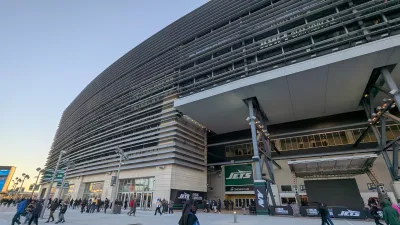
NJ Transit CEO Kris Kolluri assured a state senate committee that the agency will not charge regular commuters higher prices during the World Cup, when transit tickets to MetLife Stadium will cost more for people attending games.
According to reporting by Colleen Wilson and Katie Sobko for NorthJersey.com, "This was a significant point of emphasis during the state Senate budget hearing as Kolluri was pressed by state senators about how the agency will be accommodating commuters, after NorthJersey.com reported this week that New York Penn Station would close to NJ Transit commuters for four hours on match days."
NJ Transit expects to transport roughly 40,000 people on each game day during the tournament. Riders will have to present game tickets to enter Penn Station. "Other details about how transportation in the region will work during the two-month tournament are not yet known," the article adds.
Read the full story: World Cup transit won't be paid for by NJ commuters, official vows
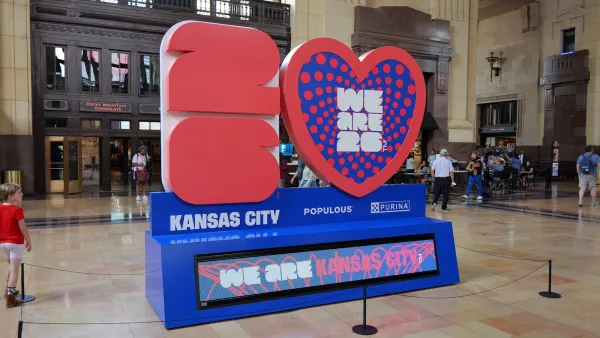
World Cup crowds offer 'stress test' for Kansas City transit planners
Transportation officials are closely monitoring travel patterns during the World Cup to understand how the city's transit system can be improved as the population grows.
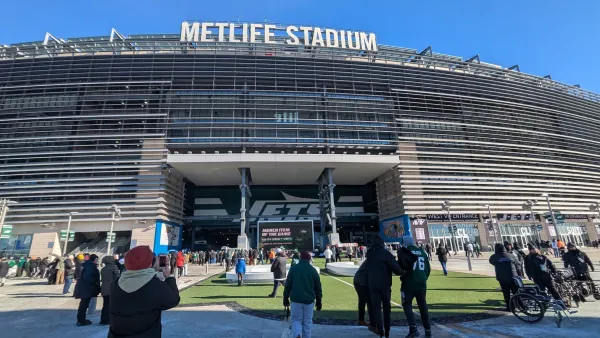
New Jersey FIFA transit will cost $6 million per match
World Cup host cities are bracing for an influx of visitors — and transit users.
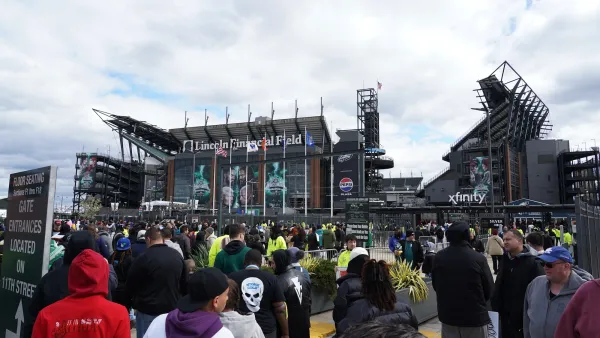
Philadelphia officials say city is ready for World Cup
The city touted its plans to ensure security and accessibility during FIFA World Cup events.

Planetizen Federal Action Tracker
A weekly monitor of how Trump’s orders and actions are impacting planners and planning in America.

California plans to bury El Niño’s downpour
If the state plays its cards right, it may be able to store a billion acre-feet of El Niño’s water in aquifers.

Desperate measures: Advocates weigh draining Lake Powell to fill Colorado River
Draining the reservoir could reduce evaporation losses by a couple hundred thousand acre-feet.

Mamdani’s pied-à-terre tax survives legal challenge
A panel of judges found that the plaintiffs failed to demonstrate injury as a result of New York City's implementation of the tax.

Eastern Nebraska is running out of electricity
Data centers and electrification are straining eastern Nebraska’s grid, throttling economic development.

Seattle passes record-breaking transit services expansion
Proposition 1 will double the city’s transit tax to add 95,000 more bus trips and preserve 180,000 bus trips annually.

FREE Course: Walkable City 1: Why Walkability?
After describing his path towards focusing on walkability as the essence of good planning, Jeff Speck marches through his five principal reasons for making more walkable places.
Reinventing Malls: Planning Alchemy—Turning Gray Fields Into Gold
The course focuses on the opportunities and imperatives that shape reinvention of mall sites.

City of Rosemead
Rutgers University, Edward J. Bloustein School of Planning and Public Policy
One Hundred Miles
University of Michigan School for Environment and Sustainability (SEAS)
Hunter College, City University of New York (CUNY)
The Architects Foundation
City of Cambridge
Montrose County
The Pocatello Development Authority