While the state plans to spend millions on urban highways, roads in rural areas remain poorly maintained.


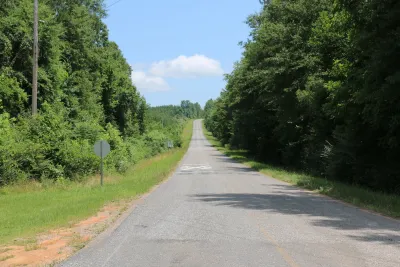
Research from the University of Alabama’s Education Policy Center reveals disparities in transportation infrastructure between the state’s urban and rural areas.
“Per the EPC’s research, Alabamians living in the Black Belt and other rural areas of the state must make longer commutes at a disproportionate rate due to inadequate roadway infrastructure.” As Alex Jobin explains in Alabama Political Reporter, the state is proposing to allocate funding for urban highway projects such as a proposed widening of Interstate 65. Meanwhile, 21% of Black Belt residents have commutes of over 45 minutes, compared with 15% of workers statewide.
The report recommends prioritizing the most urgent transportation projects rather than simply using high traffic volumes to determine which roads will get fixed first. “They argue that agencies including the Alabama Department of Transportation, ALDOT, should also take travel-time burden, commuting reliance and safety risks into consideration when considering infrastructure investments.” The report also suggests expanding grant-based funding mechanisms for rural infrastructure and improving technical assistance for local communities.
FULL STORY: U of A EPC releases report on transportation infrastructure in the Black Belt

Congress Hears Rural Transportation Challenges
A Congressional subcommittee heard testimony from rural transportation officials, transit providers, and lawmakers.
How Homelessness Differs in Rural America
Although less visible than in major cities, the housing crisis is no less severe in many rural communities, where being unhoused poses unique challenges.
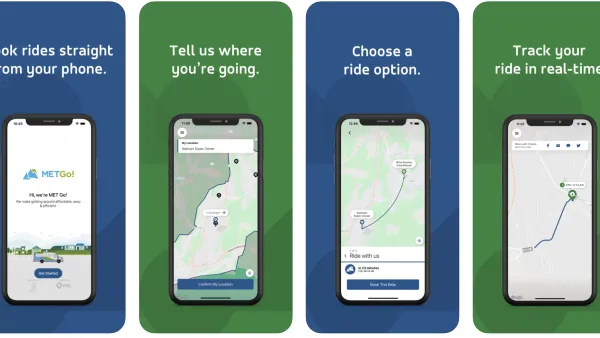
On-Demand Microtransit Proves Itself in Rural Virginia
Two Virginia transit companies launched pilot projects for on-demand microtransit services in 2021, spurring record growth in ridership as a result.

Planetizen Federal Action Tracker
A weekly monitor of how Trump’s orders and actions are impacting planners and planning in America.

The state-sanctioned urbicide of Austin
People don’t kill cities. Freeways do.

US to reduce Colorado River water deliveries to Mexico
A new Colorado Treaty amendment reduces Mexico’s Colorado River water allocation by 250,000 acre feet.

5 New England states march closer to 800 megawatt wind energy project
Securing federal approval for the project may be complicated under the Trump administration, which has historically been hostile towards domestic wind power.

Baltimore to break ground on $50 million Transit Priority Project
The project will bring faster bus trips, safer streets and better bike connections to Baltimore.

Airbnb launches $250 million 'last-dollar financing' housing accelerator, makes first investment in Austin
The company will put $6.4 million towards affordable housing development in Texas’ capital.

FREE Course: Walkable City 1: Why Walkability?
After describing his path towards focusing on walkability as the essence of good planning, Jeff Speck marches through his five principal reasons for making more walkable places.
Reinventing Malls: Planning Alchemy—Turning Gray Fields Into Gold
The course focuses on the opportunities and imperatives that shape reinvention of mall sites.

Eagle County Government
Harvard University Graduate School of Design
Nashville Planning Department
The Architects Foundation
University of Cincinnati Online
The Pocatello Development Authority
The Urban Renewal Agency of the City of Pocatello
Journal of the American Planning Association