The company admitted human drivers sometimes remotely take over robotaxi operations “if necessary.”


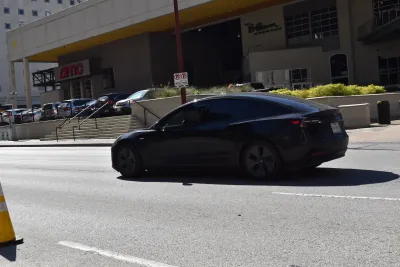
In a congressional hearing, automaker Tesla revealed that remote human operators sometimes temporarily take control of their ‘autonomous’ ride-hailing vehicles “if necessary.”
According to an article by Victor Tangermann in Futurism, “That’s in contrast to Waymo’s approach, which involves its team intervening to make higher-level decisions on where the stuck car should navigate next.”
In a letter, Tesla explained that the measure happens “in rare cases” and only as “the final escalation maneuver after all other available intervention actions have been exhausted.” Operators based on Austin, Texas or Palo Alto, California can temporarily control vehicles going up to 10 miles per hour.
Senator Ed Markey (D-MA) expressed concern about the company’s secrecy around the practice, while a Tesla representative claimed that more detailed information about how the takeovers operate would “necessarily reveal highly sensitive trade secrets and confidential business practices.”
FULL STORY: Tesla Admits Its Robotaxis Are Being Driven Remotely

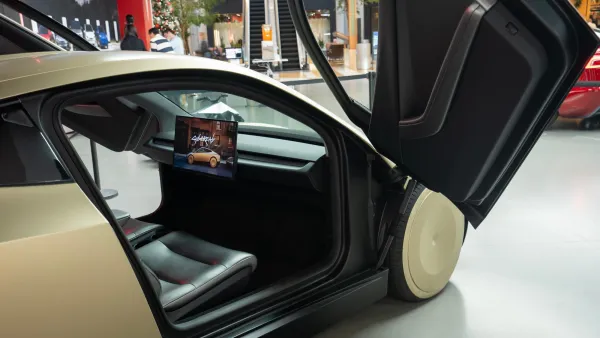
Tesla's steering wheel-less Cybercabs spotted on Austin streets
The company is testing 34 of its robotaxis in downtown Austin, but they have not been approved for public use.
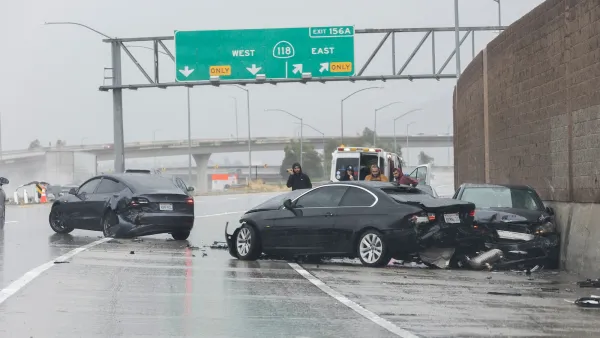
Tesla 'completely' redacts robotaxi crash reports
Reports submitted to the NHTSA also reveal differences in the types of crashes Tesla cars are involved in as opposed to its competitors.
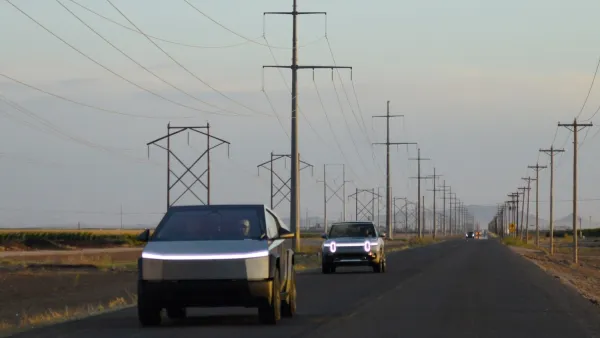
Tesla Approved to Operate Uber-like Service in Arizona
State regulators approved a permit for a ride-hailing service, but a permit for driverless taxis is still pending.

Planetizen Federal Action Tracker
A weekly monitor of how Trump’s orders and actions are impacting planners and planning in America.

The state-sanctioned urbicide of Austin
People don’t kill cities. Freeways do.

US to reduce Colorado River water deliveries to Mexico
A new Colorado Treaty amendment reduces Mexico’s Colorado River water allocation by 250,000 acre feet.

Airbnb launches $250 million 'last-dollar financing' housing accelerator, makes first investment in Austin
The company will put $6.4 million towards affordable housing development in Texas’ capital.

Guerilla urbanists are building DIY bus stop benches in Chicago
A before-and-after of one of the bus stops with a new bench. The new benches are not officially sanctioned or permitted, but the residents who placed them hope they will be the start of a network of DIY benches across the city.

Mamdani overhauls NYC's Vision Zero plan with 100 new policy goals
The overhaul aims to reduce traffic deaths and make streets safer for pedestrians, cyclists and drivers through lower speed limits, new safety infrastructure and more.

FREE Course: Walkable City 1: Why Walkability?
After describing his path towards focusing on walkability as the essence of good planning, Jeff Speck marches through his five principal reasons for making more walkable places.
Reinventing Malls: Planning Alchemy—Turning Gray Fields Into Gold
The course focuses on the opportunities and imperatives that shape reinvention of mall sites.

Eagle County Government
Harvard University Graduate School of Design
Nashville Planning Department
The Architects Foundation
University of Cincinnati Online
The Pocatello Development Authority
The Urban Renewal Agency of the City of Pocatello
Journal of the American Planning Association