The financial and legal ecosystem that led to the creation of the Oakland Ice Center no longer exists after California dissolved its state redevelopment agencies.



Olympic gold medalist Alysa Liu’s Oakland training center is an example of a project that wouldn’t have happened without a now-defunded state agency, writes Oscar Perry Abello in Next City.
Abello describes the history of the Oakland Ice Center, noting, “Located just north of downtown Oakland, in what the city considers the Uptown Retail and Entertainment Area, parcel 8-641-8-5 was just a vacant, privately-owned lot back in 1991. But in that year, Oakland’s now-defunct Redevelopment Agency acquired it as part of a three-parcel transaction for $1.8 million.” The CRA signed a lease with a private developer who built and operated the facility, financed by $11 million in tax-exempt bonds. Today, the city owns the ice rink.
A similar project wouldn’t be possible today, Abello points out. “The state of California contentiously eliminated its 400-plus local redevelopment agencies in 2012 as part of closing a $26 billion state budget deficit.” The agencies have not, advocates say, been replaced by anything similar to fill the gap they left, “both as long-term stewards of publicly-owned land and sources of local public dollars dedicated to local economic and real estate development.”
FULL STORY: Oakland Figure Skater Alysa Liu’s Gold Medal Story Has a Surprising Lesson for Cities

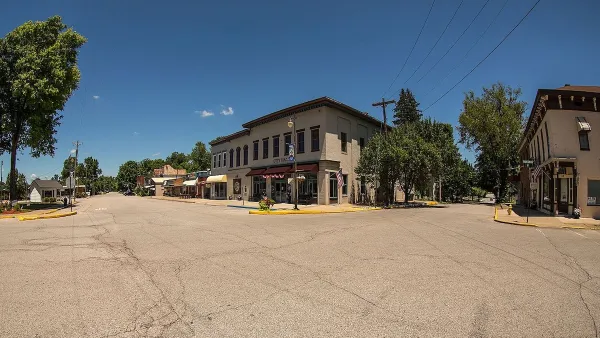
Charlestown, Indiana Announces City Square Improvement Project
Charlestown, Indiana announces a City Square Improvement Project after its Redevelopment Commission acquires a vacant 20-year-old building in the Jennings Plaza downtown.
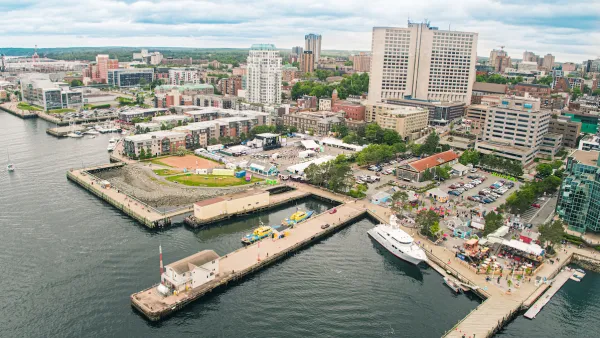
Placemaking on the Halifax Waterfront
How small, incremental changes can create vibrant places.
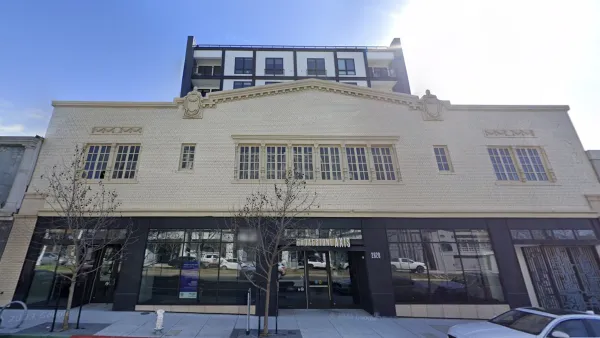
‘Facadism:’ Historical Preservation, Fakery—or a Little of Both?
Developers in cities like Oakland, California are turning to vintage architectural elements to inform building renovations, but this repackaging is far from traditional preservation work.

Planetizen Federal Action Tracker
A weekly monitor of how Trump’s orders and actions are impacting planners and planning in America.

The state-sanctioned urbicide of Austin
People don’t kill cities. Freeways do.

US to reduce Colorado River water deliveries to Mexico
A new Colorado Treaty amendment reduces Mexico’s Colorado River water allocation by 250,000 acre feet.

Baltimore to break ground on $50 million Transit Priority Project
The project will bring faster bus trips, safer streets and better bike connections to Baltimore.

Airbnb launches $250 million 'last-dollar financing' housing accelerator, makes first investment in Austin
The company will put $6.4 million towards affordable housing development in Texas’ capital.

Guerilla urbanists are building DIY bus stop benches in Chicago
A before-and-after of one of the bus stops with a new bench. The new benches are not officially sanctioned or permitted, but the residents who placed them hope they will be the start of a network of DIY benches across the city.

FREE Course: Walkable City 1: Why Walkability?
After describing his path towards focusing on walkability as the essence of good planning, Jeff Speck marches through his five principal reasons for making more walkable places.
Reinventing Malls: Planning Alchemy—Turning Gray Fields Into Gold
The course focuses on the opportunities and imperatives that shape reinvention of mall sites.

Eagle County Government
Harvard University Graduate School of Design
Nashville Planning Department
The Architects Foundation
University of Cincinnati Online
The Pocatello Development Authority
The Urban Renewal Agency of the City of Pocatello
Journal of the American Planning Association