A majority of passengers say they feel safe on trains and in stations.


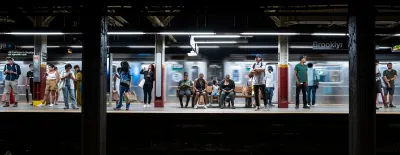
A survey of over 92,000 NYC subway riders reveals that passengers on the system largely feel safe on trains (63 percent) and in stations (59 percent).
According to an article by Sydney Hargrove in Secret NYC, “Perhaps most notably, 53% of riders now say they feel safe on platforms—a five-point jump and the first time that number has climbed above 50%.”
These numbers support a 2025 report that found the subway had its safest year in two decades. Meanwhile, performance and reliability has also improved. “Weekday on-time performance in 2025 averaged 83.7%, making it the best year on record, with May setting an all-time monthly high at 85.2%. Ridership also surged, with nearly 1.3 billion subway trips taken over the year, a 7% increase from 2024.”
According to the survey, “Riders reported major improvements in reliability, wait times, and delays, each up nine points or more, while borough results showed strong numbers in Manhattan at 69% and steady satisfaction on Staten Island buses at 60%.”
Read the full story: NYC Subway Performance Hit An All-Time High In Late 2025: Here’s Why Subway Riders Are Happier, Safer, And More Satisfied Going Into 2026

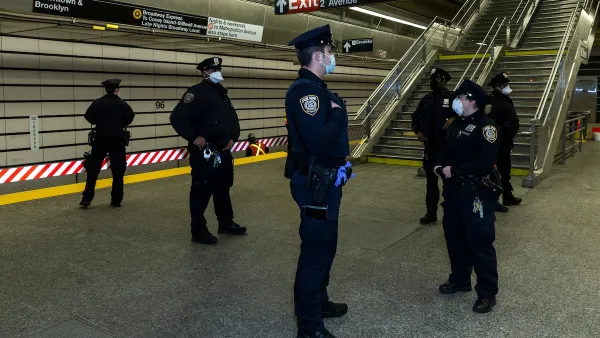
Judge Blocks Trump Cuts to MTA Security Funding
A judge halted the Trump administration’s attempt to withhold transit security funds.
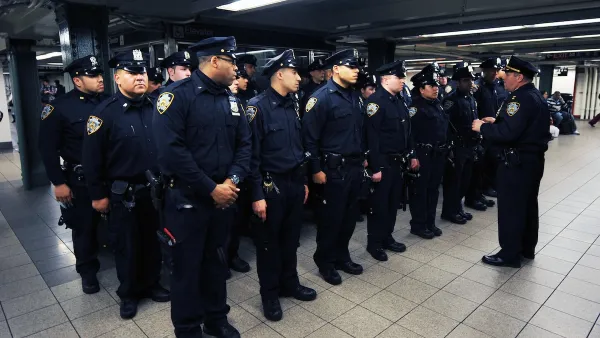
Feds Deny NYC ‘Every Dollar’ of Transit Security Funding Due to ‘Sanctuary’ Status
DHS denied the MTA its request for funding under the Transit Security Grant Program despite the administration’s concern with transit safety.
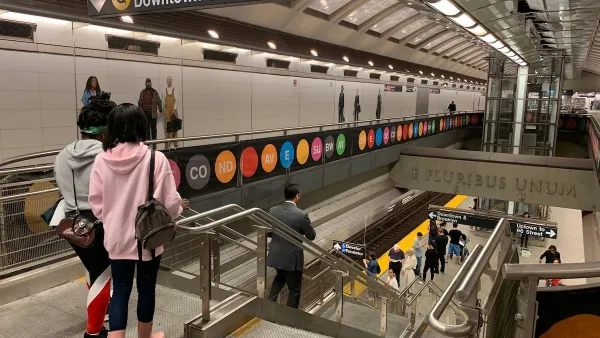
After 50 Years, Subway to East Harlem to Break Ground
The MTA approved a contract to extend the Q Line to three new stations, with surface work slated to begin in September.

Planetizen Federal Action Tracker
A weekly monitor of how Trump’s orders and actions are impacting planners and planning in America.

California plans to bury El Niño’s downpour
If the state plays its cards right, it may be able to store a billion acre-feet of El Niño’s water in aquifers.

Chicago breaks ground on $3 billion megadevelopment
The new neighborhood, titled Foundry Park, will one day host 3,700 residences.

Satanic Place Names
From streams and lakes to valleys and canyons, I mapped more than 1,000 places named after the Devil.

California High-Speed Rail Authority CEO resigns after $600,000 scandal
Under Ian Choudri, the authority used taxpayer dollars to fund first class flights and trips to nightclubs.

Want to study the Missouri River? Soon, you may need unanimous approval from 10 states
Legislation would require 10 governors’ permission to study or build projects moving water outside the basin.

FREE Course: Walkable City 1: Why Walkability?
After describing his path towards focusing on walkability as the essence of good planning, Jeff Speck marches through his five principal reasons for making more walkable places.
Reinventing Malls: Planning Alchemy—Turning Gray Fields Into Gold
The course focuses on the opportunities and imperatives that shape reinvention of mall sites.

City of Rosemead
Rutgers University, Edward J. Bloustein School of Planning and Public Policy
One Hundred Miles
Hunter College, City University of New York (CUNY)
The Architects Foundation
University of Cincinnati Online
City of Cambridge
Montrose County
The Pocatello Development Authority