Making the small-format trucks street legal is a necessary — but not sufficient — condition for widespread adoption in the United States.


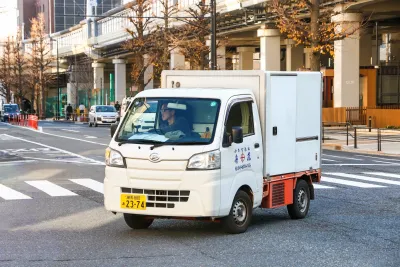
A bill introduced in the Oregon legislature would legalize small-format trucks on Oregon streets, reports Kea Wilson in Streetsblog USA.
“[Bill sponsor] State Sen. Anthony Broadman said the bill was inspired partly by a brewery owner in his district who wanted to use kei trucks to deliver kegs to restaurants down narrow city alleys, only to find that state laws essentially forced him to use a large delivery truck instead,” Wilson explains.
The bill has bipartisan support, including from rural, Republican communities where smaller trucks could save farmers thousands (and from President Trump, who called the trucks “really cute”). ‘Kei’ trucks are already legal in Washington state, where many Oregonians go to buy and register them.
Mini-trucks are affordable, fuel-efficient, and safer for pedestrians. However, legalizing them is only a first step, and doesn’t address “the other structural reasons why so many Americans are rightly afraid to travel in anything besides a large automobile — especially as so many other cars on the road continue to get bigger and more lethal.” However, Broadman hopes offering more options can help reduce costs for small businesses and farmers and provide a model for other states where kei trucks aren’t yet legal.
Read the full story: Aisle Be Damned: Dems and GOP Unite in Oregon In Bid To Legalize Kei Trucks
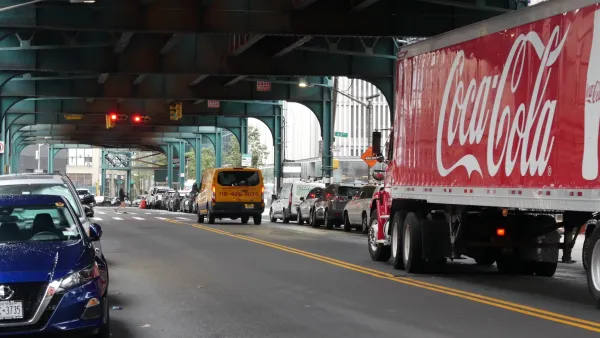
NYC plans to route trucks through more neighborhoods as safety efforts stall
90% of freight enters New York City by big rig.
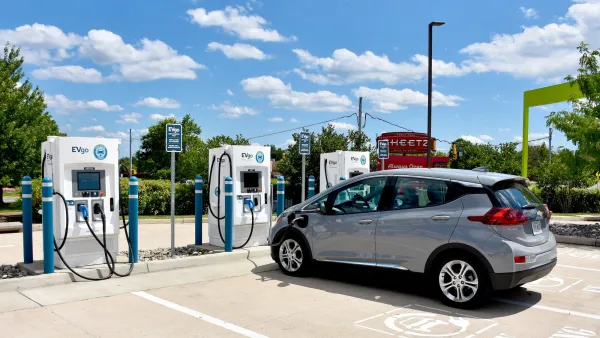
The Federal EV Tax Credit is Gone — But No One Told Google AI
Despite getting other details about the now-defunct program right, Google’s AI search summary continues to tell users they can receive a $7,500 federal tax credit for buying an EV.
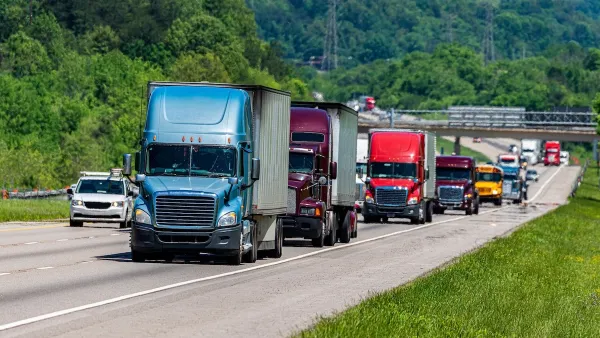
Study: 4% of Truckers Lack a Valid Commercial License
Over 56% of inspected trucks had other violations.

Planetizen Federal Action Tracker
A weekly monitor of how Trump’s orders and actions are impacting planners and planning in America.

California plans to bury El Niño’s downpour
If the state plays its cards right, it may be able to store a billion acre-feet of El Niño’s water in aquifers.

Desperate measures: Advocates weigh draining Lake Powell to fill Colorado River
Draining the reservoir could reduce evaporation losses by a couple hundred thousand acre-feet.

In Texas, data centers are swallowing promised parkland
Residents who moved to Taylor, Texas for a rural community now have to contend with three data centers in their backyard.

How a Chicago-sized wind farm beat the odds and powered on
The project spanned five presidential administrations and a standoff with a U.S. military base.

MTA gives itself 30 days to transform pit into basketball court
The site has been under construction since 2022; the city originally estimated it would finish the court in 2024.

FREE Course: Walkable City 1: Why Walkability?
After describing his path towards focusing on walkability as the essence of good planning, Jeff Speck marches through his five principal reasons for making more walkable places.
Reinventing Malls: Planning Alchemy—Turning Gray Fields Into Gold
The course focuses on the opportunities and imperatives that shape reinvention of mall sites.

City of Rosemead
Rutgers University, Edward J. Bloustein School of Planning and Public Policy
One Hundred Miles
Hunter College, City University of New York (CUNY)
The Architects Foundation
University of Cincinnati Online
City of Cambridge
Montrose County
The Pocatello Development Authority