The Roxbury council passed a resolution opposing a new immigration detention facility, but the town could go further by enacting an ordinance barring detention as a land use.


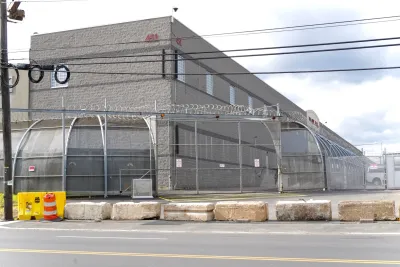
The New Jersey township of Roxbury approved a resolution opposing the repurposing of a vacant warehouse into an ICE detention facility.
While the resolution asserts the town’s stance on the issue, a piece by Guy Citron in Insider NJ argues that the township could do more to ensure the federal government doesn’t build immigration detention facilities in their jurisdiction by issuing a land use ordinance prohibiting the use. “Even when a town does not ban such facilities outright, it may impose performance standards these operations cannot realistically meet, such as: distance from homes, schools, and houses of worship; limits on fencing, floodlighting, or armed security; caps on traffic, noise, and demands on emergency services. And like any other commercial business, they also require permits, site plans, certificates of occupancy, and compliance with fire, health, and stormwater codes.”
The article argues that land use ordinances are well within the rights of local governments, and that residents concerned about immigration detention facilities can lobby their elected officials to use their zoning code to regulate them. “[W]hen your town adopts clear zoning rules and enforceable standards for what uses are permissible, it is not making a partisan statement. It is exercising lawful self-government.”
FULL STORY: Yes, in New Jersey, Your Local Government Can Stop an ICE Detention Facility

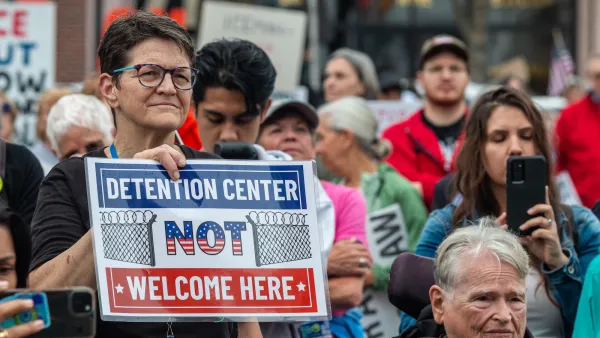
Land use as protest: How American cities are fighting federal immigration detention centers
Across the country, city officials are using zoning codes and land use law to limit where ICE detention facilities can be built.

San Antonio sets new rules for immigration detention facilities
The city revised its zoning code to add new restrictions for private detention centers, but the ordinance won't apply to federally operated facilities.
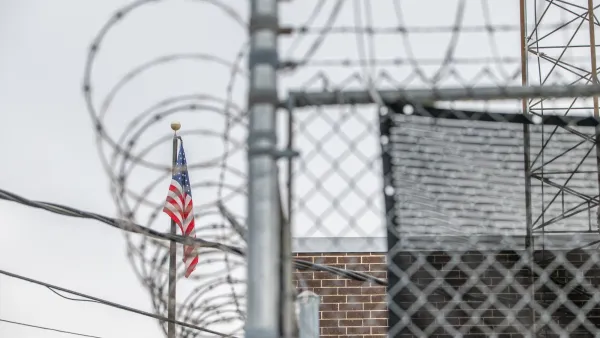
Architecture Firm to Stop Designing ICE Prisons After Staff Outrage
Employees of one of the nation’s largest “justice facility” firms called on their company to end contracts for detention facilities.

Planetizen Federal Action Tracker
A weekly monitor of how Trump’s orders and actions are impacting planners and planning in America.

The state-sanctioned urbicide of Austin
People don’t kill cities. Freeways do.

US to reduce Colorado River water deliveries to Mexico
A new Colorado Treaty amendment reduces Mexico’s Colorado River water allocation by 250,000 acre feet.

5 New England states march closer to 800 megawatt wind energy project
Securing federal approval for the project may be complicated under the Trump administration, which has historically been hostile towards domestic wind power.

Baltimore to break ground on $50 million Transit Priority Project
The project will bring faster bus trips, safer streets and better bike connections to Baltimore.

Airbnb launches $250 million 'last-dollar financing' housing accelerator, makes first investment in Austin
The company will put $6.4 million towards affordable housing development in Texas’ capital.

FREE Course: Walkable City 1: Why Walkability?
After describing his path towards focusing on walkability as the essence of good planning, Jeff Speck marches through his five principal reasons for making more walkable places.
Reinventing Malls: Planning Alchemy—Turning Gray Fields Into Gold
The course focuses on the opportunities and imperatives that shape reinvention of mall sites.

Eagle County Government
Harvard University Graduate School of Design
Nashville Planning Department
The Architects Foundation
University of Cincinnati Online
The Pocatello Development Authority
The Urban Renewal Agency of the City of Pocatello
Journal of the American Planning Association