Across the country, city officials are using zoning codes and land use law to limit where ICE detention facilities can be built.


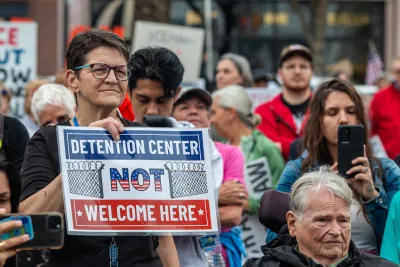
The Trump Administration's push to increase deportations has had expected consequences in major cities: construction labor is scarce and immigrant communities are receding from the public sphere. But for urban planners, the focal battlefront is combating ICE detention facilities within their jurisdictions. Though it is nearly impossible for a municipality to limit the power of the federal government, the creative ways that cities are taking a stance are worth exploring.
San Antonio, Texas
As the newly minted sixth largest city in the country with a massive military presence and multigenerational Latino community, San Antonio has felt many of the effects of the policy changes from the Trump administration. When news broke in February that the Department of Homeland Security was considering purchasing an industrial facility on the city’s Eastside to convert into a detention and processing center, local officials immediately began to explore any means of stopping it.
As San Antonio’s historically Black and underinvested neighborhood, the Eastside has long been home to a number of questionable industrial facilities that abut residential communities. Most recently, private developers have taken to investing in large commercial warehouses along I-35 due to its strategic benefit of connecting Laredo, Texas to Duluth, Minnesota. And while local officials have recently pushed to hinder more industrial development in this historic community, the state has greatly limited their ability to regulate virtually any business activities. As such, these holding facilities were prime candidates for the federal government’s need to store and process immigrants before deportation.
Initial discussions in City Hall circled around using zoning and land use regulations to stop the federal government from establishing a presence in a neighborhood that is already struggling to develop. But the Supremacy Clause of the United States Constitution explicitly ensures that local governments, like municipalities, cannot overrule the federal government in any way. As such, DHS’s exemption from San Antonio’s zoning was immediately clear – even though the area was not zoned for any operations that house humans, the Trump Administration could do as it wished.
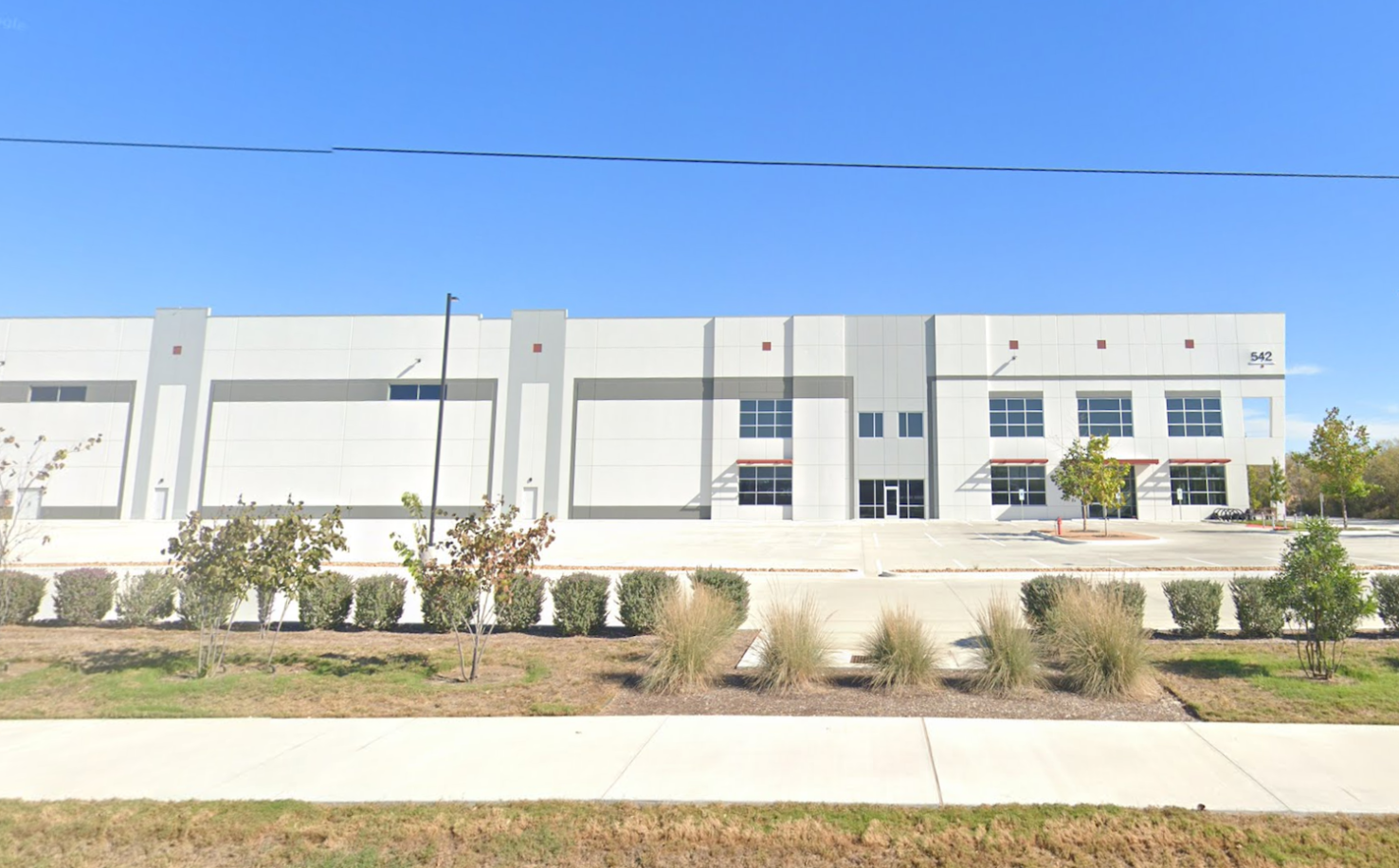
Similarly, local officials explored using building codes to block the conversion of the warehouse into a holding and processing facility, given that they have vastly different requirements for plumbing and electrical components. Members of the San Antonio City Council pressed city staff to explore using their city-owned utilities (CPS Energy and San Antonio Water System) to block the facility’s access to essential water, wastewater and electrical systems. Yet again, their ability to do so was hindered by the Constitution and such plans were quietly averted.
Though the project was recently delayed by federal requirements for an environmental impact assessment, it will likely come to fruition in due time. DHS officials have acknowledged that the facility will hold between 500 and 1,500 detainees daily, and that they plan to have it operational by the end of 2026. While the federal government initially provided no notification to San Antonio and Bexar County officials, they have promised a "cooperative partnership with local communities" following a letter to the Trump Administration from South Texas elected officials. This is all to say: the project is moving forward.
Following acknowledgement that their ability to block federal facilities was null, local officials sought to outlaw future detention centers built by private developers. In April, the San Antonio City Council voted to change its zoning code to severely restrict where private detention centers can be built within city limits. Specifically, local regulations now ensure that such facilities cannot be located within 1,000 feet of residential areas, schools, places of worship and public parks – at least not without the approval of the council. Builders would also have to seek a special zoning designation and explicitly notify the city of plans for any detention center projects. In sum, while federally owned facilities are unavoidable, local leaders can now ensure that private detention centers, which DHS often contracts with and leases, will be much more difficult to build in San Antonio.
Kansas City, Missouri
Earlier this year, Kansas City also learned that they were under consideration for a massive DHS holding facility that could contain as many as 10,000 immigrant detainees. The property, previously owned by Pork KC and sold to a private company with the understanding that it would spur economic development efforts, would no longer provide such benefits to the community. Despite such concerns, local officials were met with the same hindrances as in San Antonio, given the ultimate authority of the federal government in such matters.
Still, the Kansas City city council swiftly moved to enact a five-year moratorium on non-municipal detention facilities. This policy leverages licensing, zoning and permitting rules to effectively block the development of non-governmental detention facilities. As the lingering threat in their community was contingent on the federal government contracting a private enterprise to own and operate the detention center, the move may ensure that those 10,000 immigrants are not detained in Kansas City.
However, consider the situation in San Antonio and you can understand that these tools are limited. If DHS itself seeks to purchase a property and retrofit it for their needs, there is little that Kansas City can do. Legal scholarship has concluded that cities may not "unduly interfere" with federal operations, which could raise litigious challenges to any cities fighting with DHS over immigration enforcement. And though cities are protected by the "anticommandeering doctrine," facilities that require no local tax dollars to support their operations are free to operate.
Seattle, Washington
City officials in Seattle also found themselves looking for means to prohibit federal immigration detention centers in their city, enacting a one-year moratorium on such facilities. King County quickly moved to mimic this effort by banning new detention centers in unincorporated areas for the same period of time. They also called for land use studies to inform future policies around these developments to ensure they do not encroach on the existing uses in their jurisdiction.
At the heart of these actions is a recent notice from the federal government that announced their interest in pursuing more DHS detention centers across the country — including in the Pacific Northwest. Local officials feel that such decisions threaten the home rule of American cities. Their decision serves as a bright billboard to the federal government that warns: this city protects immigrants.
What now?
Despite the limitations cities face in challenging the growing presence of ICE in their communities, their message is clear: many urban communities do not want them and will do what they can with the power they have to stop them. As noted above, San Antonio’s facility is currently awaiting an environmental impact assessment before proceeding with operations. Still, local residents have been protesting it regularly as a means of showing the federal government that this city, with its history of rich multiculturalism, values immigrants.
In Kansas City and Seattle, the threats are less imminent. Residents may feel safer from such facilities threatening their communities’ wellbeing. Still, we see that there is only so much that local planners and officials can do to block federal detention facilities. Despite the protests and other clear signs that such facilities are unwelcome, local governments are virtually powerless against the federal government’s actions.
Editor's note: As of June 22, 2026, the Department of Homeland Security is reportedly planning to sell or give away seven of the 11 warehouses it recently acquired for immigration detention purposes. The list of warehouses to be sold does not include the San Antonio property.
—
Matthew Reyes is an urban planner and demographer based in South Texas. He holds a Bachelor of Arts from the University of North Texas and a Master of Regional Planning from Cornell University. Currently, he is pursuing a PhD in applied demography from the University of Texas at San Antonio, where his research focuses on urban poverty, socioeconomic outcomes tied to planning, and community development policy.

Architecture Firm to Stop Designing ICE Prisons After Staff Outrage
Employees of one of the nation’s largest “justice facility” firms called on their company to end contracts for detention facilities.
San Antonio sets new rules for immigration detention facilities
The city revised its zoning code to add new restrictions for private detention centers, but the ordinance won't apply to federally operated facilities.
ICE is Buying Massive Warehouses in Small Towns for New Detention Centers
The agency is shifting its approach from temporary, makeshift detention camps to more permanent facilities.

Planetizen Federal Action Tracker
A weekly monitor of how Trump’s orders and actions are impacting planners and planning in America.

Amtrak, CN end decades-long dispute with eight-year agreement
The new operating agreement establishes an updated framework for the companies to work together, including processes to resolve disputes.

Judges permit Denver to divert 77,000 acre feet from the Colorado River for reservoir expansion
Overuse and climate change have caused the Colorado River’s water levels to plummet.

NYC DOT wants faster, more permanent street upgrades
The city is examining ways to build more concrete infrastructure without getting entangled in 'decades-long' projects.

'Something we’ve never seen before:' rising utility rates could strain city finances nationwide
Data centers, climate change and other factors have caused utility rates in the United States to increase by 38% since 2020.

Trump to overrule local leaders, lease millions of acres of America’s Pacific Island territories’ seafloors to mining companies
International law says that the Indigenous people of America’s territories have a right to prior and informed consent regarding projects that impact their countries.

FREE Course: Walkable City 1: Why Walkability?
After describing his path towards focusing on walkability as the essence of good planning, Jeff Speck marches through his five principal reasons for making more walkable places.
Reinventing Malls: Planning Alchemy—Turning Gray Fields Into Gold
The course focuses on the opportunities and imperatives that shape reinvention of mall sites.

Harvard University Graduate School of Design
KFH Group Inc.
Greater Baltimore Committee
The Architects Foundation
University of Cincinnati Online
The Pocatello Development Authority
The Urban Renewal Agency of the City of Pocatello

