The ballroom project must receive approval from the National Capital Planning Commission to move forward.


New architectural plans for the White House ballroom were revealed last week, showing formal details of the 89,000-square-foot space.
According to an article by Kriston Capps and Linda Poon in Bloomberg CityLab, the structure will include a banquet space, movie theater, and offices for the First Lady. “The size of the facility hasn’t changed from prior suggestions, according to Shalom Baranes, lead ballroom architect, who delivered the presentation before the National Capital Planning Commission, the federal planning agency tasked with overseeing construction in the nation’s capital.”
In response to a question about why the demolition took place before a review, Joshua Fisher, director of the White House Office of Administration, said “concurrent work of a ‘top secret nature’ had to be considered during this project, including work that is not subject to NCPC review.”
Construction on the structure cannot legally proceed until the project receives NCPC approval. “Federal building projects are also subject to historic preservation and environmental review, processes that can be lengthy.”
FULL STORY: New Design Plans Revealed for White House Ballroom


Trump Says White House Ballroom Exempt from Permitting, Zoning Rules
The President reportedly told teams working on the ballroom that the project doesn’t have to comply with regulations.

Most Public Lands Are Safe — For Now
A proposal to sell off federally owned lands was removed from the Republican spending bill on procedural grounds.
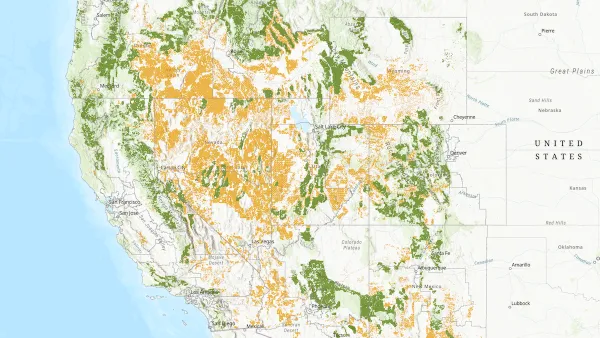
Map: Where Senate Republicans Want to Sell Your Public Lands
For public land advocates, the Senate Republicans’ proposal to sell millions of acres of public land in the West is “the biggest fight of their careers.”

Planetizen Federal Action Tracker
A weekly monitor of how Trump’s orders and actions are impacting planners and planning in America.

The state-sanctioned urbicide of Austin
People don’t kill cities. Freeways do.

US to reduce Colorado River water deliveries to Mexico
A new Colorado Treaty amendment reduces Mexico’s Colorado River water allocation by 250,000 acre feet.

5 New England states march closer to 800 megawatt wind energy project
Securing federal approval for the project may be complicated under the Trump administration, which has historically been hostile towards domestic wind power.

Baltimore to break ground on $50 million Transit Priority Project
The project will bring faster bus trips, safer streets and better bike connections to Baltimore.

Airbnb launches $250 million 'last-dollar financing' housing accelerator, makes first investment in Austin
The company will put $6.4 million towards affordable housing development in Texas’ capital.

FREE Course: Walkable City 1: Why Walkability?
After describing his path towards focusing on walkability as the essence of good planning, Jeff Speck marches through his five principal reasons for making more walkable places.
Reinventing Malls: Planning Alchemy—Turning Gray Fields Into Gold
The course focuses on the opportunities and imperatives that shape reinvention of mall sites.


Eagle County Government
Harvard University Graduate School of Design
Nashville Planning Department
The Architects Foundation
University of Cincinnati Online
The Pocatello Development Authority
The Urban Renewal Agency of the City of Pocatello
Journal of the American Planning Association