The trip between Philadelphia and Atlanta takes roughly four to six hours and costs less than the average US car payment.


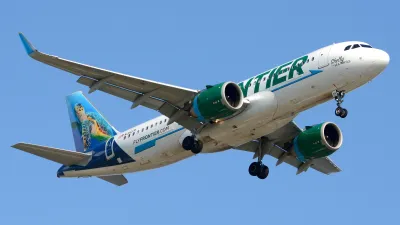
A Philadelphia man is getting viral fame for his 800-mile commute to Atlanta, which he completes using two flights, two trains, and a bus. As Anna Wright explains in the Daily Mail, the journey takes urban planner Daniel Rodriguez four to six hours twice a week.
Rodriguez decided to undertake the supercommute after calculating the cost of the commute compared to relocating or buying a car for the trip. “His monthly commute costs $400 to $600, much less than the average U.S. car payment of $700, helping him recover financially,” Wright explains.
While the arrangement is temporary, Rodriguez says it’s his best option for now, giving him the opportunity to pursue a career he’s passionate about. “You have to do uncomfortable things, disrupt the pattern, and find a way out of what we are normally dependent on and it’s in that disruption that new opportunities arise.”
Read the full story: Philadelphia designer becomes internet star over his 800 MILE commute via public transport to work in Atlanta

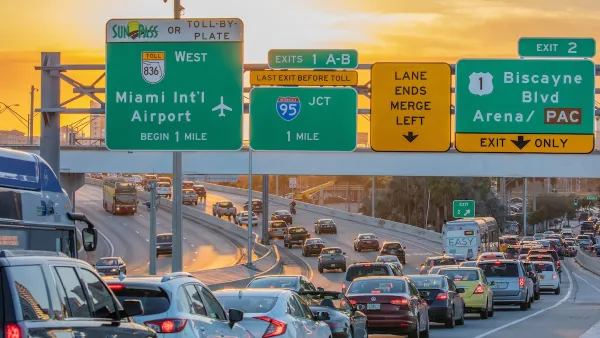
Miami, Houston Residents Spend Most on Transportation
South Floridians and Houstonians spent roughly 20 percent of their income on transportation in regions that offer few alternatives to driving.
Beyond Congestion Pricing: Strategies for Revolutionizing Urban Mobility
How cities are leveraging data and technology to improve their transportation networks and reduce traffic.
Boston Commuter Rail Recovering Rapidly
The ‘T’ is reworking its schedule to offer more reliable and flexible service, including more midday and weekend trains.

Planetizen Federal Action Tracker
A weekly monitor of how Trump’s orders and actions are impacting planners and planning in America.

California plans to bury El Niño’s downpour
If the state plays its cards right, it may be able to store a billion acre-feet of El Niño’s water in aquifers.

Desperate measures: Advocates weigh draining Lake Powell to fill Colorado River
Draining the reservoir could reduce evaporation losses by a couple hundred thousand acre-feet.

After public outcry, Massachusetts city releases housing development tracker
Cambridge’s tracker currently shows 250 housing projects in various stages of development.

40 years after approval, Chicago breaks ground on new park
The park honors Jean Baptiste Point du Sable, the city’s first permanent non-native settler.

‘Hoodwinked:’ New Mexico bill aimed at microgrids paves way for data center development
In an interview with High Country News, Padilla said the legislation “ignited” New Mexico's economy.

FREE Course: Walkable City 1: Why Walkability?
After describing his path towards focusing on walkability as the essence of good planning, Jeff Speck marches through his five principal reasons for making more walkable places.
Reinventing Malls: Planning Alchemy—Turning Gray Fields Into Gold
The course focuses on the opportunities and imperatives that shape reinvention of mall sites.

City of Rosemead
Rutgers University, Edward J. Bloustein School of Planning and Public Policy
One Hundred Miles
Hunter College, City University of New York (CUNY)
The Architects Foundation
University of Cincinnati Online
City of Cambridge
Montrose County
The Pocatello Development Authority