Fewer Portland residents are calling ride-hailing services than before the pandemic.


People in Portland, Oregon are using ride-hailing services far less frequently than they did before the Covid-19 pandemic, reports Mike Rogoway in The Oregonian.
Ridership numbers for Uber, Lyft, and taxis are recovering at an even slower rate than public transit, signaling a change in the regional economy. “Portland tallied about 8 million trips on rideshare services and taxis in the fiscal year ended June 30, down 37% from 2019, according to city data.”
The drop is a sharp contrast with worldwide ridership for Uber, whose global numbers rose by 63 percent last year compared to 2019. Portland’s slow rebound could be due in part to Oregon’s high levels of remote work and local regulations that make ride-hailing more expensive than in other cities. The number of rideshare and taxi drivers in Portland has also dropped by about a third since 2019, which may translate into longer waits for rides.
FULL STORY: Far fewer Portlanders are riding Uber and Lyft, or calling taxis

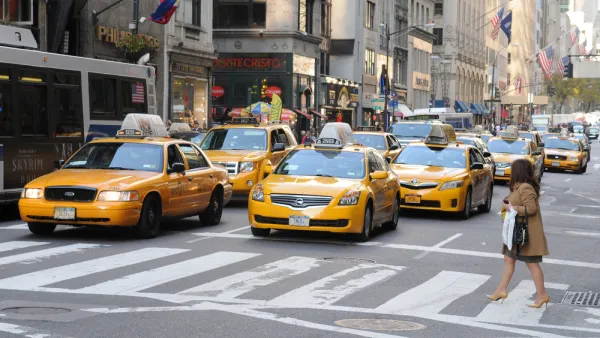
Ride-Hailing Prices Skyrocket as the U.S. Emerges From the Pandemic
A shortage of drivers and spiking demand are driving Uber and Lyft prices higher than ever as the companies struggle to achieve profitability.
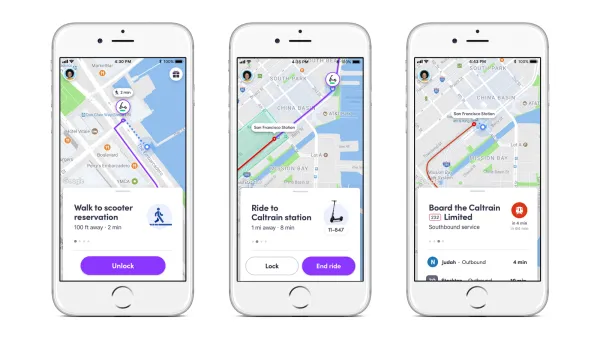
The Percent of Americans Using Ride Hailing Services is Going Up…Fast
in 2015, 28% of 18-29 year-olds said they had used Lyft or Uber. In 2018, that number jumped to 51% according to a Pew Research study.
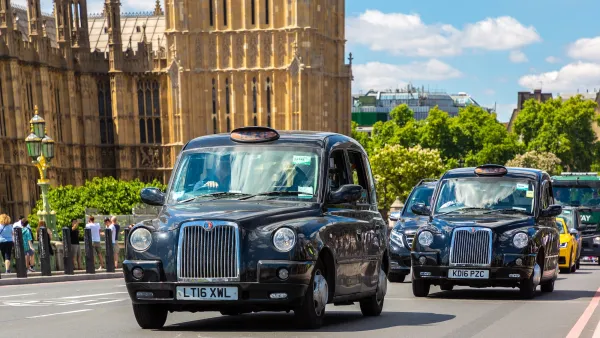
Can Robotaxis Handle London's Famously Tangled Streets?
Black Cab drivers say autonomous cars won’t be able to handle London’s unique conditions.

Planetizen Federal Action Tracker
A weekly monitor of how Trump’s orders and actions are impacting planners and planning in America.

The state-sanctioned urbicide of Austin
People don’t kill cities. Freeways do.

US to reduce Colorado River water deliveries to Mexico
A new Colorado Treaty amendment reduces Mexico’s Colorado River water allocation by 250,000 acre feet.

Baltimore to break ground on $50 million Transit Priority Project
The project will bring faster bus trips, safer streets and better bike connections to Baltimore.

Airbnb launches $250 million 'last-dollar financing' housing accelerator, makes first investment in Austin
The company will put $6.4 million towards affordable housing development in Texas’ capital.

Guerilla urbanists are building DIY bus stop benches in Chicago
A before-and-after of one of the bus stops with a new bench. The new benches are not officially sanctioned or permitted, but the residents who placed them hope they will be the start of a network of DIY benches across the city.

FREE Course: Walkable City 1: Why Walkability?
After describing his path towards focusing on walkability as the essence of good planning, Jeff Speck marches through his five principal reasons for making more walkable places.
Reinventing Malls: Planning Alchemy—Turning Gray Fields Into Gold
The course focuses on the opportunities and imperatives that shape reinvention of mall sites.

Eagle County Government
Harvard University Graduate School of Design
Nashville Planning Department
The Architects Foundation
University of Cincinnati Online
The Pocatello Development Authority
The Urban Renewal Agency of the City of Pocatello
Journal of the American Planning Association