Transit-oriented development has spurred billions in economic activity along DART light rail.


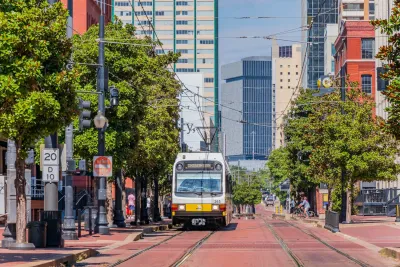
A report from the University of North Texas (UNT) Economic Research Group offers an analysis of economic activity spurred by transit-oriented development in Dallas. Marybeth Luczak outlines key findings in an article in Railway Age, noting that development around Dallas Area Rapid Transit (DART) light rail stations has generated over $18 billion in direct economic impacts since 1999. “This includes a $1.0 billion direct impact from 2022 to 2024 based on 37 development projects.”
According to the report, “Construction around DART stations in 2022-2024 generated $51.5 million in state and local tax revenue, the bulk of which ($25.4 million) was from sales tax related to construction of the projects, according to the report. Additionally, development around DART stations generated $21.1 million in property taxes, with $5.0 million in other state and local revenue from miscellaneous fees and fines.”
The study also found that TOD raised rent premiums by 10 percent for residential and 12.6 percent for commercial units within half a mile of stations and directly created 5,295 jobs in the last two years.
FULL STORY: DART TOD Drives Dallas Investment

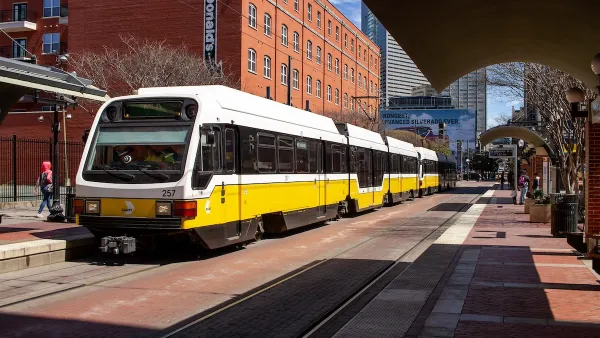
DARTSpace Platform Streamlines Dallas TOD Application Process
The Dallas transit agency hopes a shorter permitting timeline will boost transit-oriented development around rail stations.
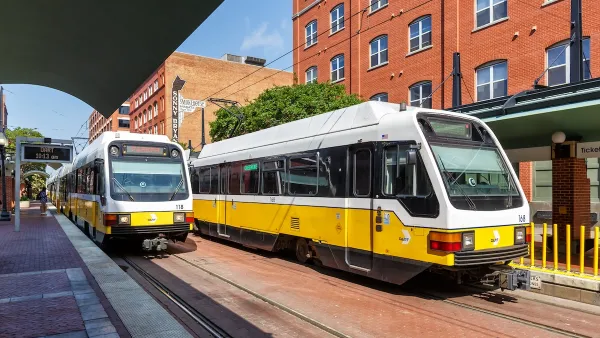
North Texas Transit Leaders Tout Benefits of TOD for Growing Region
At a summit focused on transit-oriented development, policymakers discussed how North Texas’ expanded light rail system can serve as a tool for economic growth.
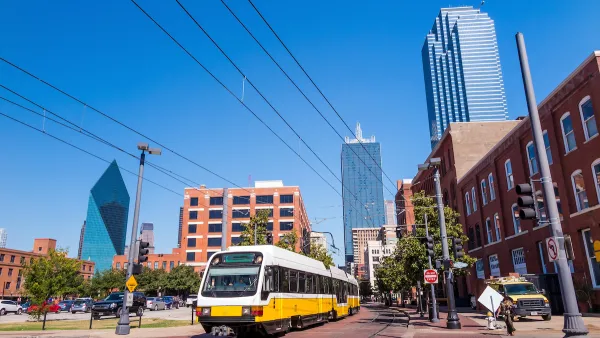
Dallas Nixes Subway Plan
A proposed subway line was removed from DART’s 20-year plan, with the agency citing low ridership projections and local opposition.

Planetizen Federal Action Tracker
A weekly monitor of how Trump’s orders and actions are impacting planners and planning in America.

The state-sanctioned urbicide of Austin
People don’t kill cities. Freeways do.

US to reduce Colorado River water deliveries to Mexico
A new Colorado Treaty amendment reduces Mexico’s Colorado River water allocation by 250,000 acre feet.

5 New England states march closer to 800 megawatt wind energy project
Securing federal approval for the project may be complicated under the Trump administration, which has historically been hostile towards domestic wind power.

Baltimore to break ground on $50 million Transit Priority Project
The project will bring faster bus trips, safer streets and better bike connections to Baltimore.

Airbnb launches $250 million 'last-dollar financing' housing accelerator, makes first investment in Austin
The company will put $6.4 million towards affordable housing development in Texas’ capital.

FREE Course: Walkable City 1: Why Walkability?
After describing his path towards focusing on walkability as the essence of good planning, Jeff Speck marches through his five principal reasons for making more walkable places.
Reinventing Malls: Planning Alchemy—Turning Gray Fields Into Gold
The course focuses on the opportunities and imperatives that shape reinvention of mall sites.

Eagle County Government
Harvard University Graduate School of Design
Nashville Planning Department
The Architects Foundation
University of Cincinnati Online
The Pocatello Development Authority
The Urban Renewal Agency of the City of Pocatello
Journal of the American Planning Association