The activist organization Transportation Alternatives offers detailed recommendations for more efficient and affordable transportation to New York City's Mayor-elect Zohran Mamdani.


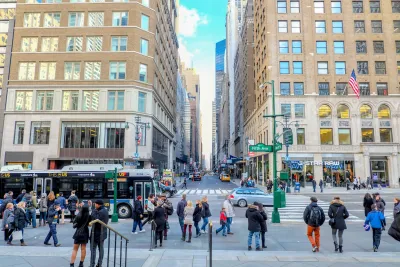
When Mayor-elect Mamdani takes office on January 1, he will control over 6,300 miles of streets throughout the five boroughs. Overnight, he’ll have the power to build bike lanes, bus lanes, public plazas, and more — the exact kind of design changes that make it easier for New Yorkers to sell their car (or use their car less) and get by walking, biking, and riding public transit. Owning a car costs nearly $9,000 annually, while taking transit costs just $1,500. Mayor-elect Mamdani has the power to save millions of New Yorkers thousands of dollars just by building the streets New York City deserves.
Transportation Alternatives' new report, The Road to Affordability: A Streets and Transportation Agenda for the Next Mayor of NYC, includes over 80 ideas to transform New York City into a more affordable place to walk, bike, ride the bus, and live. Building a city where it’s possible for New Yorkers to sell their car, or use their car less often, could save a household nearly five figures each year.
The report includes the following recommendations:
- Implement universal daylighting.
- Commit to building a citywide bike network that reaches within a quarter-mile (a one-minute bike ride) of every New York City residence.
- Develop a plan for marquee bus rapid transit on at least five key routes. BRT is distinguished by center-running bus lanes, busways, off-board fare collection, level boarding, and a subway-like experience on the streets.
- Announce a plan to expand Summer Streets to every Sunday, with an all-day program that includes a continuous route that connects at least four boroughs.
- Announce a plan for dramatically expanding pedestrian spaces, including building on existing community-led plans for FiDi, Broadway, and SoHo.
- Finish the job: Un-pause all existing bus projects, bike lane projects, and street safety projects that have already been presented to community boards but then stalled or implemented and then removed.
- Implement Sammy’s Law by committing to lowering speed limits to 20 mph on all eligible roads across the city, and beginning to change signage within the first 100 days.
- Go bold with the NYC Streets Plan 2.0 and commit all necessary funding in the mayor’s executive budget to fully implement the Streets Master Plan, as required by law; end the safe streets hiring freeze; and increase DOT staff to meet the measure of this legislation.
FULL STORY: The Road to Affordability: A Streets and Transportation Agenda for the Next Mayor of NYC

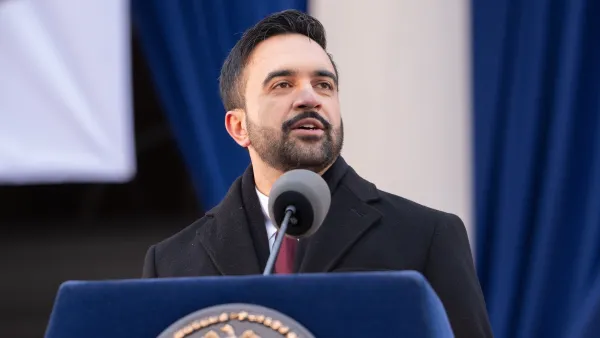
Mamdani overhauls NYC's Vision Zero plan with 100 new policy goals
The overhaul aims to reduce traffic deaths and make streets safer for pedestrians, cyclists and drivers through lower speed limits, new safety infrastructure and more.
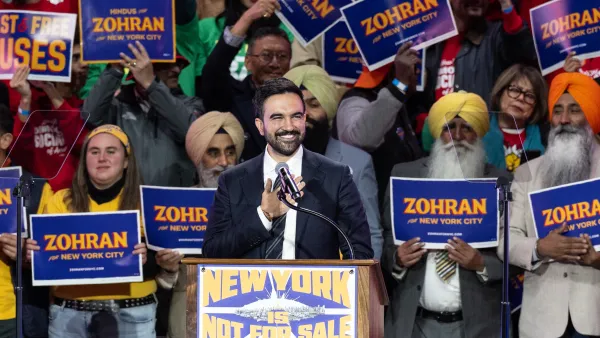
NYC releases city’s first racial equity plan
The plan lists a wide range of goals, from improving pregnancy-related health outcomes for Black New Yorkers to building more affordable housing.
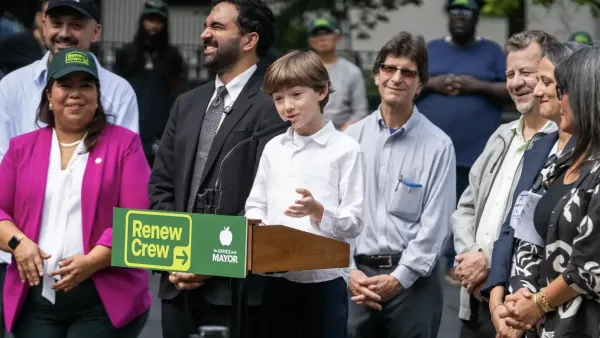
NYC residents are using TikTok to alert Mandami of city infrastructure problems — and it’s working
The format went viral after a NYC resident posted a video of two potholes and found them paved within hours.

Planetizen Federal Action Tracker
A weekly monitor of how Trump’s orders and actions are impacting planners and planning in America.

The state-sanctioned urbicide of Austin
People don’t kill cities. Freeways do.

US to reduce Colorado River water deliveries to Mexico
A new Colorado Treaty amendment reduces Mexico’s Colorado River water allocation by 250,000 acre feet.

5 New England states march closer to 800 megawatt wind energy project
Securing federal approval for the project may be complicated under the Trump administration, which has historically been hostile towards domestic wind power.

Baltimore to break ground on $50 million Transit Priority Project
The project will bring faster bus trips, safer streets and better bike connections to Baltimore.

Airbnb launches $250 million 'last-dollar financing' housing accelerator, makes first investment in Austin
The company will put $6.4 million towards affordable housing development in Texas’ capital.

FREE Course: Walkable City 1: Why Walkability?
After describing his path towards focusing on walkability as the essence of good planning, Jeff Speck marches through his five principal reasons for making more walkable places.
Reinventing Malls: Planning Alchemy—Turning Gray Fields Into Gold
The course focuses on the opportunities and imperatives that shape reinvention of mall sites.

Eagle County Government
Harvard University Graduate School of Design
Nashville Planning Department
The Architects Foundation
University of Cincinnati Online
The Pocatello Development Authority
The Urban Renewal Agency of the City of Pocatello
Journal of the American Planning Association