The facility claims it will cut energy demand by 22.8%.


China is building what it calls the world’s first underwater data center (UDC), a $226 million project that will be powered entirely by wind energy.
As Anna Lagos reports in Wired, the UDC submerges servers in the ocean, using seawater as a cooling system. “This reduces the energy demand for cooling to less than 10 percent,” compared to the typical 50 percent or more used by data centers for cooling. “The project is environmentally sustainable in other ways. More than 95 percent of its electricity comes from offshore wind turbines. Overall, the designers estimate that this reduces energy consumption by 22.8 percent.”
Locating the center offshore also reduces land usage by over 90 percent. “The UDC’s 24-megawatts capacity is just the beginning. During the announcement for the project, the main contractors, including Shanghai Hicloud Technology, Shenergy Group, the Shanghai branch of China Telecom and INESA, signed a new agreement to launch another offshore wind-powered UDC project with a much more ambitious goal: 500 megawatts.”
Read the full story: China Dives in on the World’s First Wind-Powered Undersea Data Center

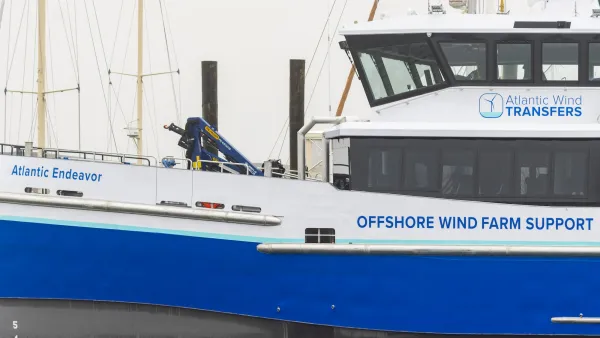
Nation’s Largest Offshore Wind Project, Suspended by Trump, Restarts Construction
A judge issued a temporary restraining order against the Trump administration’s suspension of five East Coast offshore wind projects.
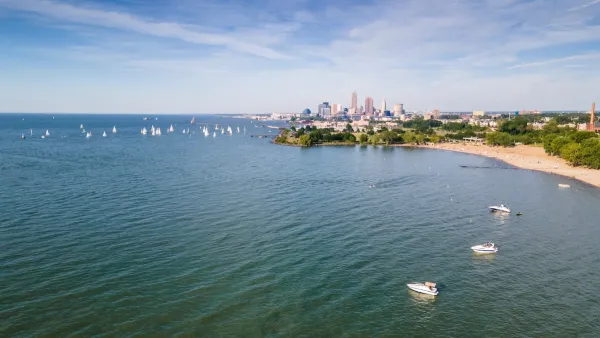
Op-Ed: The Great Lakes Could Be a Key Source of Wind Energy
States, not the federal government, have authority over wind power leases in the Great Lakes.

Washington Tribes Oppose Wind Project
Tribal communities claim that a major wind energy project threatens sensitive cultural and environmental resources.

Planetizen Federal Action Tracker
A weekly monitor of how Trump’s orders and actions are impacting planners and planning in America.

California plans to bury El Niño’s downpour
If the state plays its cards right, it may be able to store a billion acre-feet of El Niño’s water in aquifers.

Desperate measures: Advocates weigh draining Lake Powell to fill Colorado River
Draining the reservoir could reduce evaporation losses by a couple hundred thousand acre-feet.

In Texas, data centers are swallowing promised parkland
Residents who moved to Taylor, Texas for a rural community now have to contend with three data centers in their backyard.

How a Chicago-sized wind farm beat the odds and powered on
The project spanned five presidential administrations and a standoff with a U.S. military base.

MTA gives itself 30 days to transform pit into basketball court
The site has been under construction since 2022; the city originally estimated it would finish the court in 2024.

FREE Course: Walkable City 1: Why Walkability?
After describing his path towards focusing on walkability as the essence of good planning, Jeff Speck marches through his five principal reasons for making more walkable places.
Reinventing Malls: Planning Alchemy—Turning Gray Fields Into Gold
The course focuses on the opportunities and imperatives that shape reinvention of mall sites.

City of Rosemead
Rutgers University, Edward J. Bloustein School of Planning and Public Policy
One Hundred Miles
Hunter College, City University of New York (CUNY)
The Architects Foundation
University of Cincinnati Online
City of Cambridge
Montrose County
The Pocatello Development Authority