States, not the federal government, have authority over wind power leases in the Great Lakes.


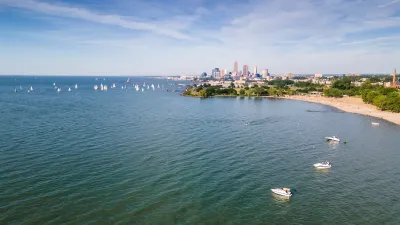
In an op-ed in Governing, researchers Cora Sutherland and Melissa Scanlan highlight the potential of the Great Lakes as a source of wind energy. As the authors explain, “the states, not the federal government, handle leases and permits for wind power on the Great Lakes, though federal agencies are involved in the overall process.”
According to the piece, “A 2023 analysis from the National Renewable Energy Laboratory found that the Great Lakes states have enough offshore wind power potential to provide three times as much electricity as all eight Great Lakes states use currently, which would mean plenty left over to meet increasing demand or send power elsewhere in the country.”
The authors outline the results of a research study that explored how conditions in the Great Lakes would affect energy production, what type of turbines would work best, and how wind turbines might affect migratory birds and fisheries. The authors conclude that “Despite all the unknowns, we encourage greater support for research to harness the potential of offshore wind energy in the Great Lakes to be a renewable resource for states, the region and the nation as a whole.”
FULL STORY: The Great Lakes’ Untapped Wind Power

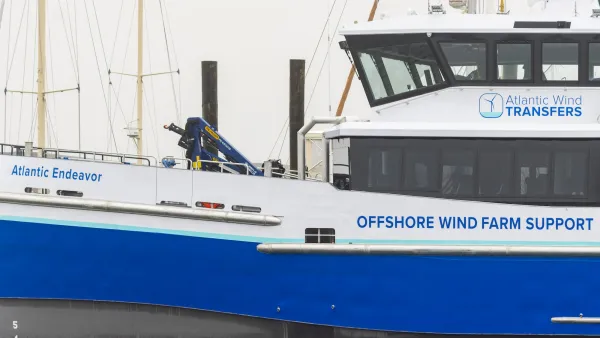
Nation’s Largest Offshore Wind Project, Suspended by Trump, Restarts Construction
A judge issued a temporary restraining order against the Trump administration’s suspension of five East Coast offshore wind projects.
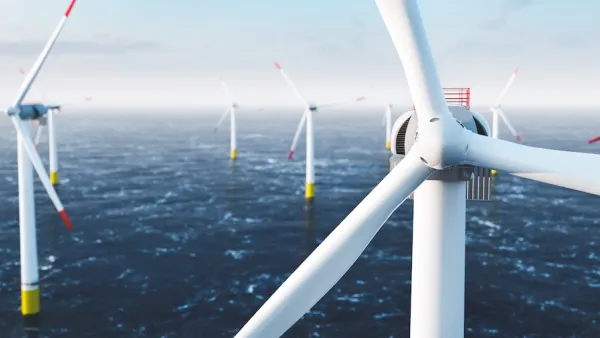
New York Offshore Wind Farm Offers Hope for Nascent Industry
The first commercial-scale offshore wind installation in the United States is powering roughly 70,000 homes in Long Island, New York.

New Power Transmission Line Approved in the Southwest
The proposed transmission line will transfer wind-produced power from New Mexico to cities in Arizona and California.

The state-sanctioned urbicide of Austin
People don’t kill cities. Freeways do.

US to reduce Colorado River water deliveries to Mexico
A new Colorado Treaty amendment reduces Mexico’s Colorado River water allocation by 250,000 acre feet.

New Jersey’s second-largest city bans standalone data centers
Jersey City will continue to allow co-location facilities, such as those meant for research institutions that store their own data.

Amtrak not solely to blame for New Jersey commuter rail's unreliability, report finds
A new study from the Garden State Initiative found that NJ Transit’s budget grew 20% across a 4 year period, but reliability declined significantly over the same period.

EPA erases limits on planet-warming pollution from power plants
Under Monday’s plan, power plants would still have some limits on how much mercury, arsenic and other contaminants they can emit.

Phoenix announces new on-demand transit service, more frequent RAPID buses
Both new services will launch in October, and are part of Phoenix's Project Effective Access Solutions for Easing Congestion.

FREE Course: Walkable City 1: Why Walkability?
After describing his path towards focusing on walkability as the essence of good planning, Jeff Speck marches through his five principal reasons for making more walkable places.
Reinventing Malls: Planning Alchemy—Turning Gray Fields Into Gold
The course focuses on the opportunities and imperatives that shape reinvention of mall sites.

Eagle County Government
Harvard University Graduate School of Design
Nashville Planning Department
The Architects Foundation
University of Cincinnati Online
The Pocatello Development Authority
The Urban Renewal Agency of the City of Pocatello
Journal of the American Planning Association