Can you design an efficient and profitable transit system?


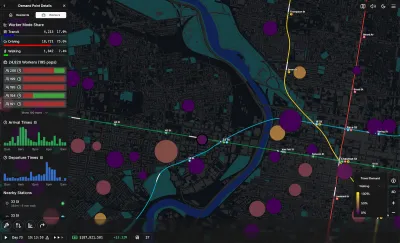
A new video game lets you design your own subway system in 26 U.S. cities, report Daniel Zawodny and Greg Morton in The Baltimore Banner.
The game, Subway Builder, uses Census data to simulate ridership on Metro lines. Players can start with a budget or let their imagination go wild in a budget-free sandbox mode. After designing their system based on real topography and urban conditions, players can adjust service frequency and other factors to make their virtual commuters happy and make their proposed systems turn a profit.
Colin Miller, the game’s creator, says he hopes it will spark hope for bigger, better transit systems in U.S. cities. “Miller said the idea for the game came to him when he was stuck on a delayed car on New York City’s subway. After searching for a game like ‘Subway Builder’ and coming up empty, he decided to build it himself.” The game, he notes, uses “Mediterranean pricing,” the cost per mile of building transit overseas. According to Miller, because of the high price of of building transit in the United States, where the per-mile cost is on average double that of other countries, “It’s the only way the game would be playable.”
FULL STORY: Can a video game help solve public transit in Baltimore?

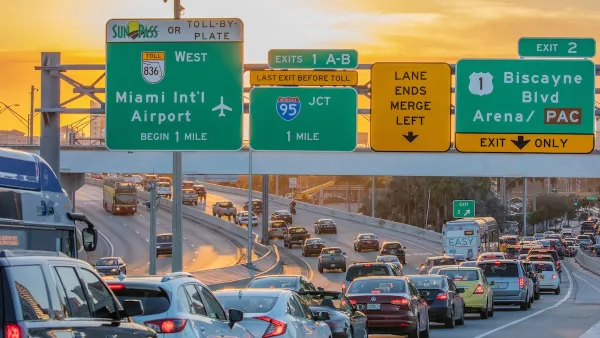
Miami, Houston Residents Spend Most on Transportation
South Floridians and Houstonians spent roughly 20 percent of their income on transportation in regions that offer few alternatives to driving.
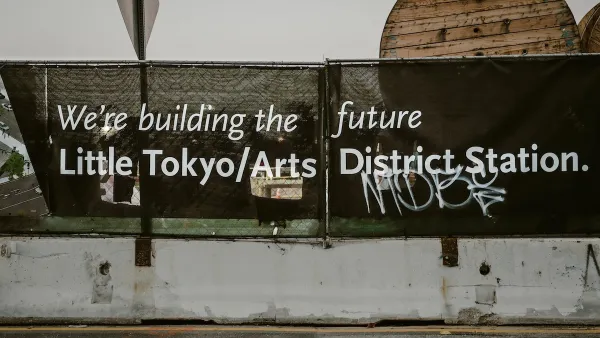
How Did Transit Projects Fare in 2024?
A comprehensive list of public transit expansions and new lines that opened in 2024, and projections for 2025.
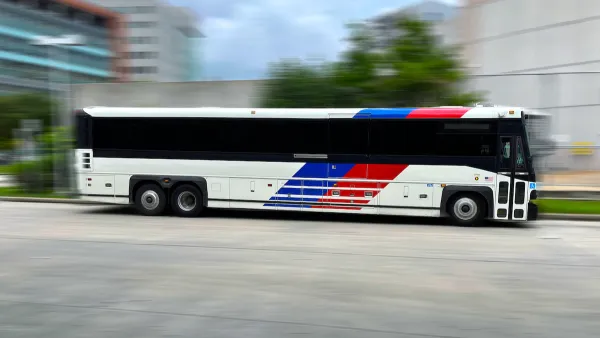
Houston Could Cancel Rapid Transit Project
Metro officials say prioritizing the University Corridor project would force them to delay or cancel other service expansion initiatives.

Planetizen Federal Action Tracker
A weekly monitor of how Trump’s orders and actions are impacting planners and planning in America.

The state-sanctioned urbicide of Austin
People don’t kill cities. Freeways do.

US to reduce Colorado River water deliveries to Mexico
A new Colorado Treaty amendment reduces Mexico’s Colorado River water allocation by 250,000 acre feet.

5 New England states march closer to 800 megawatt wind energy project
Securing federal approval for the project may be complicated under the Trump administration, which has historically been hostile towards domestic wind power.

Baltimore to break ground on $50 million Transit Priority Project
The project will bring faster bus trips, safer streets and better bike connections to Baltimore.

Airbnb launches $250 million 'last-dollar financing' housing accelerator, makes first investment in Austin
The company will put $6.4 million towards affordable housing development in Texas’ capital.

FREE Course: Walkable City 1: Why Walkability?
After describing his path towards focusing on walkability as the essence of good planning, Jeff Speck marches through his five principal reasons for making more walkable places.
Reinventing Malls: Planning Alchemy—Turning Gray Fields Into Gold
The course focuses on the opportunities and imperatives that shape reinvention of mall sites.

Eagle County Government
Harvard University Graduate School of Design
Nashville Planning Department
The Architects Foundation
University of Cincinnati Online
The Pocatello Development Authority
The Urban Renewal Agency of the City of Pocatello
Journal of the American Planning Association